
Advertisement


Sections
Ambition lies behind Bihar CM Nitish Kumar's draconian liquor prohibition law
Quite apart from challenges with implementation there are worries related to return of licence raj. Kumar will face a shortfall in revenue, hitting many of his social sector schemes while bootlegging will increase, liquor mafias will distribute spurious liquor and a complicit police will pocket some extra cash.

Let's say as an ambitious entrepreneur you are planning an aggressive expansion strategy and want your product to reach the maximum number of customers. You'll need to develop a brand, position it and use tools to differentiate it in a crowded marketplace of similar products. If the brand is to succeed it must, therefore, create a unique identity.Creation of a unique identity in the rough and tumble of politics is just as important. Regional leaders ambitious enough for a national role must differentiate themselves from other players to transcend state boundaries. More so if they lack the political assets of a BJP or the Congress.So, we find Arvind Kejriwal running a high-pitched, media-based campaign. By constantly attacking the Prime Minister, the Aam Admi Party chief has been able to stay in the headlines and create the brand placement of both a crusader and a victim. AAP's rapid rise and bright prospects of expansion in new states such as Punjab prove that his strategy is working.No less ambitious, Nitish Kumar is more old school. His methods are more conventional. Instead of a media-driven campaign, the JD(U) chief is in search of an ideological plank that may pitchfork him into national consciousness. He has a two-pronged strategy. In calling for a RSS-mukt Bharat, he wishes to generate heat by challenging India's currently dominant politico-ideological force. This is an interesting move but still at a very early stage.Two, to position himself as a social reformer he has sought to make Bihar a dry state, jumping on to the bandwagon of prohibition — an idea of dubious effectiveness that still retains immense currency.In itself, the political incentive for prohibition is clear. Like 'development' and 'good governance', prohibition is not an idea limited by geography. It is one of the very few planks that cuts across state boundaries, affects the poorest and most politically sensitive sections of the society and touches an immediate chord with roughly half of active Indian voters — women.However, creating a nanny state to solve a deep-rooted social evil rarely works, as history and data have proved several times. It merely drives it underground, criminalises the activity and creates a different set of problems. But the Bihar chief minister sees in prohibition a calling card to extend the political presence of the Janata Dal (United) beyond Bihar and a possible Prime Ministerial bid in 2019.[caption id="attachment_2721618" align="alignleft" width="380"]![Bihar Chief Minister Nitish Kumar. PTI]() Bihar Chief Minister Nitish Kumar. PTI[/caption]But Kumar has a problem.Because prohibition is seemingly the easiest and quickest way out of issues related to alcohol consumption — alcoholism, indebtedness and domestic violence — it is popular with politicians. Gujarat remains a dry state while Kerala, Tamil Nadu are moving towards this form of competitive populism. Haryana and undivided Andhra Pradesh flirted with and abandoned it, having failed in implementation.So in order to differentiate himself from the crowd, Kumar must do something different with prohibition to create a unique identity. For instance, bringing a law so draconian that it infringes on the fundamental rights of citizens, gives sweeping powers to law-enforcing authorities, proposes ridiculously tough penalties and has provisions that could be easily misused to harass innocents.The scary part is, Bihar has already passed such a law largely avoiding media scrutiny. And the most bizarre aspect of the new law is that it keeps outside its ambit toddy, the country-made staple of poor tipplers prone to high contamination and responsible for most alcohol-related deaths and related social ills.Kumar had initially banned country booze from 1 April this year with the Bihar Excise (Amendment) Act, 2016. Within a few days, he expanded it by outlawing Indian Made Foreign Liquor — which means just about everything else.However, to plug some legal and penal loopholes, the Nitish Kumar government brushed aside all political opposition from BJP and also enormous dissent within his party and ruling partner Lalu Prasad's RJD to come up with a fresh legislation superseding all earlier Acts by amending the April 1 law. The new law — Bihar Prohibition and Excise Act, 2016 — is more broad-based, stringent and incomparable with any law in any state. Some of the provisions, as we shall presently note, are scarily excessive.A report in The Indian Express notes some of the most rigorous provisions. One of those makes all adults responsible for the consumption and possession of liquor at home by any member of the family. The assumption is that all adults must be in the know, and must be held responsible until proven otherwise. All sections of the Act are non-bailable, leaving it solely to the courts to decide based on the circumstances and gravity of individual cases.PRS Blog, the official blog of independent research initiative PRS Legislative Research that works with MPs across party lines to provide research support on legislative and policy issues, has done a detailed analysis of the Bill and finds that some of these provisions may violate Article 14 and Article 21 of the Indian Constitution.Some of the key features highlighted by PRS are:
Bihar Chief Minister Nitish Kumar. PTI[/caption]But Kumar has a problem.Because prohibition is seemingly the easiest and quickest way out of issues related to alcohol consumption — alcoholism, indebtedness and domestic violence — it is popular with politicians. Gujarat remains a dry state while Kerala, Tamil Nadu are moving towards this form of competitive populism. Haryana and undivided Andhra Pradesh flirted with and abandoned it, having failed in implementation.So in order to differentiate himself from the crowd, Kumar must do something different with prohibition to create a unique identity. For instance, bringing a law so draconian that it infringes on the fundamental rights of citizens, gives sweeping powers to law-enforcing authorities, proposes ridiculously tough penalties and has provisions that could be easily misused to harass innocents.The scary part is, Bihar has already passed such a law largely avoiding media scrutiny. And the most bizarre aspect of the new law is that it keeps outside its ambit toddy, the country-made staple of poor tipplers prone to high contamination and responsible for most alcohol-related deaths and related social ills.Kumar had initially banned country booze from 1 April this year with the Bihar Excise (Amendment) Act, 2016. Within a few days, he expanded it by outlawing Indian Made Foreign Liquor — which means just about everything else.However, to plug some legal and penal loopholes, the Nitish Kumar government brushed aside all political opposition from BJP and also enormous dissent within his party and ruling partner Lalu Prasad's RJD to come up with a fresh legislation superseding all earlier Acts by amending the April 1 law. The new law — Bihar Prohibition and Excise Act, 2016 — is more broad-based, stringent and incomparable with any law in any state. Some of the provisions, as we shall presently note, are scarily excessive.A report in The Indian Express notes some of the most rigorous provisions. One of those makes all adults responsible for the consumption and possession of liquor at home by any member of the family. The assumption is that all adults must be in the know, and must be held responsible until proven otherwise. All sections of the Act are non-bailable, leaving it solely to the courts to decide based on the circumstances and gravity of individual cases.PRS Blog, the official blog of independent research initiative PRS Legislative Research that works with MPs across party lines to provide research support on legislative and policy issues, has done a detailed analysis of the Bill and finds that some of these provisions may violate Article 14 and Article 21 of the Indian Constitution.Some of the key features highlighted by PRS are:
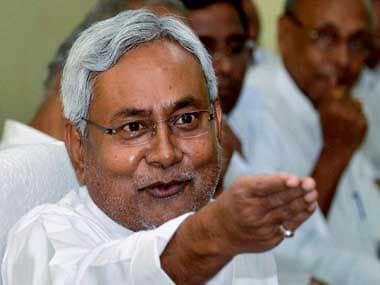 Bihar Chief Minister Nitish Kumar. PTI[/caption]But Kumar has a problem.Because prohibition is seemingly the easiest and quickest way out of issues related to alcohol consumption — alcoholism, indebtedness and domestic violence — it is popular with politicians. Gujarat remains a dry state while Kerala, Tamil Nadu are moving towards this form of competitive populism. Haryana and undivided Andhra Pradesh flirted with and abandoned it, having failed in implementation.So in order to differentiate himself from the crowd, Kumar must do something different with prohibition to create a unique identity. For instance, bringing a law so draconian that it infringes on the fundamental rights of citizens, gives sweeping powers to law-enforcing authorities, proposes ridiculously tough penalties and has provisions that could be easily misused to harass innocents.The scary part is, Bihar has already passed such a law largely avoiding media scrutiny. And the most bizarre aspect of the new law is that it keeps outside its ambit toddy, the country-made staple of poor tipplers prone to high contamination and responsible for most alcohol-related deaths and related social ills.Kumar had initially banned country booze from 1 April this year with the Bihar Excise (Amendment) Act, 2016. Within a few days, he expanded it by outlawing Indian Made Foreign Liquor — which means just about everything else.However, to plug some legal and penal loopholes, the Nitish Kumar government brushed aside all political opposition from BJP and also enormous dissent within his party and ruling partner Lalu Prasad's RJD to come up with a fresh legislation superseding all earlier Acts by amending the April 1 law. The new law — Bihar Prohibition and Excise Act, 2016 — is more broad-based, stringent and incomparable with any law in any state. Some of the provisions, as we shall presently note, are scarily excessive.A report in The Indian Express notes some of the most rigorous provisions. One of those makes all adults responsible for the consumption and possession of liquor at home by any member of the family. The assumption is that all adults must be in the know, and must be held responsible until proven otherwise. All sections of the Act are non-bailable, leaving it solely to the courts to decide based on the circumstances and gravity of individual cases.PRS Blog, the official blog of independent research initiative PRS Legislative Research that works with MPs across party lines to provide research support on legislative and policy issues, has done a detailed analysis of the Bill and finds that some of these provisions may violate Article 14 and Article 21 of the Indian Constitution.Some of the key features highlighted by PRS are:
- If a person is found to have committed any offence under the Bill (which has since been passed), any authorised person (such as the District Collector, Excise Officer, and Superintendent of Police) may take action against the offender by arresting him without a warrant. In addition, the premises where alcohol is found, or any place where it is being sold, may be sealed.
- Family members and occupants as offenders: For illegal manufacture, possession or consumption of alcohol by a person, the Bill holds family members of the person criminally liable. Family means husband, wife and their dependent children. Also owner and occupants of a land or a building, where such illegal acts are taking place.
- The Bill presumes that the family members, owner and occupants of the building or land ought to have known that an illegal act is taking place. In all such cases, the Bill prescribes a punishment of at least 10 years of imprisonment, and a fine of at least one lakh rupees.
First Published:Aug 08, 2016, 07:42:19 IST
Advertisement
Advertisement

Rahul Gandhi, Kharge lead protest near PM residence; Centre says Parliament discussion was offered
The developments come amid the continuing CJP-led agitation at Jantar Mantar, where protesters have vowed to continue their sit-in despite recent clashes with Delhi Police
2 min read
Parliament's Monsoon Session from July 20: Key bills, numbers game to dominate agenda
The Monsoon Session of Parliament will begin on July 20 and continue till August 13, with the government expected to push several key legislations, including constitutional amendment bills
2 min read
Major blow to Uddhav Thackeray as six Lok Sabha MPs join Shinde camp
In a major political setback for Shiv Sena (UBT) chief Uddhav Thackeray, six of the party's nine Lok Sabha MPs joined the Eknath Shinde-led Shiv Sena in Mumbai on Monday
2 min read
12 years and counting: NDA leaders felicitate PM Modi as he trumps Nehru's tenure record
Leaders of the National Democratic Alliance (NDA) on Wednesday felicitated Prime Minister Narendra Modi on completing 12 years in office and becoming India's longest-serving continuously elected Prime Minister
3 min read
‘Trust, progress and welfare’: PM Modi celebrates 12 years in office, highlights big policy moves
Prime Minister Narendra Modi on Tuesday marked 12 years in office. He described the period as one dedicated to "trust, development and public welfare" while highlighting key achievements of his government
3 min read
Advertisement
Advertisement