


The best army chief the country never had: Lt Gen SK Sinha and the cost of principled dissent
Sinha finished second — not because he lacked competence, but because he refused to comply unquestioningly. Power often chooses obedience over judgement, compliance over wisdom, while the country pays the price

“Nice guys finish second.” This may sound like a cliché, but it reveals how a system truly works — a system where meek obedience is rewarded, but principled dissent is discouraged, and at times punished. One can recall several such instances. To this, a new book adds another compelling story.
This is the story of Lt Gen SK Sinha. His story, as recounted in Probal Dasgupta’s General Brasstacks: The Sundarji Story, isn’t just about one officer being overlooked. It is, more importantly, about how a person gets marginalised and castigated for his constructive dissent. And how it costs the nation immensely.
 More from Opinion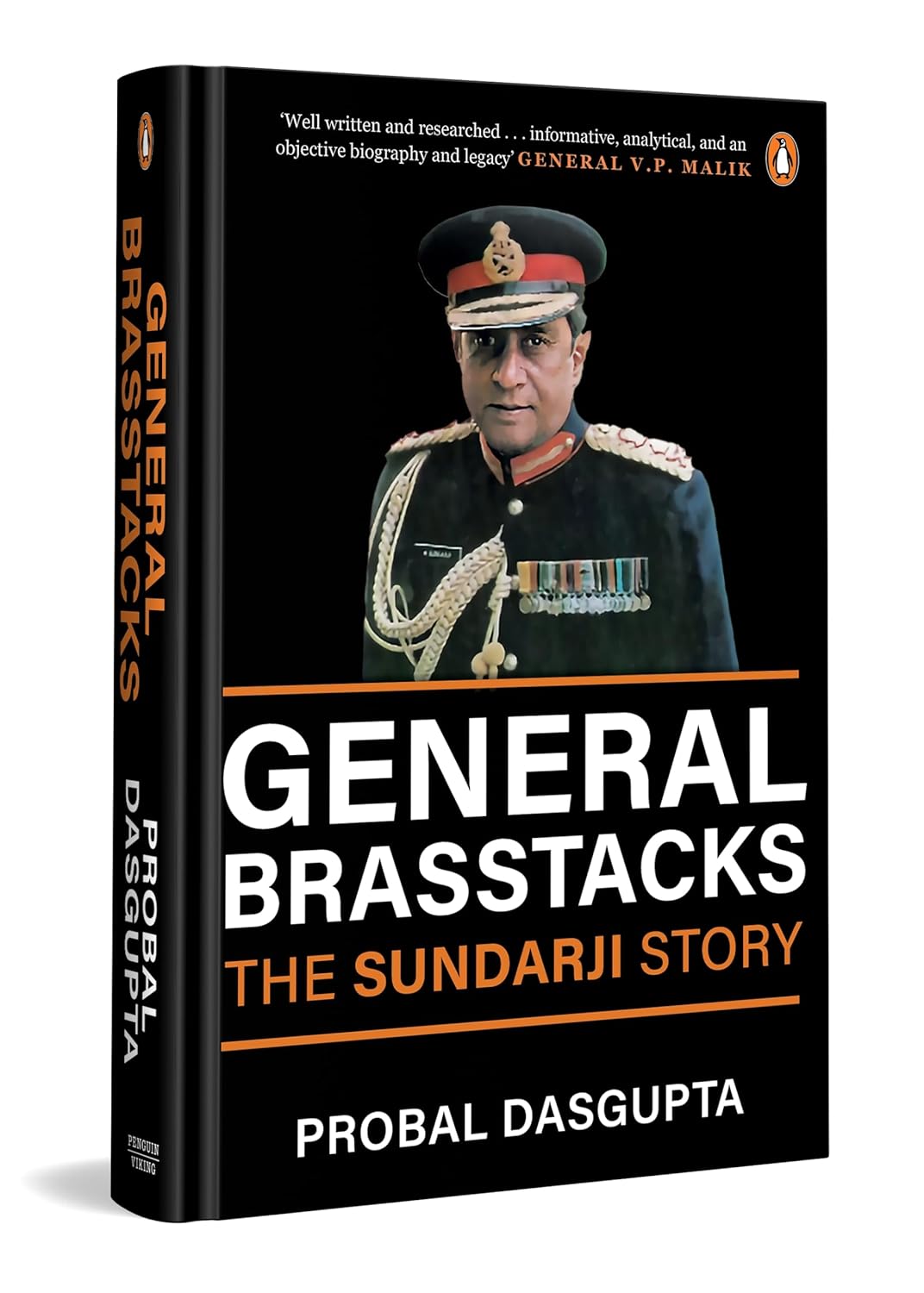
The backdrop is Punjab of the 1980s, when it was simmering with tension. Brutality and violence had become a way of life in Punjab, more so after the rise of Jarnail Singh Bhindranwale. The latter was not just a fringe religious figure but a political creation gone rogue. What began as a cynical Congress tactic to undercut the Akalis had mutated into a full-blown Frankenstein that refused to go down without causing mayhem of unprecedented proportions.
In this charged environment, Lt Gen Sinha, then heading the Western Command, received a call from Punjab’s Chief Secretary, Ishwar Chandra Puri. Alarmed by Bhindranwale’s activities, Puri sought the Army’s help in providing tanks to the state police.
Sinha refused. His reasoning was simple and rooted in institutional propriety. He believed that the army should not supply weapons to the police. Soon after, he was summoned by Punjab Chief Minister Darbara Singh, who wanted to use the military to arrest Bhindranwale. Sinha, again, refused. “The police can arrest. The army cannot, and I would advise you to use the police,” he said.
The Chief Minister was furious, and the meeting ended abruptly.
Delhi, too, had little patience for such resistance. Two days later, as Probal Dasgupta writes, Western Command’s Chief of Staff, Maj Gen JK Puri, got a message from Delhi to send the army to the Golden Temple to arrest Bhindranwale.
Preparations began, and a Gorkha battalion was readied for the operation. As fate would have it, Lt Gen Sinha, who was away for some work, returned just in time. On learning of the plan, he immediately cancelled the operation.
“These are my orders,” he said.
Lt Gen Sinha then reached out to Defence Minister R Venkataraman, seeking to present his case before the Prime Minister. He believed that deploying the army into a religious shrine would inflame sentiments and worsen the crisis.
Probal Dasgupta writes in detail about the interaction between the two:
“I’ve told my people not to take any action till I have my views presented to the PM,” asserted Lt Gen Sinha.
“So, you are not going to carry out the PM’s orders?” asked Venkatraman.
“No sir, I will carry out the PM’s order. But my submission is that I am an army commander, and I should be allowed to present my views before the PM,” explained Sinha.
Venkataraman relented. However, within hours, a message arrived from Delhi, asking the army to stand down. The state police would now act, a new firman from Delhi stated.
Sinha’s view thus prevailed. But the story did not end there.
Such opposition, even if principled, invariably comes at a cost. Sinha’s career trajectory soon reflected this reality. After completing his tenure at Western Command, he moved to Delhi as Vice Chief of Army Staff in 1983, widely seen as the natural successor to the Army Chief. However, when the time came, the government chose to appoint Gen AS Vaidya.
Evidently, the decision to oppose the government’s diktat didn’t go down well with those in power in Delhi. According to Dasgupta, the decision to bypass Lt Gen Sinha was taken at the highest political level — by Indira Gandhi, the Defence Minister, the Defence Secretary and the Cabinet Secretary. He, however, believes the defence minister was most opposed to his elevation. “The move was likely to have been instigated by R Venkatraman,” he writes.
Before retiring from the military, Sinha undertook a final act of institutional foresight. Dasgupta informs how the general drafted a comprehensive Standard Operating Procedure (SOP) for the army in dealing with internal insurgencies. Central to this SOP was a clear directive: that the army should avoid entering religious places and must allow adequate time for militants to surrender peacefully. The guiding philosophy was to preserve the sanctity of such spaces and to avoid actions that could damage the army’s long-term image or exacerbate tensions.
This wasn’t just military thinking. It was political wisdom. But such suggestions had no place in a government that was addicted to power and accustomed to sycophancy.
Against this backdrop emerged Lt Gen K Sundarji, who was dynamic, charismatic and technologically inclined, but whose boldness could at times appear brash and whose decisiveness might occasionally seem harried. Where Sinha sought clarity and caution, Sundarji was more than willing to take risks and break conventions.
No wonder when Indira Gandhi decided to use the army to flush out militants from the Golden Temple, Sundarji took up the task with renewed zeal.
Operation Blue Star, aimed at flushing Bhindranwale-led Sikh militants out of the Golden Temple, was a disaster — socially and politically, as well as strategically. It cleared the complex but tore through the psyche of the Sikh community, deepened militancy in Punjab, and set off a chain reaction that took thousands of lives, including that of Indira Gandhi.
This is not to say that Sundarji was a failure. Far from it, his decision in Arunachal Pradesh — to occupy the dominant heights in the Himalayas in 1986 — strengthened the country’s strategic position vis-à-vis China, and his leadership during Operation Brasstacks, one of the largest military exercises since the Second World War, demonstrated military preparedness that unnerved Pakistan and prompted diplomatic engagement from Gen Zia-ul-Haq.
Coming back to Punjab, one wonders what the course of the state’s history — and perhaps the country’s — might have been if Lt Gen Sinha’s counsel had been heeded. Maybe the scale of madness, mayhem and violence could have been contained. But the biggest lesson lies elsewhere: that it is in the interest of political systems to shun compulsive compliance in favour of independent thinking and principled dissent.
Sinha finished second. Not because he lacked competence, but because he refused to comply unquestioningly. Power often chooses obedience over judgement, compliance over wisdom. And the country pays the price.
Lt Gen Sinha remains the best army chief the country never had.
(Views expressed are personal and do not necessarily reflect those of Firstpost.)
The author is Opinion Editor, Firstpost and News18. He can be reached at: utpal.kumar@nw18.com

Could India have done more to prevent the Iran war?
The Russia-Ukraine war: Why peace remains so elusive
Head-on | Why President Trump is targeting India
When Manila and Tokyo draw a line, Beijing draws a red line
Bangladesh gets a new envoy to reset its India ties