


India has now reached a level of influence in West Asia where its voice has real impact: Pramit Pal Chaudhuri
‘Our ties with UAE are at a different level; it is the cornerstone of India’s new Gulf policy’, says Eurasia Group’s head for South Asia

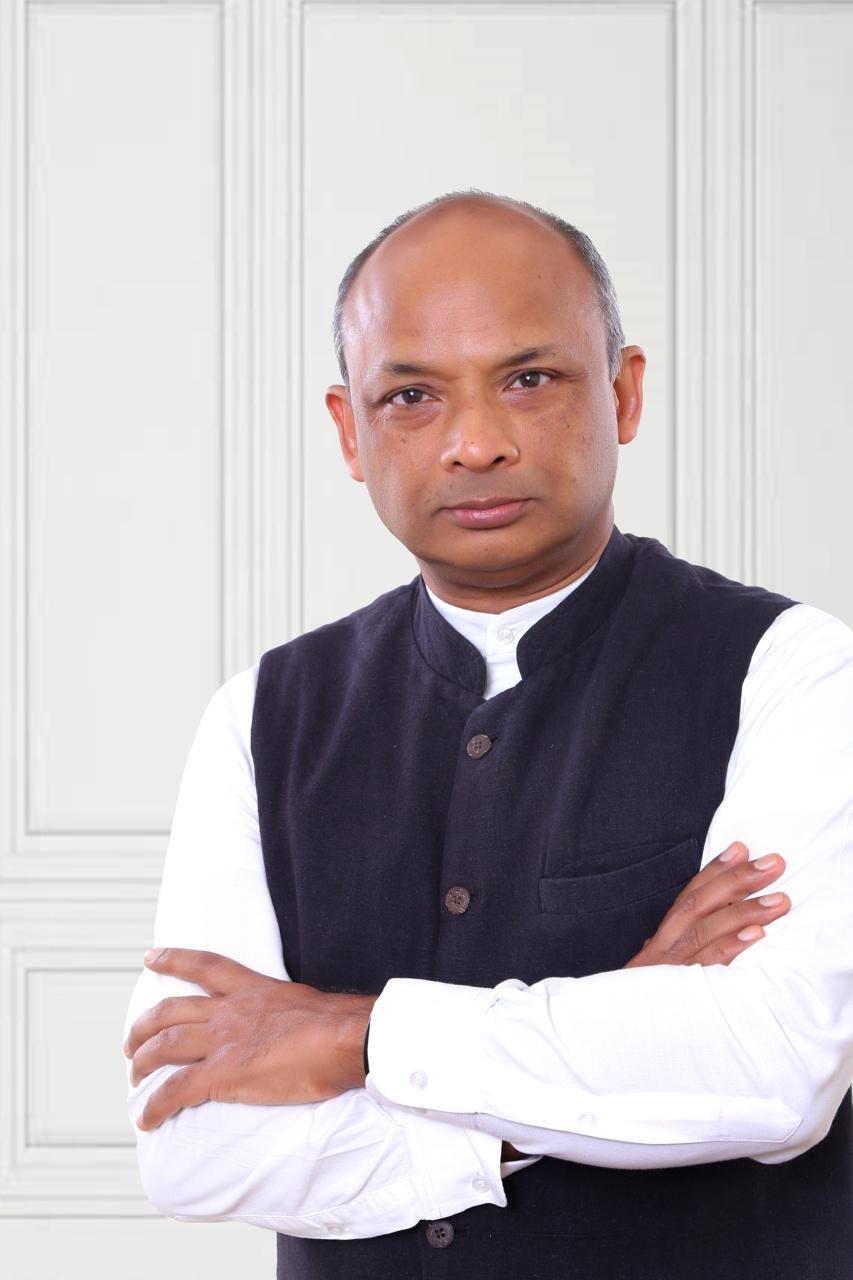
This is Part 2 of Firstpost’s conversation with Pramit Pal Chaudhuri, Eurasia Group’s head for South Asia. (Read Part 1 here.) Pal Chaudhuri, a former journalist, has served on the National Security Advisory Board of two Indian prime ministers. He is an advisor to several New Delhi-based think tanks and remains active in Track-II diplomacy between India and the US, Japan, China, and Israel. Firstpost caught up with him during the recent Raisina Dialogue and the topics of discussion included the US, Israel war against Iran, the sinking of an Iranian ship off Sri Lankan waters, US-China ties and more.
The interview has been lightly edited for fluidity.
Q: I want to shift a little bit from the U.S. to what has been happening in the Gulf. Do you think there is a change in India’s policy on Iran?
Pramit: Let’s put it this way. I think what we’re seeing is the original Indian policy on the Gulf. There’s a speech made by one of our joint secretaries many years ago, where he said our policy on the Persian Gulf, the Middle East in general, is that we have a set of bilateral relationships, and we try to ensure that none of them get entangled with the other, because we don’t want to get caught in these crazy battles in the Middle East. We are the third largest Sunni and the third largest Shia country in the world. No need to get involved.
 More from Opinion
But over the past 15 years certain relationships are now very clearly well ahead of the others. Our Israel relationship is on a completely different track. There’s probably no other country that has consistently helped us whenever we have had a security crisis with Pakistan or China… Not even Russia has come close to what Israel has done for us. Our officials now look at it and say, this is a country that’s on a different level.
The new country that’s really moved into that space is the UAE. We now refer to the UAE as a transformational relationship. This is a reference to only a handful of countries that India believes are committed to the strategic rise of India and prepared to invest in India on a non-commercial basis. The UAE is the only country in the Gulf where we have that kind of a relationship. We started to see the beginnings of that with Saudi Arabia, but I think that sort of died out after the Saudis decided to go with Pakistan.
So, we now have two relationships that are on a different level in the Middle East than we ever had before. And that is a consequence of our economy being so much larger than it used to be, and having moved away from just the question of importing oil and sending workers, which was the original Gulf relationship. It’s now much, much larger than that.
The UAE is the cornerstone of a new Gulf policy that’s being built. We did not complain about Israel and Iran fighting, what we complained about was Iran attacking the UAE. ‘That this is not a country that attacked you, and you’re attacking the UAE’ fundamentally impinges on an Indian strategic interest. ‘We know you have a problem with the Israelis, but the Israelis can handle themselves. And if that’s the war between you and them or the Americans, we don’t give a damn. But (attacking) the UAE is a problem.’
And that was what we basically signaled to the Iranians, both by criticizing them and I think my sense is by holding back on the condolence message for Ayatollah Khamenei’s death for a couple of days to make it clear that India has to take a stand on this… a very quiet one. The UAE took more hits than any other of the other countries in the battle, including Israel. And India said, this is becoming a problem for us.
When MBZ (UAE president Mohammed bin Zayed Al Nahyan) was squabbling, if you wish, with MBS (Saudi crown prince Mohammed bin Salman Al Saud), remember the UAE president came to India for this one-hour, 45-minute summit with the prime minister…
(interjection) …At the airport, to meet PM Modi
…And he brought the heads of all of the other Emirates to make it clear. And I would argue MBZ was basically saying, whose side are you on? Modi was saying, ‘I want to meet you here just to tell Saudi Arabia, you signed a defense pact with Pakistan. Understand that India cannot be with you…’
Q: Since then, India has signed Iran’s condolence book, and the deputy foreign minister of Iran was at the Raisina Dialogue, and our external affairs minister had a chat with him. The picture was tweeted out. Do you think a message must have gone?
Pramit: I think it was a combination of messages. Not just us. Obviously, the Gulf countries themselves complained the loudest. There was also, I gather, an outcry in the Islamic world. Why are you killing fellow Muslims? I mean, you’re fighting Israel we don't have a problem with it. But the fact that you're bombing eight other Muslim countries…
Q: But was it not unexpected that when Israel and US, who have a lot more firepower than Iran, rain down missiles and take out the Supreme Leader and top generals, that Iran may hit out in all directions in desperation, especially as they lack any projectiles to target US mainland?
Pramit: Bringing the Gulf states into the frontier of the battle was Iran’s original plan, but ultimately India still has to respond. I think the big difference now is that India has reached a level of influence that it can say these things and actually have an impact. I would say 20 years ago, if India had said, ‘Don't do this’, they (Gulf states) would have said, ‘we don’t care. You depend on us’… Whether it’s the Iranians or the UAE.
In fact, the UAE wouldn’t have even asked us for support. That’s the big difference. Now, you actually have MBZ, MbS coming to India and saying, ‘we want you to support my policies’. Or Saudi Arabia telling India, ‘We want to explain why we have to sign a defense pact with Pakistan. It’s not about you’…
I had the chance to interview King Abdullah, soon after he became the king, in Riyadh. His first foreign trip as king was to India. And he was the first king, if I remember correctly, in 27 years from Saudi Arabia to visit India. I remember he said, that, “look, you are going to be the hydrocarbon consumer of the future. America is energy independent. China is going green. You’re next. And, we want to tell you that if you want a partner to provide all of your energy security needs for the future, we’re prepared to play that role. That’s the message I want to send to the people of India. Saudi Arabia is with you, if you’re interested.” He (King Abdullah) also said, “we want to have a relationship with you like we have with the United States.”
And MBZ did the same thing in 2015 when he met with Modi. He said, “don’t worry about Pakistan. That relationship is dead. You’re the future. And I will invest money. Why is DP World (Emirati logistics company, based in Dubai) putting money into ports in India? Why is ADIA (Abu Dhabi Investment Authority, a sovereign wealth fund) pouring so much money into India? A lot of it is not because they think they’re going to make money out of it. It’s because they’ve been told to go and build India up.
So, Iran’s policy on whether to continue bombing UAE was a consequence of several factors, but one of them, for the first time, was that India complained and said, ‘this is not a good idea.’ Also helped that Pakistan made some very bizarre statements, including warning Iran that we have a defense relationship with Saudi Arabia… prompting the Revolutionary Guard to threaten them that, ‘if you want to get involved in this, there’ll be a day of-- when this is over -- reckoning between us.’
That, in my view, is an example of Munir trying to play what Pakistan has always done, leverage geopolitics to compensate for its economic weaknesses. The problem is he’s not a statesman, and he doesn’t know how to play this game. Pakistan is heading for a situation where every single one of its neighbors are going to be hostile.
Q: This is about the Iranian ship that was sunk on the waters close to Sri Lanka. I want to draw your attention to Trump’s National Security Strategy released in 2025, where he identified the Western Hemisphere as America’s exclusive ‘strategic backyard’. So, the US goes ahead and sinks a vessel in a region that India can legitimately claim to be its strategic backyard. What kind of message does it send?
Pramit: At this point, any Iranian warship anywhere is a legitimate target. In fact, the Americans waited for the ship to leave Indian economic zones. As soon as it entered Sri Lankan waters, they torpedoed it. So, they seem to have actually said, we will not embarrass India, but once it is in international waters, it is a legitimate target under international law. The UN Law of the Sea (UNCLOS) makes that very clear.
In fact, when a Chinese submarine enters Indian Ocean, it’s the Americans who tell us that submarine has entered because we still don’t have the capacity (to track) complete oceanic maritime domains. We depend on the United States for that. So, for them to track a surface ship would have been easy. I’m not certain why did the Iranian captain get orders to come back, or he decided he wanted to make a run for it. But he was a sitting target at that point.
India’s responsibility ended the instant he left Indian territorial waters. There’s nothing India could do after that. We have territorial maritime capacity only in the northern Indian Ocean. We still don’t have it for the rest of the ocean. As the Chinese have said, Indian Ocean is not ‘India’s ocean’.
Let’s put it this way. If tomorrow India and Pakistan are in full-fledged war, a Pakistani warship happens to be in Russia on a naval exercise when the war breaks out or leaves during the midst of it. Would we wait for it to sail all the way back to Pakistan to sink it if it were to run into an Indian submarine? No, you are totally within your rights to torpedo that ship and bring it down. But I think there’s a big shock for everybody. We’ve forgotten a lot of what international laws of the sea regarding what maritime engagement are. This is actually very standard.
And ironically, I suspect even the Iranian captain mentally didn’t adjust to the fact that, I am facing a navy that is global and has nuclear attack submarines that are the quietest and the most difficult to track. I think that he must have detected the submarine at some point. He realized he was in danger, which is why he tried to ask the Sri Lankans for harbor. And they sat on it because they were terrified.
Q: That leads to my final question. Trump is going to go to Beijing next month, and he’s been dropping hints about some sort of G2 compact. Despite the structural rivalry, is there a tactical understanding brewing between US and China, and if so, how does that affect India?
Pramit: What is Trump’s worldview? What we can tell from first administration, what he has said in interviews, and what we know about the non-public segment of the national security strategy is that ‘alliances are bad’ because they force America to fight other wars that they aren’t interested in. And all the allies, in his view, basically live off American power and never pay off what they should do. He hates the United Nation and multilateral structures which -- in his view -- hold back American power.
He has floated the so-called ‘C5 proposal’ in the NSS, which is not in the public document, that we have to create a set of core powers. He has this Yalta idea, that tough guys should sit together and decide everything.
So, Vladimir Putin, Xi Jinping, and interestingly enough, Narendra Modi (India is one of the C5 countries). He clearly doesn’t like Europeans, so he’s kept the Europeans out. Trump may be tough with Russia or India, but he still sees them as part of a ‘cabal of power’. Interestingly, at the Munich Security Conference, the Chinese began talking about ‘E5’ a very similar concept. They also incorporated India, which was a bit of a surprise to everybody else.
On China, Obama had the same idea, that of an ‘entente cordiale’ with China. That was the original G2. It lasted 14 months, because China wasn’t interested. Trump believes he is a wonderful charmer and nobody can resist him. He’s going to try the same thing. But his problem will be, in my view, that the economic policies that he’s carrying out are ones that China simply cannot accept.
If you’re saying that India only has a handful of American corporations and lobbies on our behalf, China has none. China has a lot of very hostile lobbies, whether it’s the Pentagon, the tech companies, because they’re not allowed to invest in that country, manufacturing sector, who sees no opportunities in China, the intelligence structure, which is also hostile.
My sense is that Trump will either end up with a summit in which he will declare victory and come up with a piece of paper that nobody will pay any attention to, as happened in the first Trump tenure. Remember, he had a great trade deal with China, which Beining did not implement a single word of. My sense is China will do exactly the same thing. They’ll give him a piece of paper, with elections coming in November. Give him some pomp and glory, photographs. Trump will declare ‘victory’. And then just throw it in the bin and wait for the clock to run him down.
I simply cannot see America making the kind of concessions (that China wants), or China making the kind of trade concessions, on the economy that the United States would want. China might concede a few trade issues, but only in return for very, very strong language of Taiwan. So at least on G2 score, India has nothing to be worried about.
(Note: This is the final part of two-part interview with Pramit Pal Chaudhuri. Read Part 1 here.)

Could India have done more to prevent the Iran war?
The Russia-Ukraine war: Why peace remains so elusive
Head-on | Why President Trump is targeting India
When Manila and Tokyo draw a line, Beijing draws a red line
Bangladesh gets a new envoy to reset its India ties