


The Promised Land: Gulf lures many from Kerala, but few make it big
The lives of the majority of the expatriates in the UAE have not seen much change. Like Bappu, many Keralites are struggling hard. The situation is almost the same in other countries under the Gulf Cooperation Council.

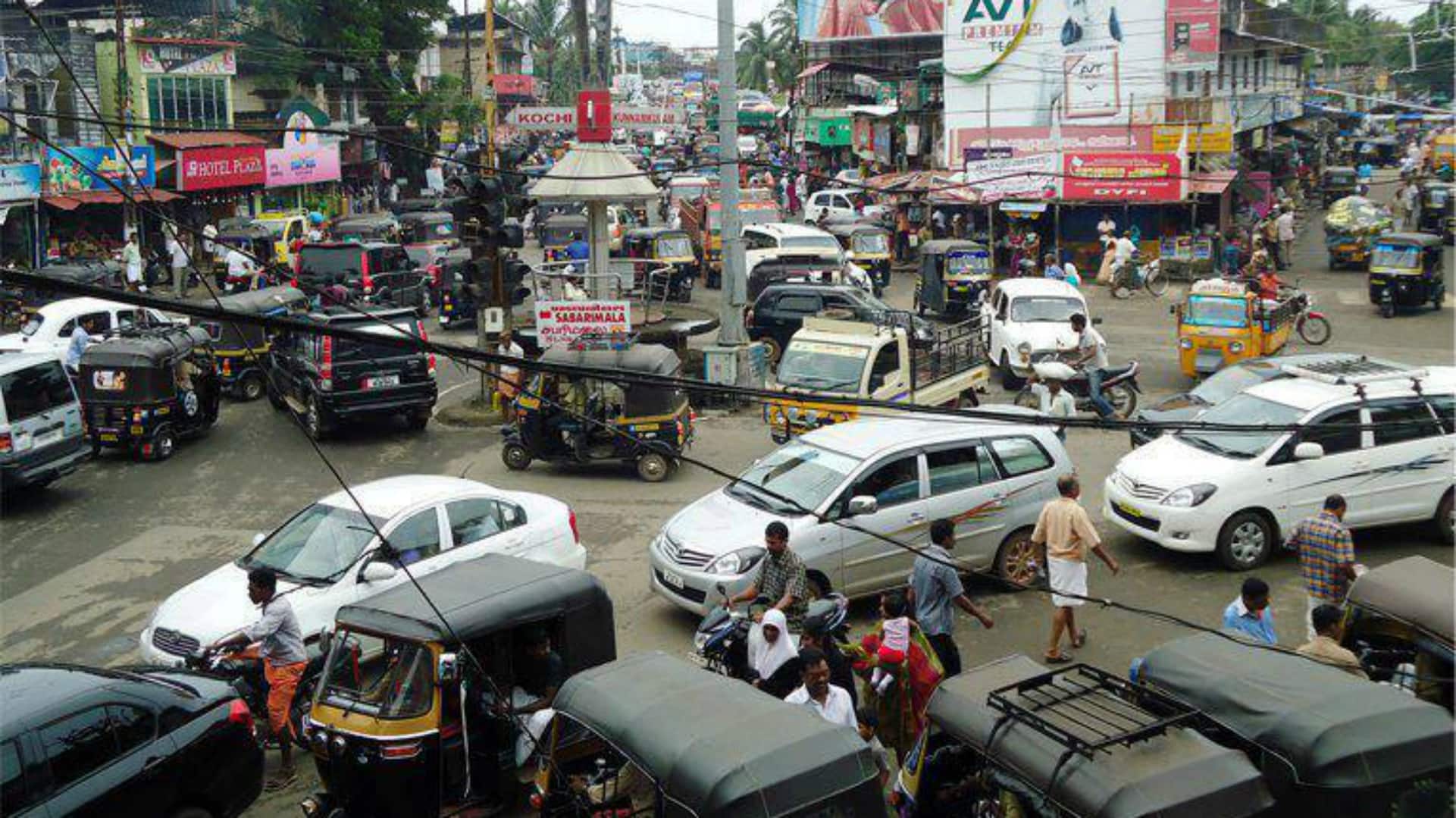
[/imgcenter]“I had planned to build a house and give better education to my children. I could not achieve both even after working 30 years in Dubai. I hope my son, who has been given a job by Moopen in his hospital at Dubai, will fulfill my dreams,” Bappu, who lives in a small house built by his father, told Firstpost.Bappu, who has studied up to Class VIII, migrated since he could not find any job in his home state. His father, who was a betel leaves trader, had struggled hard to bring up his 11 children. He sailed to Dubai hoping to support his father.“Life was very hard in Dubai then. We lived in a thatched hut at Bur Dubai. There was no latrine or toilet in the area. We defecated in the open. Water was very scarce those days. There was a small well in our area but the water was salty. We had to buy drinking water. We spent a major portion of our earning for water and food,” he said.Living conditions have changed vastly after the city transformed from a tiny fishing village to a global trading hub in the last four decades. But the lives of the majority of the expatriates in the UAE have not seen much change. Like Bappu, many Keralites are struggling hard.The situation is almost the same in other countries under the Gulf Cooperation Council (GCC). A recent survey conducted among expatriates by Sharjah-based Pravasi Bandhu Welfare Trust (PBWT) revealed that only five percent of the estimated 2.4 million Keralites in Gulf were financially comfortable.“Majority of the expats in West Asia today are blue collar workers, who do not earn enough for their subsistence. They borrow money to meet the rising needs of their families. Many of them land in jails for not repaying the loans. Majority of Keralites languishing in jails in the Gulf are punished in cheque bouncing cases,” says KV Shamsudheen, chairman of the PBWT.He told Firstpost that his survey had found that 95 percent of the Keralites in West Asia had no savings to take care of their life when they return to Kerala. Moreover, many continue to live illegally in many Gulf countries even after losing their jobs. They cannot go back without money as the families are not ready to change their lifestyles.Shamsudheen said many who returned to Kerala after losing their jobs, had come back after they found they were unwelcomed back home. Abdullah, who worked for 40 years in Dubai, is one such person. Two years ago, he returned to Kerala hoping to spend his remaining life with his family. But he returned a year later saying that the family had found him a burden.“They want my money not me. I will live in this country till I die. Let my family live happily,” said Abdullah, who works in a small cafeteria. However, his friends in Dubai did not allow him to die there. They took him home when he fell sick.Varghese, a heavy duty driver who is from Alappuzha, said he sleeps in his vehicle as the money he earns was not sufficient to meet the family’s needs. He cannot afford to rent or share a room because he had to support his own family as well as his parents and siblings.“My father wants me to meet the expenses of my unemployed brothers till they get job. My wife wants good dress and good food. She is not ready to cut down the expenditure. Often I have thought of ending my life by driving my truck into a hard object,” said Varghese.The impression in Kerala is that emigrants get lot of money. This is mainly because a large number of expats have built palatial houses and bought expensive cars. This was true in the beginning when the cost of living in most Gulf countries was less and remuneration high. Today, Dubai is in the list of top 10 most expensive cities in the world.Even though the cost of living in most countries in the GCC has gone up the wages have not risen commensurately. On the other hand many saw their income dipping in the wake of the recent global economic recession and the oil price decline. Shamsudheen said the businesses that suffered a huge loss due to these factors had resorted to wage cuts for their survival.“Many Keralites who lived with their families in the Gulf have sent back their wife and children to Kerala following the wage cut. Several others have sold their cars and cut down their expenditure. Still very few are ready to return,” he said.This is mainly because they can’t find a job in their home state. Noted historian MGS Narayanan said that the rise of the communist movement was the major reason for the rising unemployment in Kerala. He told Firstpost that investors had stayed away from the state considering communists as anti-capitalists.“The communists did not do anything to dispel these fears. They did this deliberately as they did not want capitalism to dominate the society. Even the successive communist governments made no attempt to attract investments to the state,” he said.The historian said that Kerala would have become a leading state if it had built on the achievements the state made in the education sector. The young men passing out from schools and colleges had no option other than looking for greener pastures outside. This has forced a sizeable number of Keralites to live away from their homes, wives, children and parents.Part 1: Opportunity, discovery and how Kerala embraced migration

Off-centre | Vande Mataram: The mother that we adore
Of nature, culture and alcohol: A glimpse into Sikkim’s age-old brewing traditions
Revisiting the Bollywood dream sequence: A tour of the world, and within
Trams, part of Kolkata heritage, are little more than a nostalgia ride today
Online exhibition archives oral histories of the Kolis, degradation of Mumbai's coastal ecology