Ankita Shah, one of the founders of The Poetry Club, speaks about the importance of poetry collectives and what writers can gain from being part of them
Beginning 22 June, Firstpost embarks on an 8 week-long journey of poetry. Featuring poets who write in English and Hindi, this project is meant to both showcase their art as well as their individual creative processes. These poets write for the page and for the stage, and the themes of their works range from love and friendships to how power-hungry human society can be. Their verses, expressed in the 'spoken word' format, are brought to life by visuals and supported by music.Presenting — The Firstpost Poetry Project.This is the fourth poet featured in this series.***
Ankita Shah | 25"What according to you is the mark of a good poem?""Absolute, absolute honesty."Ankita Shah is one of the most significant young voices of Mumbai's poetry scene. She co-founded The Poetry Club in 2013 with Trupthi Shetty, but she began taking an interest in poetry many years before this. "My school teacher, who inculcated in me empathy for people and the environment, would nudge us to express ourselves through art. She made me write my first ever poem about endangered Olive Ridley turtles when I was 12 years old."Ankita and Trupthi began The Poetry Club while they were studying to become chartered accountants. They realised they both wrote poetry and wanted to find others who shared their interests. "So there could be an exchange of ideas and stories, and we could nurture a sense of community and belonging, all along making sure we were creating a space for more direct and honest criticism and learning," Ankita explains.Setting up the club and running it gave her the chance to interact with people who wrote in several languages, to discover stories, narratives and styles different from her own, and to have conversations that shaped both her thinking and craft. "Everyone who has ever attended our sessions led us into a wild, untouched forest, where creatures we’d never seen before existed. Of course, I mean poems when I say 'creatures'. To write better, you need to read better, allow yourself to wander in this wild forest."Ankita says that the collective is made of so many distinct people and works, that eventually, the conversations transcended the collective to become something more. "I’d say communities like The Poetry Club are initiators of new ideas. But they also have an important role to play in creating a safe space. Because of the power they hold, it’s their responsibility to also represent the voice of the individuals that make them, in every way possible," she says.Ankita believes that performing a poem adds a different dimension to it. "As a craft, poetry has so much to do with sound — the sounds of the words you choose to write or choose to make a part of your poem, the metre, the rhythm that your poem carries, and of course, the whole tone of your poem... The very act of writing the poem is a very personal exercise that the poet engages in. To take that whole process and show it to an audience in the way it was supposed to be is extremely crucial. It adds a lot of value to how poetry is valued and experienced."With every poem, Ankita hopes that she can make the reader feel the way she did when she was putting her pen to the paper. "If someone reads or hears my poems, I want them to like the process of unlayering it. What the process of writing evokes in me, is what I want it to evoke in the reader. I cannot exactly point out what those emotions are; it involves a quiver, that’s all I can say."
A(f)fair WarningIOn a blue-skied, moonlit, summer eveningof Delhi,inside a warm, multi-hued shopdown the road of Paharganj,I set my heart on a peacock-colored shawl.I bargained too littleand beamed too much,I was sold a
pashminathat wasn't.
IIYou are Daryaganj,in camaraderie,with Wilde and Manto,Kafka and Premchand.
You are Ghalib’s final wagerat Ballimaran - which he has so since woneach time Urdu slips into verses of another tongue.
You are Agrasen's baoliburning bare and emptyquenching its thirstoff conversations of loversit knows will leave.
You, the plebeian Indian Coffee Houseatop the princely expanse of Connaught Placethat makes delectable omelette toastand debates on politics.
You are the pashmina and the momosof Paharganj’s firangi galli -overpriced and untrue to their promise,yet warm with familiarity.
You are the Dilliof weekend vanishing actsfrom wintry literature festivalsand summer training
The Dilli, I’ve been warnedI won’t love as muchif I startedto live in it.
VultureDo you remember the poemwhere house was a metaphor to mean youand I, was determined to burn it?
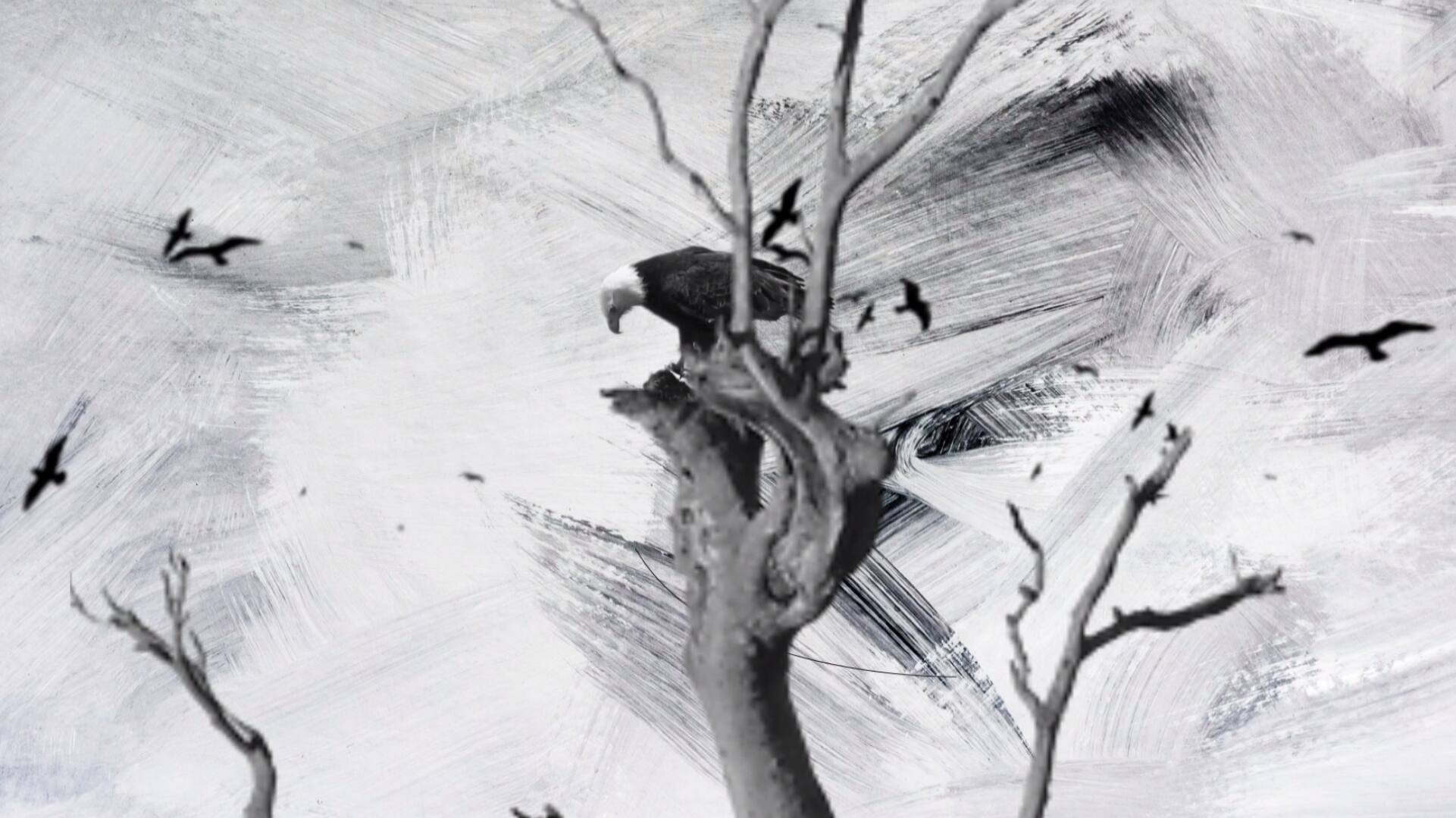
That poem, when it set out, was a sunbird,yellow-bellied, purple-rumped,upside down on a flower, hungwith a mouth that yearned to swallow the sky.But on the page, when it perched, it preyedfor a cold and bitter July.It wanted words thinned outto the last layer of their skin, holding withina meaning fermented to putrid perfection.[imgcenter]![vulture scrolling]() [/imgcenter]Do you remember that poem?The anatomy of our past,dismembered by a birdwith a taste for decay?That poem is not over.That vulture still shows up on the page.When I set out to draw springI spill outside the circles and shapesof who we are,into what we’ve been.The words I know are always becomingand the poems,they come from history.
[/imgcenter]Do you remember that poem?The anatomy of our past,dismembered by a birdwith a taste for decay?That poem is not over.That vulture still shows up on the page.When I set out to draw springI spill outside the circles and shapesof who we are,into what we’ve been.The words I know are always becomingand the poems,they come from history.
The sunbird does not set on the page yet.I’ve heard,we learn words long after we’ve felt what they mean.***Read about the first, second and third poet featured in this series

More from Long Reads



 [/imgcenter]Do you remember that poem?The anatomy of our past,dismembered by a birdwith a taste for decay?That poem is not over.That vulture still shows up on the page.When I set out to draw springI spill outside the circles and shapesof who we are,into what we’ve been.The words I know are always becomingand the poems,they come from history.