
Advertisement


Sections
Dalit shahirs of Maharashtra: Prakash Patankar's songs against caste
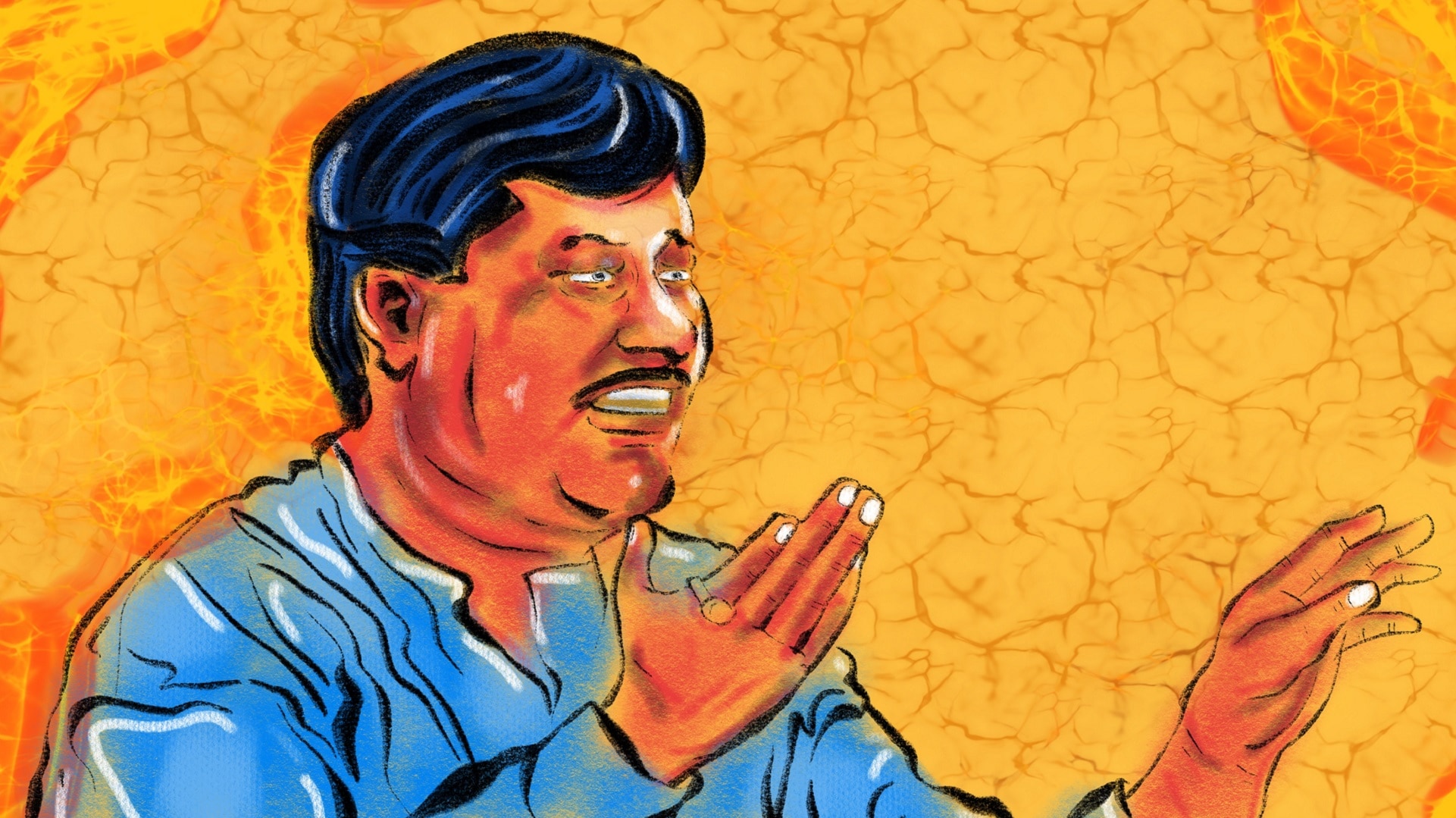
“Song is not a means of livelihood for me [sic]. It is a weapon to bring awareness in society,” Prakash Patankar said

An introduction: Maharashtra’s tradition of ‘shahiri’ is several centuries old. In the last few decades of the 18th century, under the influence of Mahatma Phule’s Satyashodhak Samaj, it was transformed into a musical weapon of the masses, against the caste system. By the 1930s, the ‘Satyashodhaki jalsa’ was in decline, but a powerful new force had emerged in its place: ‘Ambedkari jalsa’. Ambedkari jalsa represented the teachings and philosophy of Dr BR Ambedkar in oral form, accompanied by songs. Over a journey that is close to completing a century, many Ambedkarite shahirs have helped hone shahiri as an anti-caste tool. This series on Maharashtra’s shahirs explores the lives and work of 15 greats.This is part seven of the series.— Art by Satwick Gade***The political economy of and around music suggests that it isn’t ‘innocent’. When it emerges from a dominant social location (read: Brahminical agencies) then, music doesn’t remain naïve. It takes on a negative connotation for the people who are deprived of their own music – the sound of their experiences – in the national and public imagination. The process is one where their music is both appropriated by Brahminical classes, and rejected once it has been commodified to suit their aesthetics. This is done with a view to maintaining the domination of the Brahminical castes through music.Does popular music succeed in capturing the imagination, lifestyle, worldview, aesthetics, perceptions and aspirations of the Dalit-bahujans? In India, ‘popular’ music did not necessarily mean the music of the Dalits, who were historically prohibited from listening to the sound of mantras. Hence, the Ambedkarite shahiri marked not just the beginning of anti-caste music in India, it also was a means of freeing music from hegemonic Brahminical structures. (Bear in mind that these structures produced music and also dictated what music is and should be, through literature.)It is in this context that understanding the legacy of Prakash Patankar’s music becomes even more important.Born into a family of shahirs, Pakash Patankar’s life illustrates how music that is against irrationality and prejudice, when projected through those that are historically exploited, becomes the epitome of change.Mashalwalya N ShivrajaMashal Pudhe DavKalya Ratitun Jayach Aahe rrLai dur Majhya Bhimach Gao[imgcenter]![]() [/imgcenter](Oh, N Shivraja, a torch bearerShow the torch furtherWe have to walk through dark nightFar is the home of my Bhima)This song by Wamandada Kardak was one Patankar had heard from the time he was in the cradle. His grandmother would sing it to the infant every night, while putting him to bed. Patankar studied till Class Four, then began learning classical music from the age of 15. Shahiri in Maharashtra was already decades old by that time. Still, Ambedkar’s anti-caste message had to be musicalised; it had to be sung – again and again. The music, however, was never devoid of its philosophy.Six days after the death of his father Nagorao Patankar in 1972, Prakash performed in his stead at a shahiri programme in Nagpur. As acclaim poured in for the son who had taken over the father’s mantle, Pakash said, “Song is not a means of livelihood for me [sic]. It is a weapon to bring awareness in society.”Like other shahirs, Prakash Patankar also witnessed the ups and downs within the anti-caste movement. He illustrated the struggles of the Ambedkarites during the Namantar Movement in this song:Ghoshana Tee Namantarachi Ashi Keli GarjuneeUddhar Kartya Bapach Nav, Deel Tithe NonduneeShurviranni Bhimrayach, Dakhwile Panee(Thus, the announcement of Namantar was proclaimedThe name of father, saviour of lives, engraved out thereWarriors have shown the might of Bhimraya)Patankar’s music highlighted what Jacques Attali had articulated: “The monologue of standardised, stereotyped music accompanies and hems in a daily life in which, in reality, no one has the right to speak any more. Except those among the exploited who can still use their music to shout their suffering, their dreams of the absolute, and freedom.”As Prakah Patankar became renowned through Maharashtra for his shahiri, the world around him was changing too. However, the centrality of his music remained Ambedkar and his movement. The legacy of shahiri which Prakash Patankar had been bequeathed by his father was furthered in his own lifetime. The son proved what the father had as well – that shahiri, even if not ‘popular’ was essential for society to grow.***Also read parts one, two, three, four, five and six of this series.Yogesh Maitreya is a poet, translator and founder of Panther's Paw Publication, an anti-caste publishing house. He is pursuing a PhD at the Tata Institute of Social Sciences, Mumbai.
[/imgcenter](Oh, N Shivraja, a torch bearerShow the torch furtherWe have to walk through dark nightFar is the home of my Bhima)This song by Wamandada Kardak was one Patankar had heard from the time he was in the cradle. His grandmother would sing it to the infant every night, while putting him to bed. Patankar studied till Class Four, then began learning classical music from the age of 15. Shahiri in Maharashtra was already decades old by that time. Still, Ambedkar’s anti-caste message had to be musicalised; it had to be sung – again and again. The music, however, was never devoid of its philosophy.Six days after the death of his father Nagorao Patankar in 1972, Prakash performed in his stead at a shahiri programme in Nagpur. As acclaim poured in for the son who had taken over the father’s mantle, Pakash said, “Song is not a means of livelihood for me [sic]. It is a weapon to bring awareness in society.”Like other shahirs, Prakash Patankar also witnessed the ups and downs within the anti-caste movement. He illustrated the struggles of the Ambedkarites during the Namantar Movement in this song:Ghoshana Tee Namantarachi Ashi Keli GarjuneeUddhar Kartya Bapach Nav, Deel Tithe NonduneeShurviranni Bhimrayach, Dakhwile Panee(Thus, the announcement of Namantar was proclaimedThe name of father, saviour of lives, engraved out thereWarriors have shown the might of Bhimraya)Patankar’s music highlighted what Jacques Attali had articulated: “The monologue of standardised, stereotyped music accompanies and hems in a daily life in which, in reality, no one has the right to speak any more. Except those among the exploited who can still use their music to shout their suffering, their dreams of the absolute, and freedom.”As Prakah Patankar became renowned through Maharashtra for his shahiri, the world around him was changing too. However, the centrality of his music remained Ambedkar and his movement. The legacy of shahiri which Prakash Patankar had been bequeathed by his father was furthered in his own lifetime. The son proved what the father had as well – that shahiri, even if not ‘popular’ was essential for society to grow.***Also read parts one, two, three, four, five and six of this series.Yogesh Maitreya is a poet, translator and founder of Panther's Paw Publication, an anti-caste publishing house. He is pursuing a PhD at the Tata Institute of Social Sciences, Mumbai.
 [/imgcenter](Oh, N Shivraja, a torch bearerShow the torch furtherWe have to walk through dark nightFar is the home of my Bhima)This song by Wamandada Kardak was one Patankar had heard from the time he was in the cradle. His grandmother would sing it to the infant every night, while putting him to bed. Patankar studied till Class Four, then began learning classical music from the age of 15. Shahiri in Maharashtra was already decades old by that time. Still, Ambedkar’s anti-caste message had to be musicalised; it had to be sung – again and again. The music, however, was never devoid of its philosophy.Six days after the death of his father Nagorao Patankar in 1972, Prakash performed in his stead at a shahiri programme in Nagpur. As acclaim poured in for the son who had taken over the father’s mantle, Pakash said, “Song is not a means of livelihood for me [sic]. It is a weapon to bring awareness in society.”Like other shahirs, Prakash Patankar also witnessed the ups and downs within the anti-caste movement. He illustrated the struggles of the Ambedkarites during the Namantar Movement in this song:Ghoshana Tee Namantarachi Ashi Keli GarjuneeUddhar Kartya Bapach Nav, Deel Tithe NonduneeShurviranni Bhimrayach, Dakhwile Panee(Thus, the announcement of Namantar was proclaimedThe name of father, saviour of lives, engraved out thereWarriors have shown the might of Bhimraya)
First Published:Jul 10, 2018, 14:11:17 IST
Advertisement
Advertisement

Off-centre | Vande Mataram: The mother that we adore
A meditation on the meaning of India as the country celebrates 77th independence Day
Of nature, culture and alcohol: A glimpse into Sikkim’s age-old brewing traditions
Most rural households across Sikkim have their own breweries, which are an integral part of the local culture.
Revisiting the Bollywood dream sequence: A tour of the world, and within
The Bollywood dream sequence helped stretch my imagination in a way that I believed the whole world was within me. This self-sufficiency helped me get through the physical setting I was in, from awkward social gatherings to the confines of my home during the pandemic.
Trams, part of Kolkata heritage, are little more than a nostalgia ride today
In recent years, hit by natural disasters and official neglect, the city’s tram system has become little more than a nostalgia ride, its passengers more often looking for a lark than an efficient trip home.
Online exhibition archives oral histories of the Kolis, degradation of Mumbai's coastal ecology
The online exhibition Through the Eyes of the Kolis uses their photos to highlights how Mumbai's ecology has been disturbed and how the fishermen community are adapting.
Advertisement
Advertisement