
Advertisement


Sections
Dalit shahirs of Maharashtra: B Kashinand's verses of optimism
Dalit shahir B Kashinand was optimistic, determined and a dreamer of the Prabuddha Bharath (Enlightened Bharath)

The power of this music lies in its ability to not just communicate with the listener, but to converse with them too.B Kashinand belongs to that generation of artists whose ideological inspiration and influence was Ambedkar’s thoughts, which was deeply embedded in their music, thereby shaping the country’s discourse.Though he was originally from Amaravati, he came to Nagpur with his mother when he was a child. In this city, Ambedkar's movement had a profound impact on him and convinced his mother that education has the power to change their lives. When he was seven or eight, he learnt the Marathi alphabet and did not receive any schooling beyond it, in terms of learning in the traditional sense. He lived in Pandharabodi, Nagpur until his death in 2014.He spent a substantial amount of time in the presence of shahir Nagorao Patankar, who was also from Nagpur. Patankar’s company would leave an impact on the songs and poems he would go on to write. Patankar also sang some of the songs which he had written.[imgcenter]
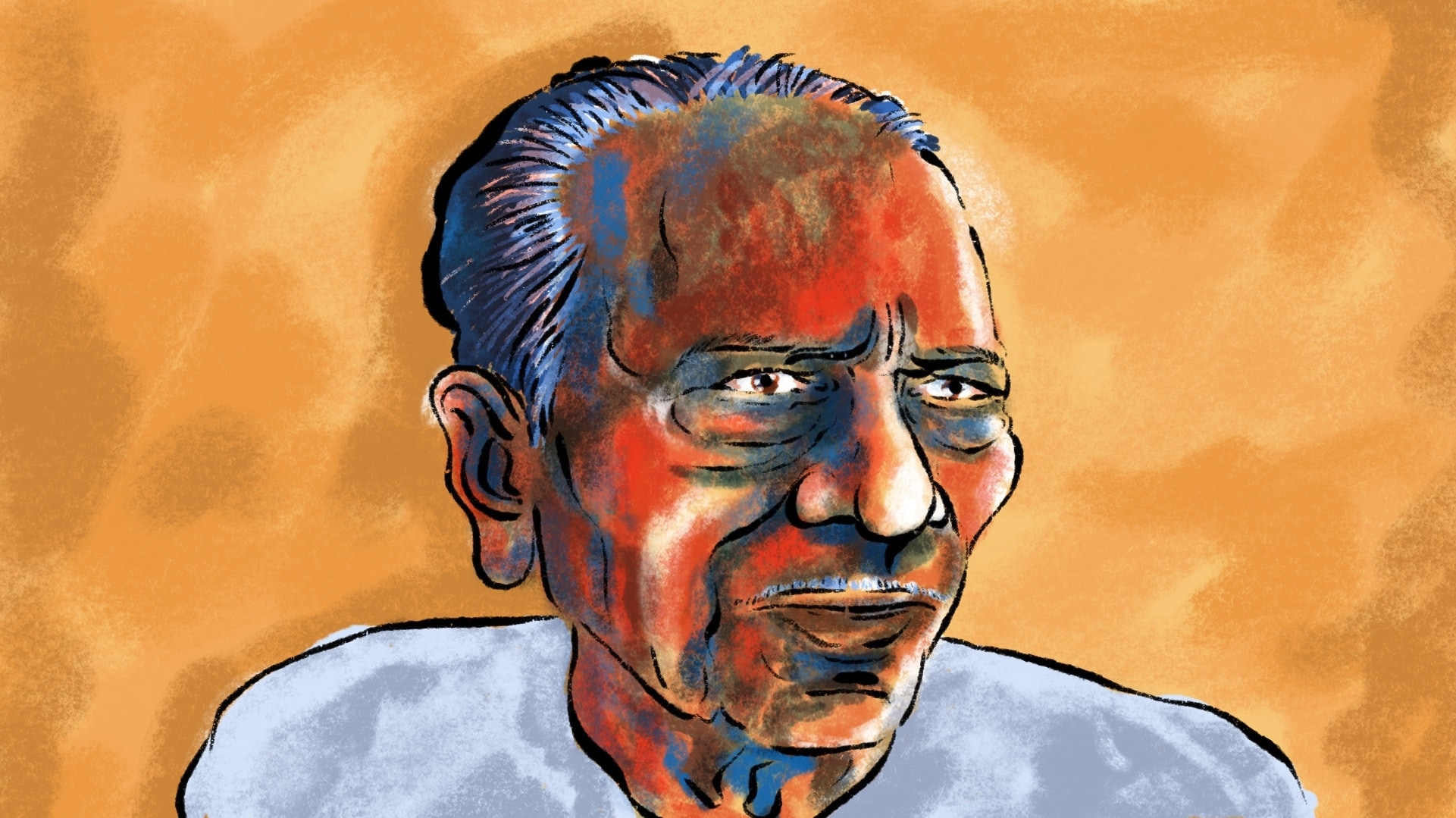 [/imgcenter]But B Kashinand began singing only when he had formed the Siddharth Gayan Party in 1956-57, the era when Buddhism was revived by Dr Babasaheb Ambedkar, which was also the period that observed his demise. Both of these events had a tremendous impact on the lives Dalits would go on to lead, and music did not remain immune to these developments.This period marked a transition in the discourse of shahiri. There was a time when Dalits were denied the status of human beings in the eyes of society; now they were singing and contributing to enriching the experience of life, with egalitarian principles at the core of their art. The ‘distribution of Sensibles’ through Ambedkarite shahiri was not merely about self-evident facts about Dalit lives but also truths which are common to oppressed peoples across the world: The quest for a world where everyone will be treated equally, where respect is based on compassion, where strong egalitarian philosophies reign supreme.At a time when technology was still inaccessible to Dalits and was hegemonised by the Brahminical class, B Kashinand’s songs were recorded by cassette companies such as HMV, TIPS, and Kashmira among others. Stalwart shahirs and poets like Wamandada Kardak and Suresh Bhat were also very impressed with his ability to effectively marry lyrics with tune.
He did not focus on victimhood as the subject of his songs.He was optimistic, determined and a dreamer of the Prabuddha Bharat (Enlightened Bharat). His songs aptly suggest how music in hands of the oppressed always constructs society in a humane way. He writes:“Kay gotos hey majhya mitra, lacharichi hee radaki garhaniRakt bhimache angat aahe, lath maru kadhu tithe paneeNahi nahi patnar nahi, ashi mandharni tu rahiTu ashya did damdichya payi, majha samaj viknaar nahi(What are you singing, my friend? The tearful songs of hopelessnessWe are descendants of Bhima, wherever we dug we’ll find waterNo, no, I do not agree with your selfish wayYou will not sell my community for the bribe of some money)”
Ambedkar's vision of a 'casteless society' and the compassion, rationality and wisdom of the Buddha remain alive in B Kashinand's words, even after his death. Though he wrote many songs in his lifetime, he did not occupy a dominant space in the public imagination. He remained a shahir who worked behind-the-scenes, persisting in what he had committed to do: writing and giving a voice to those values and beliefs which were not considered worthy of writing down.***The version of B Kashinand's 'Petata Petata Bolali Chita' featured in this piece has been sung by Virendra Border.Also read parts one, two, three, four, five, six, seven and eight of this series.Yogesh Maitreya is a poet, translator and founder of Panther's Paw Publication, an anti-caste publishing house. He is pursuing a PhD at the Tata Institute of Social Sciences, Mumbai.
First Published:Aug 21, 2018, 17:25:59 IST
Advertisement
Advertisement

Off-centre | Vande Mataram: The mother that we adore
A meditation on the meaning of India as the country celebrates 77th independence Day
Of nature, culture and alcohol: A glimpse into Sikkim’s age-old brewing traditions
Most rural households across Sikkim have their own breweries, which are an integral part of the local culture.
Revisiting the Bollywood dream sequence: A tour of the world, and within
The Bollywood dream sequence helped stretch my imagination in a way that I believed the whole world was within me. This self-sufficiency helped me get through the physical setting I was in, from awkward social gatherings to the confines of my home during the pandemic.
Trams, part of Kolkata heritage, are little more than a nostalgia ride today
In recent years, hit by natural disasters and official neglect, the city’s tram system has become little more than a nostalgia ride, its passengers more often looking for a lark than an efficient trip home.
Online exhibition archives oral histories of the Kolis, degradation of Mumbai's coastal ecology
The online exhibition Through the Eyes of the Kolis uses their photos to highlights how Mumbai's ecology has been disturbed and how the fishermen community are adapting.
Advertisement
Advertisement