
Advertisement


Sections
Dalit shahirs of Maharashtra: Arjun Hari Bhalerao's perseverance amid adversity
Despite creating a body of influential work and being one of the Dalit shahirs who took Ambedkar and his ideas to some of the most marginalised people in villages, Arjun Hari Bhalerao's work is still not known to many today

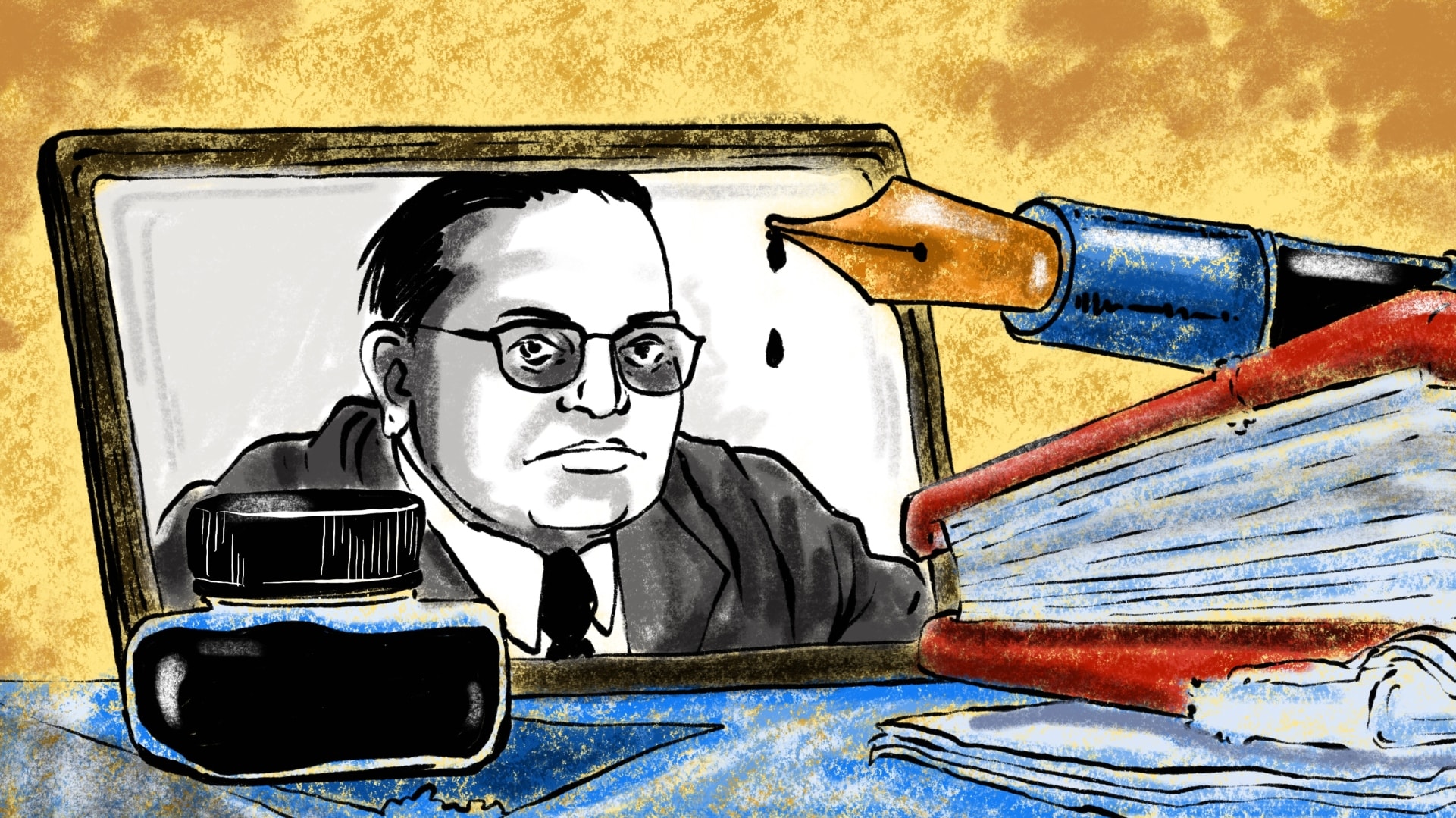 [/imgcenter]But it was only in 1927 that he realised the jalsa's potential to bring about change in the society. In the same year, he was selected for a teacher’s training program in Pune, and the following year, he was appointed as a teacher in the village of Kasabe Tadawale. This was at the peak of Ambedkar’s movement. In the Tadwale village, a newspaper called Ambedkar’s Janata was being read dedicatedly, because it spoke about the suffering and issues of Dalits — it became their voice. Arjun Hari Bhalerao too was influenced by it, and he started writing as a result. Though he began by writing songs, he realised that the jalsa is a much more effective medium to disseminate Babasaheb Ambedkar's words.Kasabe Tadwale was the village of many tamasha artists. However, many of them had to move out of the village in order to survive and take up any sort of job that came their way. Hunger was thus an impediment to achieving an anti-caste vision. Bhalerao perhaps realised this. The formation of an Ambedkarite jalsa wasn’t an easy task. He had to first convince artists about the ideas he was intending to perform, and then he had to make sure that practice sessions would be regular. Despite the lack of adequate funds and costumes for performances, Bhalerao was determined to form a jalsa that would spread Ambedkar’s words to the people. But the obstacles he faced weren't just material ones. In 1947, he and members of his jalsa had a close brush with death during a performance in the district of Latur. When Brahmins and Marathas in the region found out that the jalsa was going to be performed, they were ready to attack those who were directly associated with it and those supported it.In spite of these difficulties, he and his jalsa continued to perform. He explored forms within the jalsa, such as 'wagg', 'gaulan' and farce. Sample one of the earliest 'kawans' he wrote:Mahne Arjuna gulamgirichi! Hoti bedi annyachi!Shikvun soda bal! Purana gela tumcha kaal! (Arjuna talks about slavery! Of the shackles of injustice!Educate your child ! your past destroyed by Puranas!)It must be noted that the era when he performed with his jalsa was a time of radical social and cultural change among Dalits — a period when talking about caste injustice and attempts to promote education were nothing short of revolutionary.Ekmekanchya warkhali! Kiti varsh vaya geli!Eki nahi tumchi jhali! Jhali re seema!(Living as inferior and superior! How many years have been destroyed!We did not unite! This is the limit now)
Despite creating an influential body of work and being one of the shahir-cum-jalsakars who took Ambedkar and his ideas to the most marginalised people across villages, his work is still not known to many today. Dyanewshwar Dhaware, an author of Ambedakari Jalsa Tadwalkarancha succinctly explains the reason behind this. “From the period of Maharaki before the 1940s to the period after the 1960s, social life had been completely changed. Old occupations were abandoned. This community [Dalits], which used to work in the jalsa, was trying to adjust and adapt to the new means of livelihood. During these 20 long years, people who worked in the jalsa itself had begun to forget the times of the jalsa.”As Babasaheb Ambedkar once suggested, even ideas die if there is no one to spread them. Arjun Hari Bhalerao died on 17 February 1992. If one examines the conditions he grew up and lived in, the music he created and the anti-caste movement he led, it can be said without a doubt that he will always remain a hero, regardless of the extent of his reach. He used music not just to entertain, but also to educate.***Also read parts one, two, three, four, five, six, seven, eight and nine of this series.Yogesh Maitreya is a poet, translator and founder of Panther's Paw Publication, an anti-caste publishing house. He is pursuing a PhD at the Tata Institute of Social Sciences, Mumbai.
First Published:Sep 21, 2018, 19:12:27 IST
Advertisement
Advertisement

Off-centre | Vande Mataram: The mother that we adore
A meditation on the meaning of India as the country celebrates 77th independence Day
Of nature, culture and alcohol: A glimpse into Sikkim’s age-old brewing traditions
Most rural households across Sikkim have their own breweries, which are an integral part of the local culture.
Revisiting the Bollywood dream sequence: A tour of the world, and within
The Bollywood dream sequence helped stretch my imagination in a way that I believed the whole world was within me. This self-sufficiency helped me get through the physical setting I was in, from awkward social gatherings to the confines of my home during the pandemic.
Trams, part of Kolkata heritage, are little more than a nostalgia ride today
In recent years, hit by natural disasters and official neglect, the city’s tram system has become little more than a nostalgia ride, its passengers more often looking for a lark than an efficient trip home.
Online exhibition archives oral histories of the Kolis, degradation of Mumbai's coastal ecology
The online exhibition Through the Eyes of the Kolis uses their photos to highlights how Mumbai's ecology has been disturbed and how the fishermen community are adapting.
Advertisement
Advertisement