


Dalit shahirs of Maharashtra: Anna Bhau Sathe's powerful songs
Anna Bhau Sathe voiced the pain of an entire generation of untouchable workers, who migrated from the villages to cities in search of a life of dignity

An introduction: Maharashtra’s tradition of ‘shahiri’ is several centuries old. In the last few decades of the 18th century, under the influence of Mahatma Phule’s Satyashodhak Samaj, it was transformed into a musical weapon of the masses, against the caste system. By the 1930s, the ‘Satyashodhaki jalsa’ was in decline, but a powerful new force had emerged in its place: ‘Ambedkari jalsa’. Ambedkari jalsa represented the teachings and philosophy of Dr BR Ambedkar in oral form, accompanied by songs. Over a journey that is close to completing a century, many Ambedkarite shahirs have helped hone shahiri as an anti-caste tool. This series on Maharashtra’s shahirs explores the lives and work of 15 greats.
This is part two of the series.
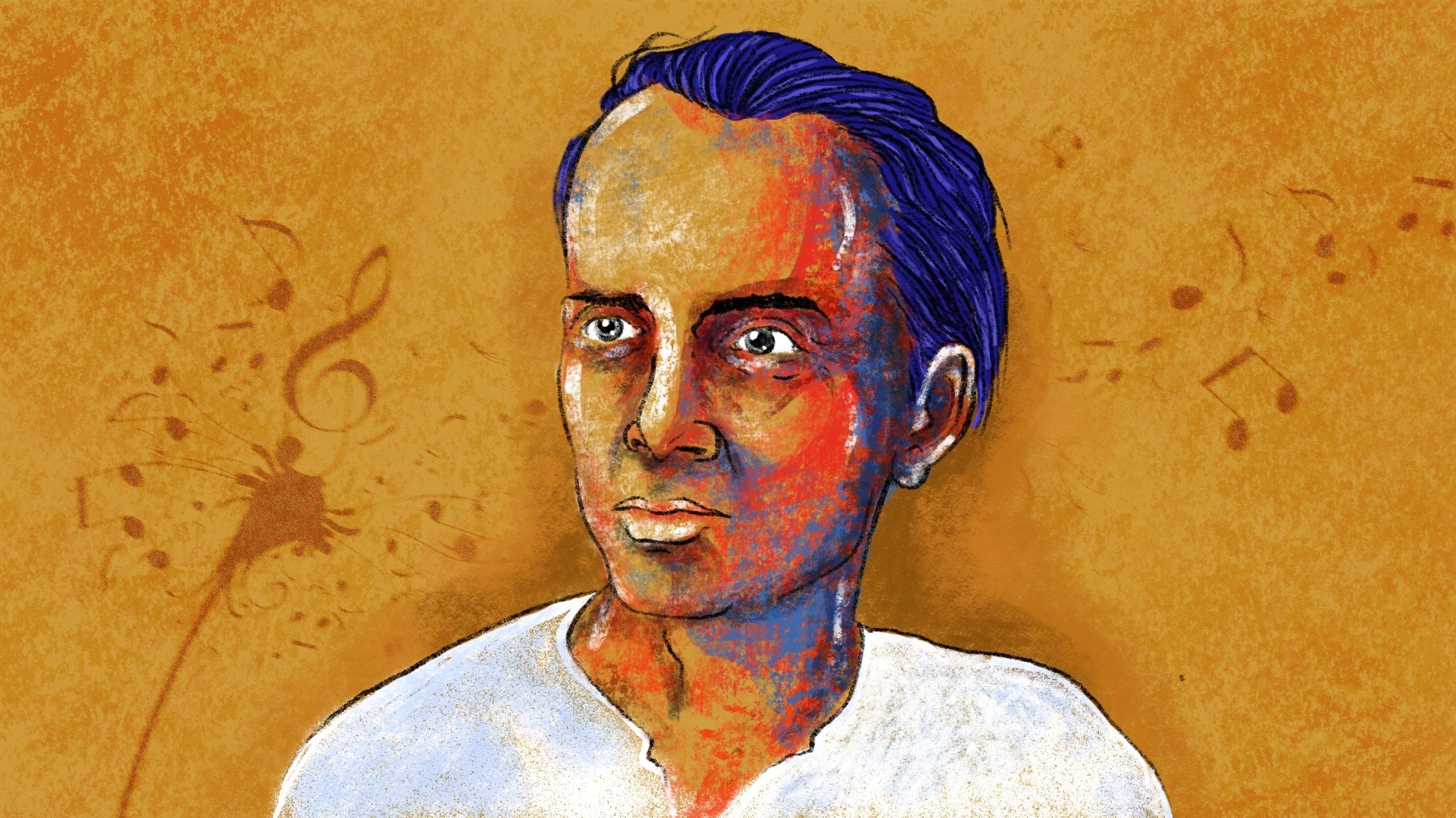
— Art by Satwick Gade
In a time when the masses in Maharashtra could not understand the world through the written word, music, as an articulation of pain and ‘anticipated’ and felt liberation, became the lens through which they understood the world and the oppression within it.Not just this, music also transformed into an aspect of significance for them. Lokshahir Anna Bhau Sathe's contribution to conscientising people — through his unparalleled shahiri, his songs, and of course, his vast body of work — is immense.He was born in 1920 into the Matang caste (also known as Mang). Years later, even when his parents migrated to Bombay in search of better prospects, Anna Bhau was still witness to the brutality of caste and capitalism, even in urbanised city spaces. The harsh world of Bombay turned into a classroom where he could learn, and it shaped the music he would later create. As someone who was barely educated but possessed vast amounts of talent, music for Anna Bhau became not only a tool to ‘understand’ but also to assert, to fight against caste and capitalism. He was probably the first shahir to expose the source of oppression in Mumbai, which can be found in its posh localities. In ‘Mumbaichi Lawani’ he writes:"Mumbait Unchawari! Malabar Hills, IndrapuriKuberachi Vasti Tithe Sukh Bhogati! Paralat Rahnare!Ratnndiwas Rabnare! Milel Te Khaun Gham Galati!Foras Road Teen Batti! Golpithi NakyawartiSharir Vikun Kitiaik Pott Bharati!(In Mumbai, at the top, there is Malabar Hills, IndrapuriThere is the colony of Kuber, sunk in bliss; those live in Parelwork hard throughout day and night, eat whatever they get and sweat it out;at Foras road, Teen Batti, at the corner of Golpithahow many bodies are sold and surviving)"But his most powerful song was the chakkad called 'Majhi Maina Gawawar Rahili' (My Maina has been left behind in the village) which was, more or less, written during the Samyukt Maharashtra movement (United Maharashtra) that influenced a majority of the people, convincing them to see Mumbai as an integral part of Maharashtra.
 [/imgcenter]Untouchable workers moved to the city of Bombay in vast numbers to live a more dignified life, and most of them participated in Ambedkar’s anti-caste movement. Anna Bhau, on the other hand, remained a communist for a long period of his life. Nevertheless, he always pledged an obscure allegiance to Ambedkar, later making it public when he dedicated his most famous work — his magnum opus Fakira — to Ambedkar.There was a reason for this. According to Sharad Patil, a noted scholar of the Marx-Phule-Ambedkar schools of thought, “Fakira is the best novel by Anna Bhau Sathe. To show that the cactus-like boundary line between the colonies of Mahar-Mangs (untouchables) including Fakira, and Kulkarni-Patil (Savarnas) was that of the class system instead of caste system, is the responsibility imposed on this communist Mang writer. During the time of Fakira, certainly, the caste system was much stronger than the class system in villages in Maharashtra. But, since it was imposed on the mind of Anna Bhau that the suffering of an untouchable peasant is equal to suffering of the touchable peasant in terms of its class, unsurprisingly, his talent was unable to trace the source of caste-class sufferings.”Despite him witnessing the cunning of Brahmin communists and being abandoned by them in the last years of his life, he continued to write, and more prominently, sing.
He was a poet, novelist, tamasgir, and shahir. But most of all, Anna Bhau was the person who provided the music that would heal the wounds of untouchable workers.Many decades have passed since his death, but his chakkad 'Majhi Maina Gawawar Rahili' still moves people deeply, whenever it is played. It is considered a classic in the history of shahiri in Maharashtra. Through this song, he voiced the pain of an entire generation of untouchable workers, who migrated from the villages to cities in search of a life of dignity.***Note from the writer: The song presented with this article was originally written and performed by Lokshahir Anna Bhau Sathe. As this song isn't available in the audio format, it has been composed and performed by Charan Jadhav for the purpose of this series. This is an acknowledgment of his contribution.Yogesh Maitreya is a poet, translator and founder of Panther's Paw Publication, an anti-caste publishing house. He is pursuing a PhD at the Tata Institute of Social Sciences, Mumbai. Read part one, three, four and five of the series.

Off-centre | Vande Mataram: The mother that we adore
Of nature, culture and alcohol: A glimpse into Sikkim’s age-old brewing traditions
Revisiting the Bollywood dream sequence: A tour of the world, and within
Trams, part of Kolkata heritage, are little more than a nostalgia ride today
Online exhibition archives oral histories of the Kolis, degradation of Mumbai's coastal ecology