
Advertisement


Sections
Dakhani poetry: Activity abound, expression in decline
Gautam Pemmaraju, Mumbai-based filmmaker, originally from Hyderabad, set out to document Dakhani humour and satire through its decades-old culture of performance poetry.

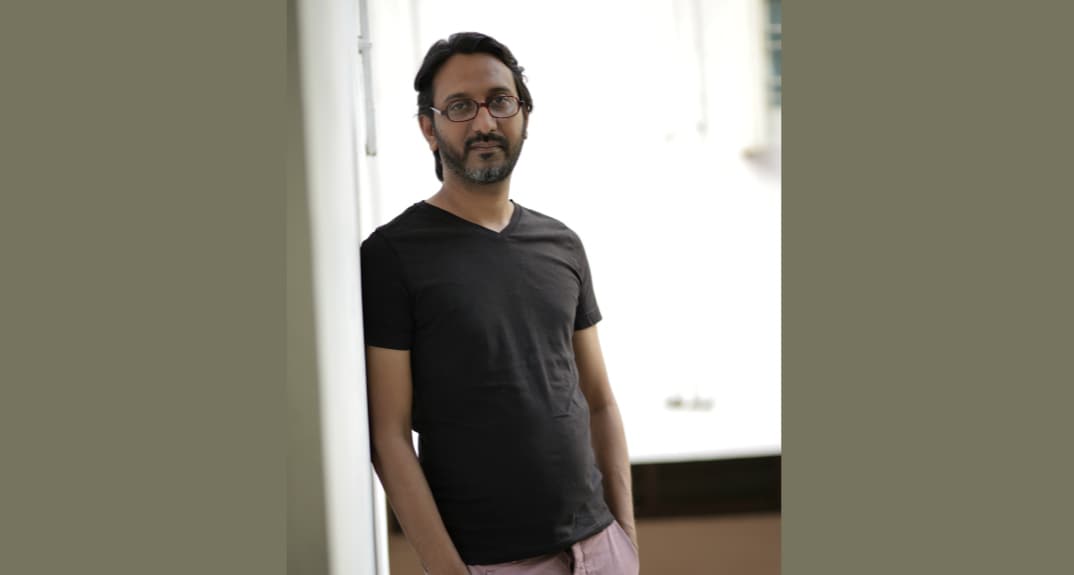 Gautam Pemmaraju, Mumbai-based filmmaker, originally from Hyderabad, set out to document Dakhani humour and satire through its decades-old culture of performance poetry. Pemmaraju began this project, Kya hai ki, Kya Nai ki: A Tongue Untied to capture the essence of mazhaiya shayari (satirical poetry) in 2011 with funding from the India Foundation for the Arts. Over the years, he realised that there was a critical question to be asked through his film: What is Dakhani? Through interviews with poets, city historians and contemporary culture, Pemmaraju paints a vivid picture of an art-form that is on the decline, but also highlights the ways in which it is being kept alive. “Many people ask, is that ‘Hyderabadi language?’ So in the popular imagination, it is the 'Hyderabadi language' that Mehmood is famous for through his comedy and of course through Naseeruddin Shah and others... but Dakhani is so much more than just broad caricatures,” says Pemmaraju.The language derived from 'khadi boli' emerged in the Deccan region and Bollywood's interpretation of the language betrays the real essence of the language. “Dakhani is the vernacular of the Deccan which was born out of an encounter between people residing there and people who migrated there,” says Pemmaraju.Imagine a language that came into being as a result of an influx of Persians, Turks and in 1724, the Mughals and the Kayasthas coming to Hyderabad, that’s precisely what Dakhani is — the sound of two cultures merging. As Biklees I Latif writes in Forgotten, “This interaction and mingling amongst those of different regions and lands also led to the emergence of a beautiful language, Urdu, with its colourful locally spoken Hyderabadi Urdu or ‘Dakhni Boli’ which often includes an element of humour at one’s own expense.”And this “humour at one’s expense” is a part of the Hyderabadi ethos, claims Pemmaraju. “(Making fun of oneself)... was encouraged, it was also a way to kind of lighten the burdens of life,” he says.
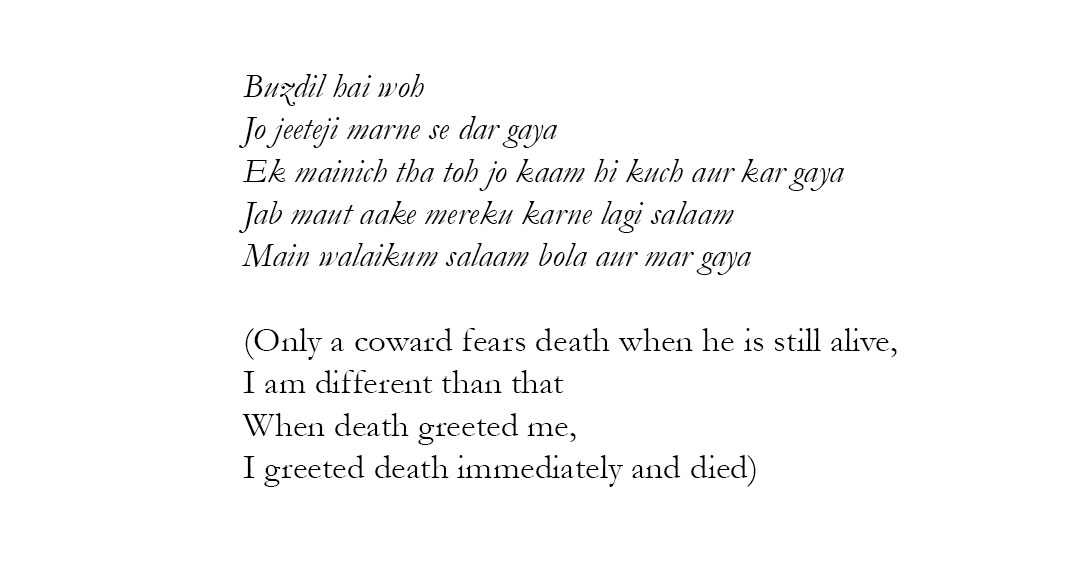 The lines by popular satirist Ghouse Mohiuddin Ahmed, popularly known as ‘Khamakha’ (good for nothing), encompass the defining aspect of Hyderabad’s culture. Delivered with a straight face; the lines hold, within themselves, a wisdom on how to deal with the curve balls that life throws. In Hyderabad, humour, satire lace the mundane — cheery spirits reign supreme even in the face of the biggest tragedies.Dakhani performance poetry began to be formalised in the late 1940s. And the first poets of this genre emerged during that time. Towards the 1960s, it took a little more life through the literary organisation — Zinda Dilan-e-Hyderabad — which was quite passionate in promoting humour, satire and poetry and the first mushaira was held in 1966.[imgcenter]
 [/imgcenter]Staying true to the genre of satire, Dakhani performance poets have used words to challenge and critique existing norms, turning the mirror on abhorrent practices. Sarvar ‘Danda’, a hugely popular Hyderabad poet during the 1960s often poked fun at the establishment. Dakhani poets engaged with issues of class, caste, gender and religion. Danda’s mushairas were derived from his own social context — which wasn’t aristocratic. According to Syed Akbar Hyder, Urdu scholar, Dakhani voices disrupted the ‘elite’ progressive writers movement by consciously celebrating Dakhani Urdu, which was considered obscene/vulgar by those from the north of the Vindhyas.Pemmaraju speaks about how political satire was and continues to be a big part of the Dakhani performance poetry scene. In last year’s Zinda Dilane gathering in Hyderabad, poets raked fun on demonetisation. “In every linguistic tradition, there are ways to confront social issues. And this (Dakhani performance poetry) has a 70-year-old rich history to it. Naturally, it is being carried on even to this day,” says Pemmaraju.Despite its rich history, the art-form is suffering in the tight embrace of mediocrity. Critics say that the Dakhani performance poetry is flailing as it refuses to get out of the “saas-bahu” (mother-in-law/daughter-in-law) jokes, or that there is very little use of Dakhani language in the poetry. There are only some popular Dakhani catchphrases that are used. “Old timers complain about the quality, there is a difference in the artistry now,” Pemmaraju says and with good cause.
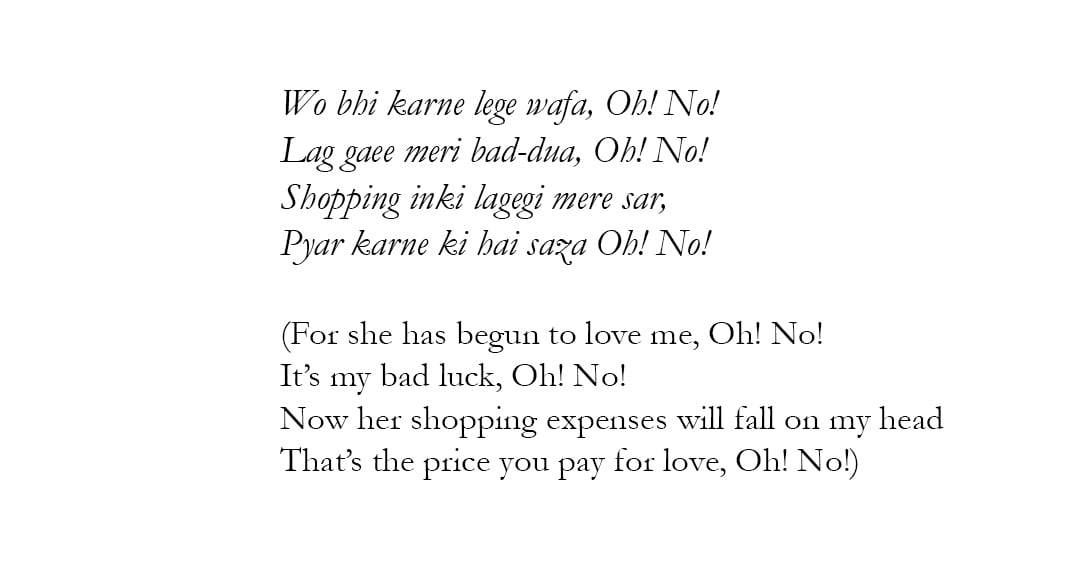 Dakhani became popular through films like Angrez, but films that came after it devolved into crass humour. The Dakhani poetry sphere that was built on the backs of Danda and Suleiman Khatib is falling into itself. The form isn’t dead, there is activity — Hyderabad’s mushaira scene exists — but it is in the want of reform, revival, especially in terms of quality.Kya hai ki, Kya Nai ki: A Tongue Untied — Pemmaraju’s exploration of the Deccan locates language and its ties to the socio-political movement in the past and its decline in the current cultural atmosphere. “Deccan still remains quite distinct; its idiosyncratic flavours, accents and tempers may not be fare for all, but what remains hidden behind is the complex history of exchange and synthesis,” words from Pemmaraju’s essay speak volumes about his forthcoming film. It is more than aggregation of conversations, thoughts — it sets out to capture the distinct quality of the Deccan — the conversations between artists, historians of Sufism, the Deccan region form a narrative and tell a unique story about a people and their culture.Centre image courtesy: Getty ImagesListen to the some excerpts from the interview:
Cultural anthropologist with a terrific nose for news. Obscure music hound. Rarely bored — always scrolling, always reading.
First Published:Mar 25, 2017, 10:40:57 IST
Advertisement
Advertisement

Off-centre | Vande Mataram: The mother that we adore
A meditation on the meaning of India as the country celebrates 77th independence Day
Of nature, culture and alcohol: A glimpse into Sikkim’s age-old brewing traditions
Most rural households across Sikkim have their own breweries, which are an integral part of the local culture.
Revisiting the Bollywood dream sequence: A tour of the world, and within
The Bollywood dream sequence helped stretch my imagination in a way that I believed the whole world was within me. This self-sufficiency helped me get through the physical setting I was in, from awkward social gatherings to the confines of my home during the pandemic.
Trams, part of Kolkata heritage, are little more than a nostalgia ride today
In recent years, hit by natural disasters and official neglect, the city’s tram system has become little more than a nostalgia ride, its passengers more often looking for a lark than an efficient trip home.
Online exhibition archives oral histories of the Kolis, degradation of Mumbai's coastal ecology
The online exhibition Through the Eyes of the Kolis uses their photos to highlights how Mumbai's ecology has been disturbed and how the fishermen community are adapting.
Advertisement
Advertisement