
Advertisement


Sections
Women in Science: Sandhya Vishweswariah talks about her research, the gender gap
Sandhya Vishweswariah says that not much can be done about the gender gap unless leadership at institutes insists on ensuring equal representation of women | #FirstCulture

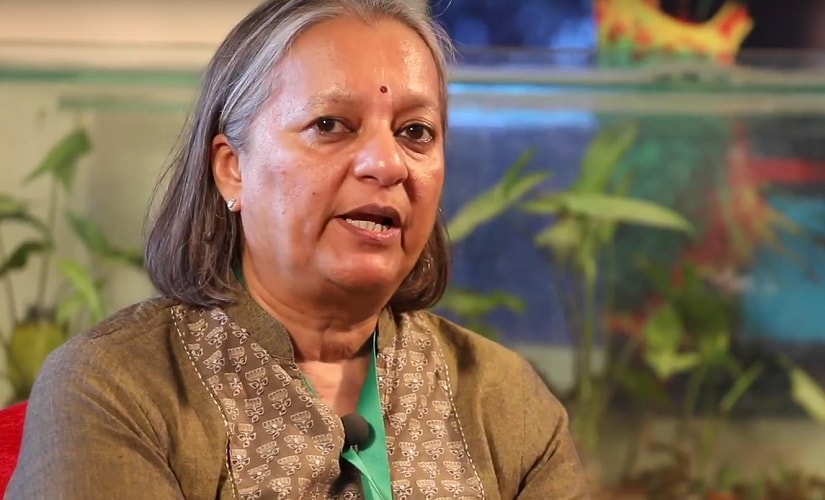 Sandhya Vishweswariah is one of the few women on top in Indian science. Her work on a molecular receptor for a toxin behind several types of diarrhoea has come a long way since she started her scientific adventures with a pharmaceutical company. Sandhya and her team at the Indian Institute of Science (IISc) have done extensive research on the receptor and its molecular pathways. Many years ago, Sandhya’s experiments induced different mutations in the gene coding for this receptor in mice. Published papers brought her attention to human medical cases in Europe that resulted from the same mutations she induced in her lab out of scientific curiosity.She is the only woman to receive the top fellowship from Wellcome DBT India Alliance named the Margadarshi Fellowship to set up a Medical Research Hub at IISc hub. This center is being set up to fan the fires of collaboration between clinicians (those who work with patients) and laboratoratory scientists like her.Sandhya has been part of sexual harassment cell and the women’s cell at IISc, and has taken steps to forward the cause of closing the gender gap in Indian science. She says that not much can be done unless leadership at institutes insists on ensuring equal representation of women. She adds that dealing with sexual harassment cases might be too slow. She was also recently elected as one of the 55 fellows of The World Academy of Sciences for the advancement of science in developing countries.Tune into this The Life of Science podcast as Aashima Dogra talks to her about her research and the gender gap.
Read more from the Women in Science series here.THELIFEOFSCIENCE.COM is a feminist science media project on a mission to make Indian women scientists more visible and investigate the gender gap in Indian academia
First Published:Apr 05, 2018, 17:00:34 IST
Advertisement
Advertisement

Here's why you crave sweets after every meal: This one thing can fix it
It's common to crave something sweet after meals. However, what's often dismissed as "having a sweet tooth," is mostly nutritional deficiency
1 min read
India's most beloved national parks for wildlife lovers
India holds some of the world’s most wonderful wilderness spaces. Forests and jungles where myth, beauty and survival exist side by side. From mangroves that swallow rivers to grasslands shaped by centuries of migration, the country’s national parks offer more than sightings. They offer moments of stillness, surprise, and reverence.
1 min read
Even the Beckhams break: The rise of family estrangement
People are choosing to cut off contact with their families, prioritising mental health.
4 min read
European Council Chief has an OCI card: What is it?
The OCI Scheme, introduced in 2005, grants foreign nationals of Indian origin a life-long visa for India, but no political rights.
1 min read
The 90s show Friends, and why we misread modern friendships
We’ve all heard about the loneliness epidemic at this point. It isn’t even particularly shocking — it seems like the result on the obvious — people consistently glued to their phones, seeking intimacy and even sex through phone screens, consistent comparison to other peoples’ partners, and what their relationships look like, to how far everyone has come in their jobs — there is much to feel diminished about.
5 min read
Advertisement
Advertisement