


Women in Science: Madhumitha Balaji studies suicide and its prevention as a public health issue
Through her research, Madhumitha Balaji has found that rates of suicide among Indian men and women is much higher than in high-income countries

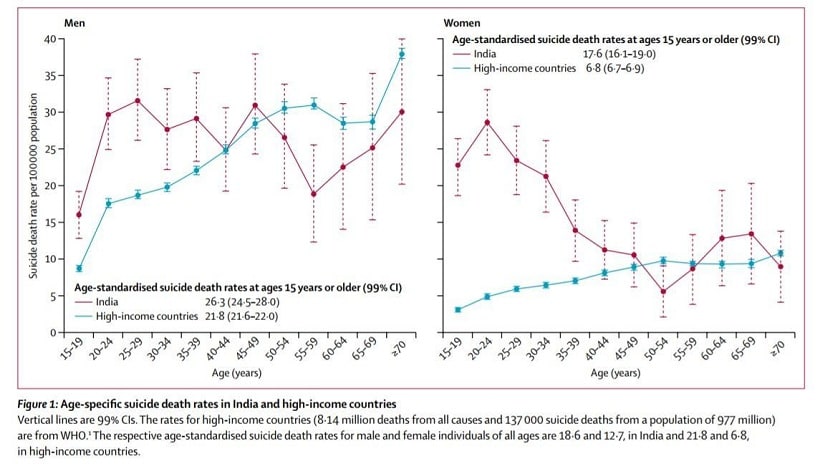
Editor's note: Starting National Science Day 2018, The Life of Science and Firstpost bring you a series profiling Indian women in Science. The challenges in Indian scientific life are many — more so for women taking up this path. This series honours those who beat the odds and serve as inspirations for the next generation of Indian science — a generation that is slowly and surely on its way to becoming gender equal.***By Karthik VarmaMadhumitha Balaji | 35 | Clinical Psychologist | Sangath (NGO), The Centre for Mental Health Law and Policy (CMHLP), Indian Law Society, PuneAccording to the National Crime Records Bureau, about 130,000 people commit suicide in India every year. Family problems, marital and relationship problems, financial difficulties, drug and alcohol use, and failure in examinations have been identified as some of the causes. However, while it is easy to spot correlations between patterns, it is hard to say with certainty what the reasons are behind suicide, without conducting a scientific study.It’s a sunny Monday morning in Pune, and the roads are buzzing with energy. Workers head back to their jobs while students loiter endlessly. The din fades as you enter the green cover surrounding the Indian Law Society, where Madhumitha Balaji and her research team are based. At the cafeteria, Madhumitha sits down to talk about her work in mental health research. She's just been awarded a five-year research fellowship to understand the reasons behind youth suicide attempts in India (individuals between 15-29 years of age). Suicides in this group constitute over 50 percent of suicides in India.As a clinical psychologist, Madhumitha exudes an enthusiasm that illuminates the dark recesses of her subject of study. “Before we try and treat a problem, we need to understand all the reasons behind it,” she says. She lights up as she pulls out a paper authored by one of her longstanding mentors Vikram Patel. It contains what she describes as some of the most shocking statistics in India related to suicides.
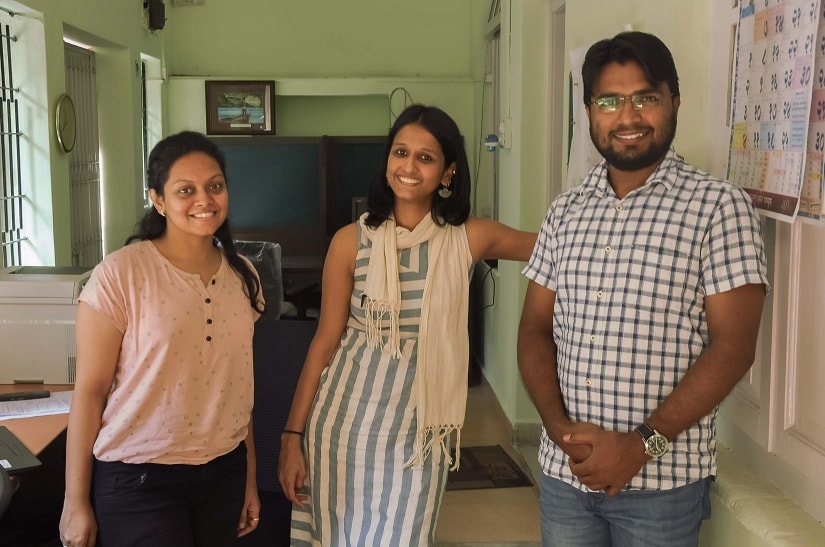 She and her team are looking for associations between suicide attempts, and various factors relevant to young people, such as failed aspirations, relationship problems, personality traits, and mental health problemsTheir fieldwork involves interviews with those who made suicide attempts and survived, as well as interviews with family members and friends of those who committed suicide. These interviews will reconstruct all the events and circumstances in the person’s life that lead to the suicide attempt, in order to understand the various reasons for why young Indians take this decision.The study aims to find the extent to which factors such as gender-based violence, family problems, exam failure and mental illness are present in young people who come to hospitals as a result of suicide attempts, as opposed to the comparison group of young people in the same neighbourhood.All the data is collected electronically using tablets installed with a built-in questionnaire. This minimises the step of data entry, which is typically prone to error. Standardised questions are used to measure a certain variable, such as severity of depression, while more qualitative answers are recorded to get a narrative exploration of a person’s life.When it comes to human behaviour, there's always some level of variability in results, Madhumitha notes, but she believes it has a very good predictive value. Her study aims to find a risk percentage associating a certain variable (for example, a certain life event) with the health outcome (suicide attempt). Once you find the statistic, the more you replicate it across cultures, the stronger the evidence is for that particular effect.“I would definitely say that public health science is scientifically robust,” says Madhumitha. Each research question calls for its own methodology and style of analysis. Some methods are heavily statistics-based, and some are not. If you want to find the prevalence of schizophrenia in a community, you would do a survey to count the number of people identified with the condition. Once you divide this by the total population, you have the number you’re looking for. If you’re interested in exploring the problems people face after losing a loved one, you would do it in a more qualitative way.Informing policyThere's a lot we can do with this information. It can be used to implement strategies aimed at reducing widespread social behaviours that have contributed to poor mental health outcomes. India is already doing this, Madhumita hints, adding that more could be done by emphasising on early detection, so that vulnerable groups are treated before they're at risk of suicide, promoting healthy gender norms and behaviours towards women, regulating use of alcohol, and reducing access to pesticides and other toxic substances.
 India, China and Japan account for about 40 percent of the world’s suicides. Despite this, India trails behind in terms of spending on this major public health issue. Most developed nations spend above four percent of their entire budget on mental health. India spends only one to two percent of its budget on healthcare, and only 0.07% goes towards mental health. As a result, there are only three psychiatrists for every million who need care, creating a need for a low cost and scalable solution.One of the things that Madhumitha is thrilled about is the recent ground-breaking development in India’s policy related to mental health. Under the Mental Healthcare Act of 2017, suicidal attempts have been decriminalised. "This basically means you can get proper treatment when you’re distressed. You can’t be denied treatment while waiting for the police to conduct an investigation. This is significant because there’s a great deal of stigma attached to getting help. People don’t come forward when they require support."“In India, we now have a good understanding about what causes a number of conditions like depression, and we've developed effective treatments to handle it,” she adds. “Suicide attempts, however, need a lot more work. There are very few studies in India on suicide attempts, especially studies on why this is happening among young people in India. I really hope that my study–by highlighting the reasons for youth suicide attempts–will inform the development of programs to prevent this in the country.”Read more from the Women in Science series here.THELIFEOFSCIENCE.COM is a feminist science media project on a mission to make Indian women scientists more visible and investigate the gender gap in Indian academia
Here's why you crave sweets after every meal: This one thing can fix it
India's most beloved national parks for wildlife lovers
Even the Beckhams break: The rise of family estrangement
European Council Chief has an OCI card: What is it?
The 90s show Friends, and why we misread modern friendships