
Advertisement


Sections
Still trying to figure out where you fit on the queer spectrum? Here's a suggestion: Don’t
The entire point of the queer spectrum is to embrace inclusivity and acceptance — whichever way you choose to identify yourself. Unlike your closets, there’s no need for labels here.

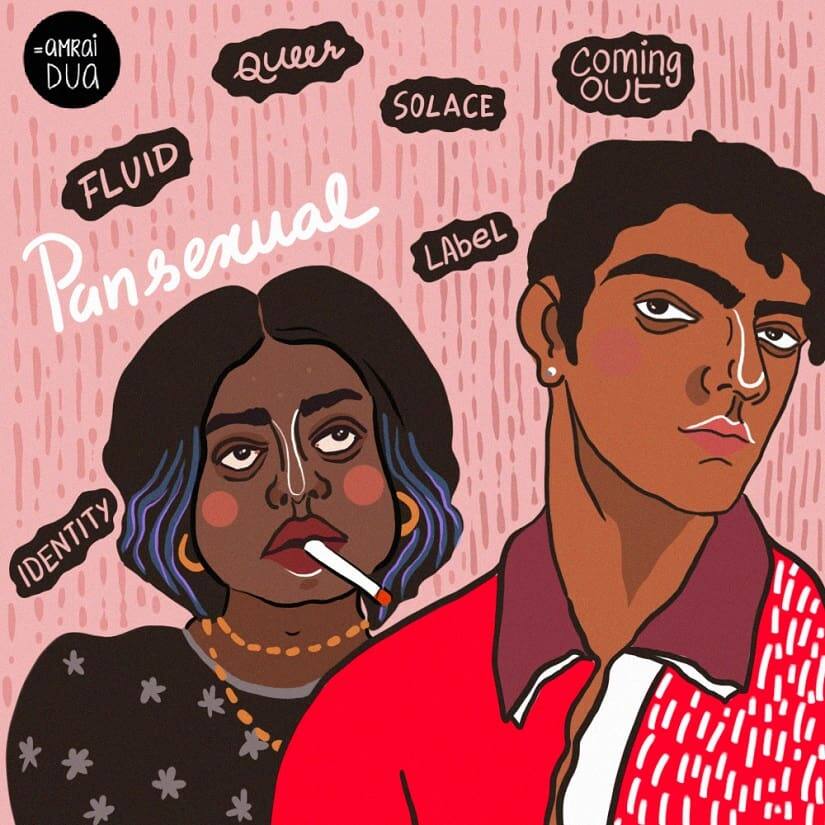
I was 12 when someone asked me for the very first time if I was queer. It was 2000, and the world was learning new things.And apparently, so was I.I remember going back home and opening the dictionary, flipping through pages, hungry for the definition. And there it was, on page 783, comfortably sandwiched between Queen’s Truss and Quell.Strange, it screamed silently back. My smile faded. Eccentric. Peculiar. Questionable. Sick. Unwell. Bad. Worthless. Counterfeit. Definition after definition, the dictionary sniggered and smirked, throwing words that were too heavy for my 12-year-old brain. And then as an afterthought, it coughed out a succinct: Slang for homosexual.I was a sight, yes, but did I ever identify as…strange?Weird? Maybe. Eccentric? Possible. But strange? Uh-oh. I don’t think so. I slammed the dictionary shut, and never opened it ever again.In the 19 years since, the word queer has evolved into a whole inclusive word. Countless movements and multiple debates later, the word identifies as an umbrella term for sexual and gender minorities who are not ‘heterosexual or are not cisgender’. It’s 2019, and personal identity is everything. The New Webster’s Dictionary would agree.Nineteen years later, the dictionary still won’t let me be at peace. As a cisgender gay man, what really is my queer identity?[caption id="attachment_7083261" align="alignnone" width="825"]![The entire point of the queer spectrum is to embrace inclusivity and acceptance — whichever way you choose to identify yourself. Illustration courtesy Amrai Dua]() The entire point of the queer spectrum is to embrace inclusivity and acceptance — whichever way you choose to identify yourself. Illustration courtesy Amrai Dua[/caption]The word identify is so fluid. Who am I? Why am I? Where am I? What am I? These are questions we all (must) ask ourselves. It’s not an existential crisis; it’s an everyday struggle. So what (or more importantly, who) do I identify as?A CIS man? A queer person? Gay? A writer? A meme maker? A panic-stricken squirrel? A night owl? A recovering alcoholic? An Instagram addict? A child? A friend? A human being who always takes too much time to text back? Someone who likes salted caramel ice cream? Someone who hates pigeons? Someone who asks too many questions?Maybe all of these pieces (or identities) come together to form this giant jigsaw puzzle that is ‘me’. Being gay and being queer are two different things. You are queer if you identify as gay, but you aren’t necessarily gay if you identify as queer.See, being gay is just one of the many pieces that makes up my identity. Do I like being an out and proud gay man? YES. Is it the only thing I am? Not really, but it is (most certainly) a ‘part of a whole’ that makes me who I am. For a long time I thought my sexuality was not something I needed to wear on my sleeve, but something I wore on my chest, out and proud. It took me more than decade of self-discovery to get here.And then I met Suhana* (name changed) at a friend’s birthday party a few months ago. Suhana is a 20-something graphic designer with a pixie-cut and purple highlights, and I immediately felt drawn to her. Ten minutes into the conversation, I found out that she had a boyfriend. When I told her I was gay (and thus, meant no harm), she also told me she was pansexual.‘I am gender-blind,’ she explained, as we found ourselves a little spot by the window. Over the past three years since her ‘coming out’, she’d been attracted to several people, regardless of gender and sexual orientation. Sometimes it was because someone was witty. Sometimes it was because someone was cute. Sometimes it was because someone spoke about books so passionately your heart welled up.Their gender wouldn’t matter. Their quirks? Obviously.Has it been difficult? I asked her. ‘People don’t understand it,’ she said, as we sipped our whiskey sours in a corner, ‘My friends pretend it’s all a big joke, and my parents avoid me every time I’ve tried having an honest conversation, but it’s not something I want to hide…we know we are queer, but it’s time people do so too…’Here we were, two people at the fag ends (pun intended) of the queer spectrum, finding solace in each other’s company in an entirely heteronormative party. The world is funny sometimes.
The entire point of the queer spectrum is to embrace inclusivity and acceptance — whichever way you choose to identify yourself. Illustration courtesy Amrai Dua[/caption]The word identify is so fluid. Who am I? Why am I? Where am I? What am I? These are questions we all (must) ask ourselves. It’s not an existential crisis; it’s an everyday struggle. So what (or more importantly, who) do I identify as?A CIS man? A queer person? Gay? A writer? A meme maker? A panic-stricken squirrel? A night owl? A recovering alcoholic? An Instagram addict? A child? A friend? A human being who always takes too much time to text back? Someone who likes salted caramel ice cream? Someone who hates pigeons? Someone who asks too many questions?Maybe all of these pieces (or identities) come together to form this giant jigsaw puzzle that is ‘me’. Being gay and being queer are two different things. You are queer if you identify as gay, but you aren’t necessarily gay if you identify as queer.See, being gay is just one of the many pieces that makes up my identity. Do I like being an out and proud gay man? YES. Is it the only thing I am? Not really, but it is (most certainly) a ‘part of a whole’ that makes me who I am. For a long time I thought my sexuality was not something I needed to wear on my sleeve, but something I wore on my chest, out and proud. It took me more than decade of self-discovery to get here.And then I met Suhana* (name changed) at a friend’s birthday party a few months ago. Suhana is a 20-something graphic designer with a pixie-cut and purple highlights, and I immediately felt drawn to her. Ten minutes into the conversation, I found out that she had a boyfriend. When I told her I was gay (and thus, meant no harm), she also told me she was pansexual.‘I am gender-blind,’ she explained, as we found ourselves a little spot by the window. Over the past three years since her ‘coming out’, she’d been attracted to several people, regardless of gender and sexual orientation. Sometimes it was because someone was witty. Sometimes it was because someone was cute. Sometimes it was because someone spoke about books so passionately your heart welled up.Their gender wouldn’t matter. Their quirks? Obviously.Has it been difficult? I asked her. ‘People don’t understand it,’ she said, as we sipped our whiskey sours in a corner, ‘My friends pretend it’s all a big joke, and my parents avoid me every time I’ve tried having an honest conversation, but it’s not something I want to hide…we know we are queer, but it’s time people do so too…’Here we were, two people at the fag ends (pun intended) of the queer spectrum, finding solace in each other’s company in an entirely heteronormative party. The world is funny sometimes.
 The entire point of the queer spectrum is to embrace inclusivity and acceptance — whichever way you choose to identify yourself. Illustration courtesy Amrai Dua[/caption]The word identify is so fluid. Who am I? Why am I? Where am I? What am I? These are questions we all (must) ask ourselves. It’s not an existential crisis; it’s an everyday struggle. So what (or more importantly, who) do I identify as?A CIS man? A queer person? Gay? A writer? A meme maker? A panic-stricken squirrel? A night owl? A recovering alcoholic? An Instagram addict? A child? A friend? A human being who always takes too much time to text back? Someone who likes salted caramel ice cream? Someone who hates pigeons? Someone who asks too many questions?Maybe all of these pieces (or identities) come together to form this giant jigsaw puzzle that is ‘me’. Being gay and being queer are two different things. You are queer if you identify as gay, but you aren’t necessarily gay if you identify as queer.See, being gay is just one of the many pieces that makes up my identity. Do I like being an out and proud gay man? YES. Is it the only thing I am? Not really, but it is (most certainly) a ‘part of a whole’ that makes me who I am. For a long time I thought my sexuality was not something I needed to wear on my sleeve, but something I wore on my chest, out and proud. It took me more than decade of self-discovery to get here.And then I met Suhana* (name changed) at a friend’s birthday party a few months ago. Suhana is a 20-something graphic designer with a pixie-cut and purple highlights, and I immediately felt drawn to her. Ten minutes into the conversation, I found out that she had a boyfriend. When I told her I was gay (and thus, meant no harm), she also told me she was pansexual.‘I am gender-blind,’ she explained, as we found ourselves a little spot by the window. Over the past three years since her ‘coming out’, she’d been attracted to several people, regardless of gender and sexual orientation. Sometimes it was because someone was witty. Sometimes it was because someone was cute. Sometimes it was because someone spoke about books so passionately your heart welled up.Their gender wouldn’t matter. Their quirks? Obviously.Has it been difficult? I asked her. ‘People don’t understand it,’ she said, as we sipped our whiskey sours in a corner, ‘My friends pretend it’s all a big joke, and my parents avoid me every time I’ve tried having an honest conversation, but it’s not something I want to hide…we know we are queer, but it’s time people do so too…’Here we were, two people at the fag ends (pun intended) of the queer spectrum, finding solace in each other’s company in an entirely heteronormative party. The world is funny sometimes.
I think every one has a different journey when it comes to navigating the queer space.Fortunately for me, I’d had to deal with very few instances of discrimination ever since I’ve come out. I have a great support system of friends and a wonderful family that accepted me for who am I without batting an eyelid (or shedding a tear, unlike me). But then again, I know that I come from extreme privilege — because identifying as a CIS-gendered gay man is the ‘straight white male’ equivalent on the queer spectrum. We’ve just had it easier. So what advice would I give for someone who’s still trying to figure out where they fit on the queer spectrum?Just one word: don’t. The entire point of the queer spectrum is to embrace inclusivity and acceptance — whichever way you choose to identify yourself. Unlike your closets, there’s no need for labels here.You can identify as gay. You can identify as a trans woman. You can identify as bicurious. You can identify as asexual. Gender queer. Pansexual. Non-binary. You can identify as anything you like, because it is your identity. It is what makes you who you are. It is what makes you unique.We’ve spent our entire lives trying to fit into the heteronormative formula (spoiler alert: there’s no heteronormative formula), so the least we can do is not have to struggle trying to find our place on the rainbow.Until then, remember that we are queer, and we are here.And that can be wherever you want it to be.Follow the Guysexual on Firstpost. See more of Amrai Dua's art here.
First Published:Jul 31, 2019, 10:14:25 IST
Advertisement
Advertisement

Here's why you crave sweets after every meal: This one thing can fix it
It's common to crave something sweet after meals. However, what's often dismissed as "having a sweet tooth," is mostly nutritional deficiency
1 min read
India's most beloved national parks for wildlife lovers
India holds some of the world’s most wonderful wilderness spaces. Forests and jungles where myth, beauty and survival exist side by side. From mangroves that swallow rivers to grasslands shaped by centuries of migration, the country’s national parks offer more than sightings. They offer moments of stillness, surprise, and reverence.
1 min read
Even the Beckhams break: The rise of family estrangement
People are choosing to cut off contact with their families, prioritising mental health.
4 min read
European Council Chief has an OCI card: What is it?
The OCI Scheme, introduced in 2005, grants foreign nationals of Indian origin a life-long visa for India, but no political rights.
1 min read
The 90s show Friends, and why we misread modern friendships
We’ve all heard about the loneliness epidemic at this point. It isn’t even particularly shocking — it seems like the result on the obvious — people consistently glued to their phones, seeking intimacy and even sex through phone screens, consistent comparison to other peoples’ partners, and what their relationships look like, to how far everyone has come in their jobs — there is much to feel diminished about.
5 min read
Advertisement
Advertisement