


Scientists create new antibiotic which can fight superbugs, drug-resistant TB
Scientists using a revolutionary approach have devised an antibiotic that may offset the mounting problem of drug resistance for decades.

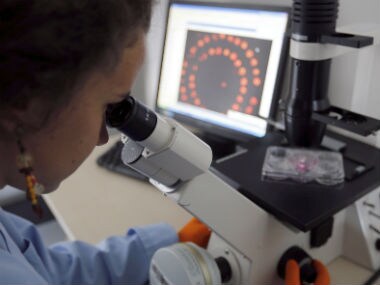
Image used for representational purposes only. Reuters[/caption]"It took 30 years for vancomycin to become resistant," Lewis told journalists in a tele-briefing. Development of resistance for teixobactin "will take more than 30 years," he hoped.Growing problemExperts have sounded ever-louder warnings about the toll of antibiotic resistance in lives and health costs as tougher bugs become harder to defeat. Decades-long misuse of licenced drugs gave rise to the resistant strains, and big pharma spending on antibiotics discovery has failed to keep apace.The most successful antibiotics, such as penicillin and streptomycin, were discovered during a "golden age" of research from the 1940s to the 1960s, derived from microbes which live in soil.But it has become harder -- and thus more expensive -- to isolate new antibiotics from this source, and attempts to create synthetic alternatives have borne little fruit. The new approach uses a screen called iChip, a palette with tiny wells each seeded with a single, different bacterial cell.Taken from the soil for tests as before, the bacteria are no longer cultivated in a lab dish, but placed in the iChip back in the soil for a week or two to reproduce in their natural environment. They grow more easily this way, and each iChip yields several types of bacteria at once -- each of which are then tested to see if they kill S. aureus.Teixobactin came from a study of 10,000 germs which yielded a shortlist of 25 bacteria of interest. This tally was finally narrowed to one -- a new species of so-called beta-poteobacterium called Eleftheria terrae, whose active compound was then isolated.If clinical trials find it is safe and effective, teixobactin will be the first of a brand-new pharmaceutical category called lipid II binding antibiotics.Independent commentators hailed the announcement."We desperately need new antibiotics to tackle bacterial infections. This is a very promising development," Nigel Brown, head of Britain's Society for General Microbiology, told the Science Media Centre in London.Teixobactin attacks so-called Gram-positive bacteria but not the Gram-negative class that includes the intestinal bug Escherichia coli, where resistance is also a big problem.The iChip opens a way for finding more new drugs. "It is likely that additional natural compounds with similarly low susceptibility to resistance are present in nature and waiting to be discovered," the paper said.The screening tool "could be a game changer," Laura Piddock, a microbiologist at Britain's University of Birmingham, said in a separate reaction. "It allows compounds to be isolated from soil, producing micro-organisms that do not grow under normal laboratory conditions."AFP

Here's why you crave sweets after every meal: This one thing can fix it
India's most beloved national parks for wildlife lovers
Even the Beckhams break: The rise of family estrangement
European Council Chief has an OCI card: What is it?
The 90s show Friends, and why we misread modern friendships