


Patagonia's wintry wonderland; skiing at Bariloche: Travels through Argentina
Sandeepa and Chetan describe their travels through Argentina and Chile in the third part of their ongoing South America travel diary for Firstpost

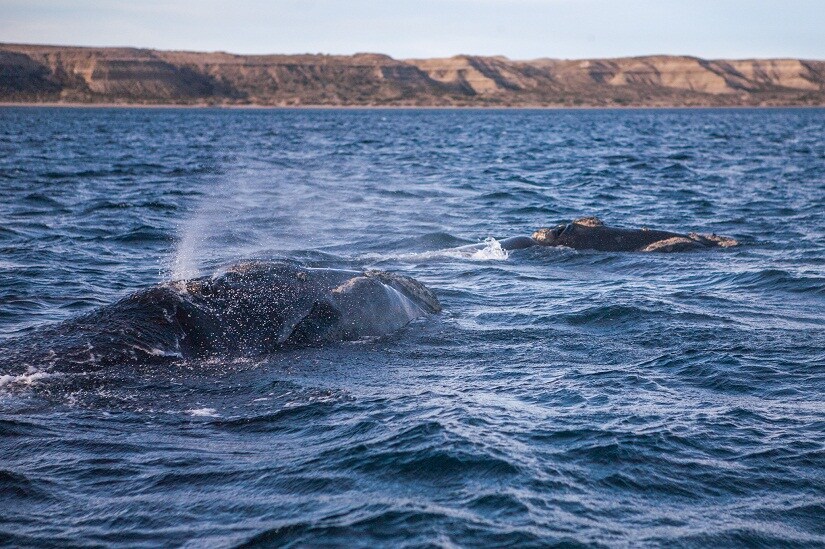
Editor's note: This is the third in a four-part travelogue series on South America. Read parts one and two.***Everything we had ever dreamt of was there. The vast ocean. Tall mountains. Nature, unadulterated nature.But we had to be brave. Very very brave. For us (meaning people from Mumbai) even the Sahyadri winters are a bit too much — forget the Himalayas. We’d have to face the full onslaught of the southern hemisphere winter at kissing distance from — Antarctica!Were we crazy to even think about it? What if we couldn’t manage to get our heads out of the blanket?But “when’ll we get another chance?” has the power to overshadow all doubts. The prospect of hurling ourselves, into the far corner of our planet, was too enticing to ignore. There was something alluring drawing us into Patagonia. It was something more powerful than the (valid) rationale that “Patagonia is too far and too cold to visit in winter”.We knew we had to experience Patagonia — winter or not.One step at a time — we chose Puerto Madryn, the northernmost point along coastal Patagonia. Whales, penguins, dolphins and sea lions: the calendar is divided according to their sightings.Winter is when the Southern Right whales visit the Atlantic coast — particularly Peninsula Valdes (a UNESCO world heritage site), 90 km from Puerto Madryn. The name “Southern Right” has a rather cruel origin. These whales are calm docile creatures. Which made them just “right” for hunting. They’re now recognised as an endangered species and are under protection. These whales have now become synonymous to Puerto Madryn.To stay away from the deadly Orcas (which are also sighted in these waters, albeit the sighting is extremely rare), they stay close to the shore. Which makes them easy to be spotted.
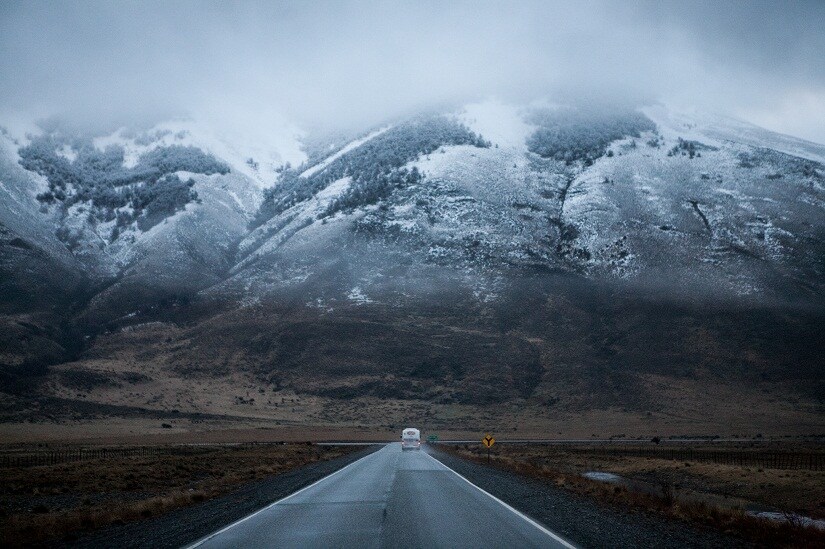
 The only growing glacier in the world resides in Patagonia — the largest cover of snow in the world after Antarctica and Siberia” — our research on Perito Moreno had come up with these glorious findings.The Perito Moreno glacier is part of the Los Glaciares National Park. The towering Andes follow the road, on one side they are the Chilean Andes. Fresh snow greets us on both sides.The landscape transitions to a thick coniferous forest. Once we reach the Las Glaciares National Park.
 Before getting off the bus, we need to dress up. Gloves, caps, socks. Jackets pulled up to cover the nose. Only our eyes are seen, just like the policeman we saw on our first day in deep Patagonia.We step out and “acclimatise”. Breathe in the incredibly cold yet incredibly fresh air. It cuts sharply through our nose and lungs. But we can feel the lungs feeling happy. They are being supplied with the cleanest material they have ever had!We then take the boat to take us to the glacier. No one’s bothered taking off their caps and gloves, we notice. All eyes are glued to the windows. The boat moves ahead steadily.Suddenly there is a collective gasp. For a moment no one moves. Just as suddenly, everyone makes a dash for the door. The Perito Moreno glacier has presented itself in all its glory.The cold is forgotten. The frenzied activity defies the sub-zero temperature or the kilos of warm clothing that exists on the deck of the boat at that moment. There is an onboard photographer. Everyone wants to pose for a picture with the Perito Moreno.Quietly, we moved away from the crowd. Found an empty spot on the deck. And just kept looking ahead. Filled our eyes up with the Perito Moreno. Every shade of blue imaginable was rising tall in the sky. As far as we could see, there’s the glacier, glacier and only the glacier. (Presently, the Perito Moreno glacier spans over an area larger than the city of Buenos Aires.)It is a massive moving mass, defying all odds, fighting a losing battle against global warming. A lone warrior. As if telling you, taunting you, warning you, “I have stood tall so far. I have fought hard. Don’t let me cave in.”
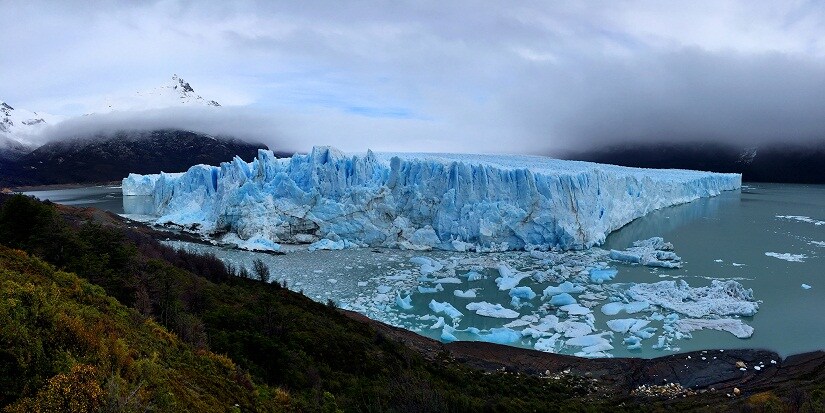 After the boat ride, we went to the walking ramps, built through the forest, to see the Perito Moreno from different angles. We had the entire day now, to gawk at the glacier.We could now see the different shades of blue. The darker the blue, the older is the ice. Which meant what we were seeing was actually witness to a large part of earth’s history!Every once in awhile, the Perito Moreno glacier gives proof of its growing nature. As it moves ahead and hits a barrier, parts of the glacier come tumbling down and hit the lake with a thud. The sound we heard was louder than the loudest fireworks we had ever heard. The ripples caused took a long time to pacify, making the lake around resemble the sea!We felt enamoured and dwarfed by the Perito Moreno glacier. We had witnessed the most glorious representative of nature’s ultimate supremacy.Coming to the far corner of the earth also meant we were in a far corner of Argentina. Which meant, going anywhere from here was going to be a long long journey. We booked ourselves in the fully reclining cama seats (they are us in the first class of the flights!) for a 30-hour bus journey to a town called Bariloche. It is on the northern end of Patagonia, but this time on the Andean side.By the time we got near Bariloche, the scene had changed completely. Rolling hills had taken the place of snow fields. The adjectives stark and rugged changed to beautiful and charming. The barren brown mountains were suddenly covered in tall conifers. Reds and yellows were in the midst of the greens. More sheep and cows. Villages that looked like were made for the hobbits.
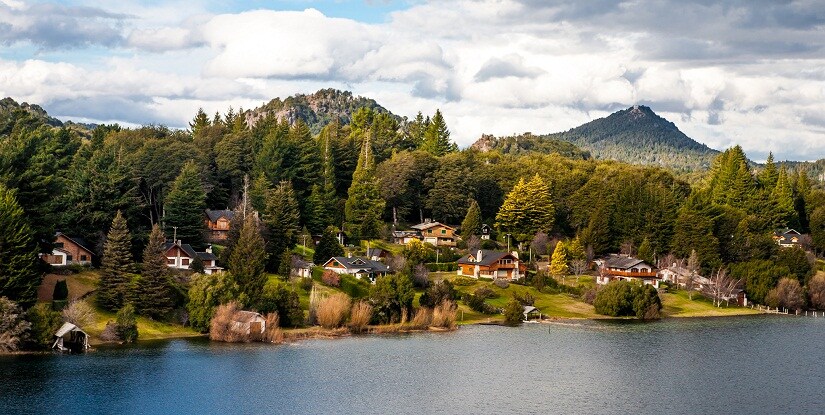 Bariloche is the ski capital of South America. The peak of winter was obviously the peak season for Bariloche. Our hostel, a cosy little wooden cabin was filled with a wide group of people — from winter vacationers to serious skiers. Heavy duty equipment was everywhere. Snowboards, skis, huge ski boots and their jackets — we realised practising winter sports was a lot of investment (and weight!).Cerro Catedral is the name of the ski circuit here. We tagged along with the serious skiers from our hostel to take us to Catedral. As we started climbing the mountain to Catedral, huge chunks of snow started lashing the car. We were in the midst of a snowfall — the first of our lives.
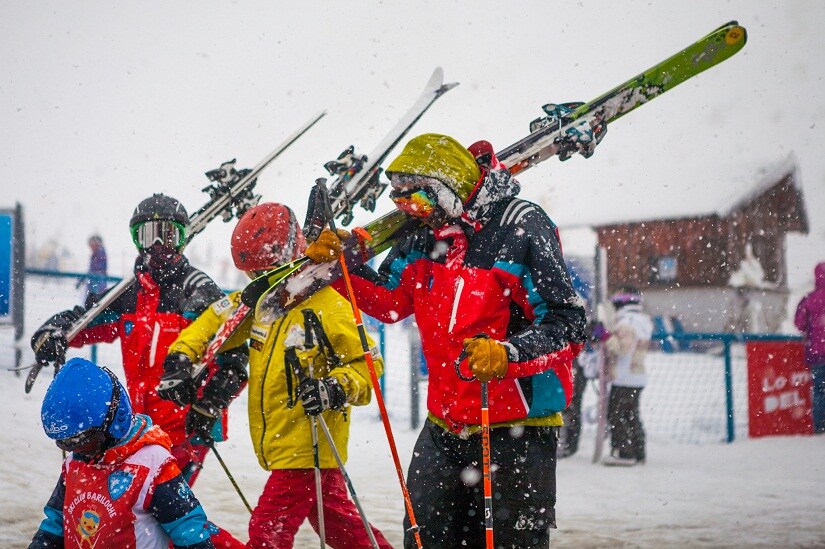 It was a perfect day to ski, we were told by the serious skiers. What did we know? We were just too engrossed in seeing the snowfall. We’ve never skied before, neither have we been trained. It became the perfect excuse to just spend the day playing in the snow like little children: making snowballs, sliding down the snow, helping people make the snowman.When all the playing tired us out, we headed to a cafe, had piping hot cups of hot chocolate with the dulce de leche sandwiches we had packed. Fortified, we resumed our snow play.Bariloche is also famous for its lakes. We went for a short trek along Cerro Chico. A snow covered volcano was peeping through the look out across the lake. The lake itself looked blue and green, fresh and lively.What difference a couple of thousand kilometres had made! How the distance had made the exact same physical formation reflect such a contrasting character!While the lake and the snow in El Calafate had been awe-inspiring, here in Bariloche, the same felt friendly and warm. And yet, it was all beautiful and magical — the kinds that only nature can make.All we had to do was be there and absorb it with all our senses. And feel grateful.Sandeepa and Chetan are full-time travel bloggers and photographers. You can follow their work here. They've been travelling long-term since 2013.
Here's why you crave sweets after every meal: This one thing can fix it
India's most beloved national parks for wildlife lovers
Even the Beckhams break: The rise of family estrangement
European Council Chief has an OCI card: What is it?
The 90s show Friends, and why we misread modern friendships