


On cosmopolitanism, Modi and AAP: A conversation with Homi Bhabha
"I may be in a minority, but I find his polemical rhetoric personally intimidating. I don’t like that tone in politics – a tone of aggression, a tone of militancy."

Dr. Homi K. Bhabha is best known for his work in post colonial theory, cultural hybridity and the relation between colonization and globalization. But when he comes to India he also likes to catch up on tabloids and gossip. “It’s terribly sad for them and shows me in a terrible light, but I really want to know why Hrithik (Roshan) and his wife split up,” confesses the Anne. F. Rothenberg Professor of the Humanities and director of the Mahindra Humanities Center at Harvard. Dr. Bhabha was in Kolkata to deliver the Apeejay Jit Paul Memorial lecture, his first public address ever in the city, at the Kolkata Book Fair. He spoke with some journalists before the event. Here are excerpts from the conversation.We are having this conversation at a time when a student from Arunachal Pradesh has been killed, African women have been attacked in Delhi. Is it worrying that this seems to be an increasingly dangerous time to be perceived as the other?Of course it’s hugely worrying, all the more because this is a country that has itself experienced external colonial histories of exclusion and humiliation. It’s a country that with the caste system has also had an experience of internal exclusion, humiliation and discrimination. In that context you would have hardly expected this kind of resurgence of violence.[caption id="attachment_137851" align="alignleft" width="380"]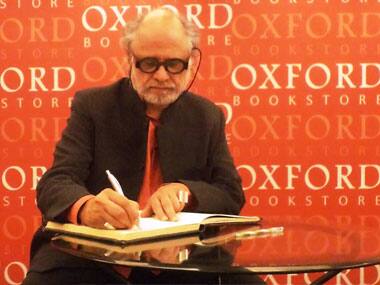 Homi Bhabha. Photo courtesy Oxford Bookstore[/caption]Including violence against women?There is an argument—I am not saying I support the argument—that violence against women really is a sign of the frustration of men in not being able to control the lives of women. That may be so, but it is a huge price to pay. So my feeling is that this violence may have something to do with progress in the economic and political emancipation of women.But there is another very sinister aspect to this which is I think that as women become freer, they act freer. They go out in the evenings. They don’t feel they need a chaperone all the time. They want to claim their space in the public sphere. I think there are very specific historical, practical and tragic reasons why the freedom of women is causing the kind of violence against them. You can have freedom as a principle, you can have freedom as a precept, but until you act on that freedom, you are not free.At times approaching elections we hear demand that people put their Indian identity before any other identity – gender, sexuality, ethnic group. Instead of the “cultural hybridity” you have written about, there is a pressure for a sort of cultural “mono-bridity”. When someone tells you that you have to be Indian—i.e you have to brand yourself as if you are an Indian product before you acknowledge your sexuality, your gender, your desire, your affiliation—this branding can hardly be to your benefit and it is hardly to your country’s benefit. It is only to the benefit to the rhetoric of a particular party. Do you want to be the branded goods of a particular party?You have written about cosmopolitanism extensively. What does it mean in the Indian context?This country has had a tradition of national leaders who have been profoundly cosmopolitan, starting with Gandhi, Ambedkar, Nehru, Sarojini Naidu and I could go on and on. This country was brought to its independence using several languages, and drawing on a wide range of traditions. Gandhi could quote freely from Thoreau and Emerson to the Bible to Tolstoy.Cosmopolitanism at its best is an understanding that a range of cultural traditions can have an effective conversation among themselves, and even if their beliefs are different they can through those dialogues and conversations negotiate a framework of human values that are equally beneficial to each of those cultures and societies.Have we now mistaken brands for cosmopolitanism? So we measure our cosmopolitanism by what brands are available at our mallsThe opening of the market to products from many parts of the world—this kind of market diversity—can be seen as a particular form of cosmopolitanism. But cosmopolitanism is not simply familiarity with a range of cultures. Cosmopolitanism is, at heart, the use of this knowledge of cultural diversity and difference in order to adduce from it political, ethical and aesthetic principles for a responsibility and obligation as a world citizen. That’s the classic idea. It is to try, from that, to understand what it would mean to be at the same time part of your own country’s productive transformation and to have that kind of citizenly commitment, obligation and responsibility to issues which go beyond national sovereignty and territoriality but are extraordinarily important for it—ecology, the problem of water, the problem of world health, the problem of world justice.You have been speaking a lot about the decline in the humanities? What are the consequences?Well there’s a very immediate crisis, and it’s an internal crisis. It is a crisis of large Indian corporations saying we cannot hire otherwise excellent software engineers or programmers, because although they can do the job they have to do, they cannot share the vision of our product and make it attractive, viable and urgent for people. They just do not have those skills of presentation, interpretation and description.Yet even if someone today has the choice to go into the humanities versus computer engineering it would seem foolhardy to choose humanities. What would you say to someone worried about that choice?Of course as an individual you will take a decision to get a pay packet and to be able to live and be able to support yourself and your family. That is exactly what you must do. But this decision, to create an investment in humanities and the liberal arts, is a decision for society to make. If a society makes a decision, if it invests in building up universities and colleges which provide this knowledge, then it creates confidence among its people. But this is not a burden that should fall on an individual. It’s a burden that should be taken up by the society and the country.You were at Jaipur literature festival, the Kolkata book fair. There are over 60 lit fests now in the region. Yet we talk about declining standards of reading. What’s the disconnect?Let’s talk about the connect rather than disconnect. What gives me great pause for reflection, but also a strong if quiet optimism, is the fact that people are coming to connect in one way or another with cultural objects, cultural ideas, cultural figures and cultural conversations. There is something about that quality of conversation which is not about quantification, which is not about utilitarianism, that people find exhilarating and attractive. The pity is that while these people are informally identifying with the teaching and learning of the arts and humanities, they are not getting this in an adequate way in their own schools, colleges, universities.Are the humanities, or at least the way they are taught, in some ways responsible for their situation?The arts and humanities are radically underfunded. When something is radically underfunded you lose confidence in your own message, in your own discipline. The more you lose confidence the more you are radically underfunded. The more you are targeted the more you want to throw up the walls around you, the more conservative and orthodox you can become. Please underline I am not saying this is true of everybody all the time. I am saying this is a very natural reaction to threat.The great tragedy in that is the humanities are by their very nature about breaking boundaries of protectionism, they are about crossing, they are about bridging, they are about making new connections. The humanities are the cross roads of the sciences and arts.We live in age of huge amounts of information available at our finger tips. What is the difference between information and knowledge?What turns information into knowledge is interpretation. I am not a Luddite, but the condition in which we receive information in the digital world, though extraordinarily useful, is in a largely unregulated, disordered form. Interpretation makes you aware that all forms of knowledge are part of value systems. They are determined by political values, social values, cultural values. The only way you can see how things that present themselves as facts are also constructed within a matrix of values is by understanding the importance of interpretation. And interpretation is at the heart of humanities.How are you watching the upcoming elections?I don’t live here so I cannot comment in detail. But you have the Aam Aadmi Party which is a new comer to power. It is wildly successful because I think it has chosen the right issue, which is corruption. People are fed up to the teeth with corruption because what corruption does is not to allow you to play a fair game. Corruption is really about the paralysis of citizenship.Yesterday when I was driving to the airport in Delhi I saw these pictures of Modi’s face with these lions in the background, roaring. I find it deeply troublesome because this is not the man in whose hands I would trust a country whose very constitution is a minoritarian constitution. It’s one of the few in the world where the protection of minorities and minority rights and interests is given a predominant form. It’s a deeply progressive constitution and I do not trust it in the hands of a man like Mr. Modi.I may be in a minority, but I find his polemical rhetoric personally intimidating. I don’t like that tone in politics – a tone of aggression, a tone of militancy. Politics is not about war. Politics is about the negotiation of the good life for people in very different situations, particularly in this country with huge asymmetries of power, wealth and opportunities.

Here's why you crave sweets after every meal: This one thing can fix it
India's most beloved national parks for wildlife lovers
Even the Beckhams break: The rise of family estrangement
European Council Chief has an OCI card: What is it?
The 90s show Friends, and why we misread modern friendships