


Like this wonly: Samosapedia, the lexicon for desi cool
Samosapedia attempts to give South Asian lingo it's own space to have fun with and share.

Excuse us wiki, samosa wants to steal your South Asian thunder.Whether you think Wikipedia will be offended by the izzat ka falooda I attempted in the first line, or whether what follows will ensure I am 99.99% correct, you will be pleased to find that us South Asians can now boast of our very own urban dictionary.No longer will you have to explain what 'tubelight' means to people, you simply have to direct them to Samosapedia.com.Conceptualised on the lines of Urban Dictionary that started way back in 1999, and defines slang, ethnic culture words, phrases and phenomenon not found in standard dictionaries, Samosapedia attempts to give South Asian lingo it's own space.[caption id="attachment_89618" align="alignleft" width="380" caption="Screen grab from samosapedia."]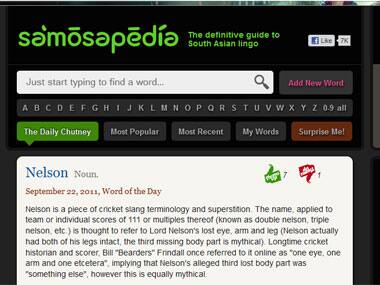 [/caption]Founded by Arun Ranganathan, Vik Bhaskaran, Braxton Robaason, and Arvind Thyagarajan, the site claims it wants to catalog and celebrate the rich, diverse, and ever-evolving landscape of shared South Asian vernacular.Initially pegged as 'wonly.in' or 'we are like this only', as the idea of starting the site and curating dialects and the words across the sub continent became bigger, it was important to find a stronger, more unifying name. Since the idea was to incorporate the unique lexicon that defined Pakistanis, Bangladeshis, and even Sri Lankans, they needed a name that transcended regional boundaries, yet celebrated localised and cultural jargon.For the boys, Samosapedia worked for all the right reasons. Not only did all of them have a special fondness for samosas — especially during monsoons with a hot cup of chai — but nothing seemed more iconic than samosa, an Indian snack which is found in some form or the other everywhere.The other significant USP of the name: In Tamil, 'samosapedia' could translate to 'hold the samosa', which sealed it as a community responsibility to contribute.From mitti pao to SUPW, the three-month-old website has a range of words that have caught on colloquially over the years, but have never been really explained. It's interactive and has already added 2,500 words and phrases since its launch.We Indians have always been great at mixing things with thousands of dialects and 22 official languages. Add to that the difference in slangs from one region to another, and additions and subtractions made along the way. It becomes routine for a Delhi to turn bhaiya into Boss when he/she moves to Mumbai.Over the years, it's become cool to be desi and make desi international. With Facebook recognising Hinglish in its language inserts, things are looking good.Manu Rao, 24, says, "My British and Australian friends have picked up Indian idioms and phrases, and we really have fun throwing them around when we meet. My dad and mom still tsk when I add Indian slangs when guests are over, or when I am going for an important dinner out with parents, but you know what, I don't care. I don't suffer from the Brit hangover."Language purists might scowl at the coolness and the frivolity with which most mix-and-match words and phrases to make a delish language chutney, but popular culture and young India is happy to give their thumbs up regardless.

Here's why you crave sweets after every meal: This one thing can fix it
India's most beloved national parks for wildlife lovers
Even the Beckhams break: The rise of family estrangement
European Council Chief has an OCI card: What is it?
The 90s show Friends, and why we misread modern friendships