
Advertisement


Sections
Jennifer Lawrence nude photos leak: Why it's not just hacking, it's cyber abuse
So here's the gist of the story: a hacker releases private photos of these women, they get shared by millions in the process subjecting their bodies and with it, their life and personality to unwarranted criticism, jokes, comments and expressions of sexual objectification.

Hours after her nude photos were leaked on 4chan by a hacker, actor Mary J Winstead posted the following on Twitter.![Jennifer Lawrence. AFP.]() Jennifer Lawrence. AFP.[/caption]So here's the gist of the story: a hacker releases private photos of these women, they get shared by millions in the process subjecting their bodies and with it, their life and personality to unwarranted criticism, jokes, comments and expressions of sexual objectification. And when the likes of Winstead expressed disgust at the people who participated in this carnival of sexual harassment, she was probably rudely told by the culprits that she has no right to be offended.Curiously, you would argue most celebs, especially women, have traditionally been subjects of this legacy of objectification and are probably even aware of that. However, one should note here that misogynistic reactions to their public personality or parts of their lives they have deliberately chosen to make public are probably not as disturbing as conversations around aspects of their lives they didn't choose to share with the world. Especially when it has to do with their bodies - images of which has been extended to millions in a way they were least prepared to deal with.While the incident has sparked off enthusiastic debates about computer security, one has to remember that is isn't merely an incident of hacking. It's clearly a case of online sexual harassment. The New York magazine aptly summarises the response to the leak: "It’s a power exerted over some of the world’s most successful women, to remind them that no matter how much money or fame or adoration they amass, they are subject to the same humiliation, ridicule, and venom that women online face every day."The social media, since its inception, has also been relentlessly used as a weapon to strike back at genders, sexualities, races and classes expected to have lesser right to social privileges. In our times, the internet is where attempts to establish and uphold hierarchies of sex, race, religion and class are aggressively pursued. It doesn't come as a surprise then that our breed of practicing social media misogynists saw the photo leak as an opportunity to assert that they still can influence and intimidate the most successful women of their times.And what is disturbing is that the incident seemed to have sparked a greater concern about cyber security than moral corruption in our times.Scott Mendelson puts the malaise in perspective when he notes in his editorial in Forbes, "As a society, we deal with violence, especially sexual violence, against women in much the wrongheaded manner that we have fought the war on drugs. We focus on the supply-side, with an emphasis on the things that women must do to “stay safe” instead of focusing on lessening mens’ “demand” to view women as purely a disposable commodity. In short, we emphasize how women can prevent being assaulted instead of telling men and boys not to assault women in the first place."Shortly after the leak, pop culture enthusiast Sonia Saraiya posted a series of tweets on the professional achievements of these actors - their best films, their most memorable roles etc. While one would say the reaction was a tad bit dramatic, what Saraiya was effectively doing, was trying to turn the gaze back to the persons and their accomplishments. The persons, who in a matter of few hours, had been reduced to body parts being unabashedly lusted after, ridiculed and criticised in an online spectacle.The leak and the rousing response it got just reiterated a belief that feminism has been trying to counter for ages now : that a woman is as good as her body. Roxanne Gay helps us understand how we have probably made little progress in that department. She notes in an editorial on The Guardian, "It goes without saying that there aren’t many nude photos of men being released. Men are largely free to bare their bodies as they choose without repercussion..."John Brimingham notes in a comment on the Sydney Morning Herald, "The unknowable number of people who republished those stolen images were not sharing or gossiping or having a bit of fun at the expense of wealthy celebs who should have known better. They were accessories to a crime. Not just of theft, but a form of assault. They debased every woman whose image they shared, and they shamed themselves in doing so."Unfortunately, it's highly unlikely that the internet misogynists are listening.
Jennifer Lawrence. AFP.[/caption]So here's the gist of the story: a hacker releases private photos of these women, they get shared by millions in the process subjecting their bodies and with it, their life and personality to unwarranted criticism, jokes, comments and expressions of sexual objectification. And when the likes of Winstead expressed disgust at the people who participated in this carnival of sexual harassment, she was probably rudely told by the culprits that she has no right to be offended.Curiously, you would argue most celebs, especially women, have traditionally been subjects of this legacy of objectification and are probably even aware of that. However, one should note here that misogynistic reactions to their public personality or parts of their lives they have deliberately chosen to make public are probably not as disturbing as conversations around aspects of their lives they didn't choose to share with the world. Especially when it has to do with their bodies - images of which has been extended to millions in a way they were least prepared to deal with.While the incident has sparked off enthusiastic debates about computer security, one has to remember that is isn't merely an incident of hacking. It's clearly a case of online sexual harassment. The New York magazine aptly summarises the response to the leak: "It’s a power exerted over some of the world’s most successful women, to remind them that no matter how much money or fame or adoration they amass, they are subject to the same humiliation, ridicule, and venom that women online face every day."The social media, since its inception, has also been relentlessly used as a weapon to strike back at genders, sexualities, races and classes expected to have lesser right to social privileges. In our times, the internet is where attempts to establish and uphold hierarchies of sex, race, religion and class are aggressively pursued. It doesn't come as a surprise then that our breed of practicing social media misogynists saw the photo leak as an opportunity to assert that they still can influence and intimidate the most successful women of their times.And what is disturbing is that the incident seemed to have sparked a greater concern about cyber security than moral corruption in our times.Scott Mendelson puts the malaise in perspective when he notes in his editorial in Forbes, "As a society, we deal with violence, especially sexual violence, against women in much the wrongheaded manner that we have fought the war on drugs. We focus on the supply-side, with an emphasis on the things that women must do to “stay safe” instead of focusing on lessening mens’ “demand” to view women as purely a disposable commodity. In short, we emphasize how women can prevent being assaulted instead of telling men and boys not to assault women in the first place."Shortly after the leak, pop culture enthusiast Sonia Saraiya posted a series of tweets on the professional achievements of these actors - their best films, their most memorable roles etc. While one would say the reaction was a tad bit dramatic, what Saraiya was effectively doing, was trying to turn the gaze back to the persons and their accomplishments. The persons, who in a matter of few hours, had been reduced to body parts being unabashedly lusted after, ridiculed and criticised in an online spectacle.The leak and the rousing response it got just reiterated a belief that feminism has been trying to counter for ages now : that a woman is as good as her body. Roxanne Gay helps us understand how we have probably made little progress in that department. She notes in an editorial on The Guardian, "It goes without saying that there aren’t many nude photos of men being released. Men are largely free to bare their bodies as they choose without repercussion..."John Brimingham notes in a comment on the Sydney Morning Herald, "The unknowable number of people who republished those stolen images were not sharing or gossiping or having a bit of fun at the expense of wealthy celebs who should have known better. They were accessories to a crime. Not just of theft, but a form of assault. They debased every woman whose image they shared, and they shamed themselves in doing so."Unfortunately, it's highly unlikely that the internet misogynists are listening.
To those of you looking at photos I took with my husband years ago in the privacy of our home, hope you feel great about yourselves.
— Mary E. Winstead (@M_E_Winstead) August 31, 2014Though remorse or shame are not qualities you would associate with a great percentage of our thriving, abrasive social media netizens, one would have expected that with the wave of protest against the leak, the sleazebags will lie low. However, that wasn't to happen. Because shortly after, Winstead posted this: She even commented on the micro-blogging site that it was high time she started using the block button. One would assume that most celebrities are part familiar with, part dismissive of the overwhelming social media attention they garner. Assuming that some of it can also be of a sexual nature or might border on being abusive, not many celebrities are known to actively respond to such behaviour or shield themselves from it. It's as if they are expected to treat online harassment as a part of their life's deal and honestly social media frenzy is probably the least of the hassles any celebrity faces. However, it is clear from Winstead's tweet, that this time, it was different.[caption id="attachment_1695467" align="alignleft" width="380"]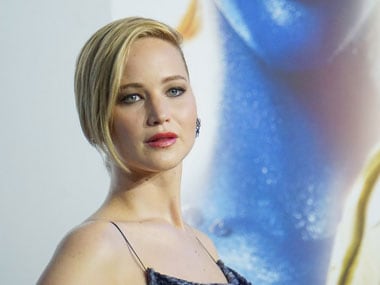 Jennifer Lawrence. AFP.[/caption]So here's the gist of the story: a hacker releases private photos of these women, they get shared by millions in the process subjecting their bodies and with it, their life and personality to unwarranted criticism, jokes, comments and expressions of sexual objectification. And when the likes of Winstead expressed disgust at the people who participated in this carnival of sexual harassment, she was probably rudely told by the culprits that she has no right to be offended.Curiously, you would argue most celebs, especially women, have traditionally been subjects of this legacy of objectification and are probably even aware of that. However, one should note here that misogynistic reactions to their public personality or parts of their lives they have deliberately chosen to make public are probably not as disturbing as conversations around aspects of their lives they didn't choose to share with the world. Especially when it has to do with their bodies - images of which has been extended to millions in a way they were least prepared to deal with.While the incident has sparked off enthusiastic debates about computer security, one has to remember that is isn't merely an incident of hacking. It's clearly a case of online sexual harassment. The New York magazine aptly summarises the response to the leak: "It’s a power exerted over some of the world’s most successful women, to remind them that no matter how much money or fame or adoration they amass, they are subject to the same humiliation, ridicule, and venom that women online face every day."The social media, since its inception, has also been relentlessly used as a weapon to strike back at genders, sexualities, races and classes expected to have lesser right to social privileges. In our times, the internet is where attempts to establish and uphold hierarchies of sex, race, religion and class are aggressively pursued. It doesn't come as a surprise then that our breed of practicing social media misogynists saw the photo leak as an opportunity to assert that they still can influence and intimidate the most successful women of their times.And what is disturbing is that the incident seemed to have sparked a greater concern about cyber security than moral corruption in our times.Scott Mendelson puts the malaise in perspective when he notes in his editorial in Forbes, "As a society, we deal with violence, especially sexual violence, against women in much the wrongheaded manner that we have fought the war on drugs. We focus on the supply-side, with an emphasis on the things that women must do to “stay safe” instead of focusing on lessening mens’ “demand” to view women as purely a disposable commodity. In short, we emphasize how women can prevent being assaulted instead of telling men and boys not to assault women in the first place."Shortly after the leak, pop culture enthusiast Sonia Saraiya posted a series of tweets on the professional achievements of these actors - their best films, their most memorable roles etc. While one would say the reaction was a tad bit dramatic, what Saraiya was effectively doing, was trying to turn the gaze back to the persons and their accomplishments. The persons, who in a matter of few hours, had been reduced to body parts being unabashedly lusted after, ridiculed and criticised in an online spectacle.The leak and the rousing response it got just reiterated a belief that feminism has been trying to counter for ages now : that a woman is as good as her body. Roxanne Gay helps us understand how we have probably made little progress in that department. She notes in an editorial on The Guardian, "It goes without saying that there aren’t many nude photos of men being released. Men are largely free to bare their bodies as they choose without repercussion..."John Brimingham notes in a comment on the Sydney Morning Herald, "The unknowable number of people who republished those stolen images were not sharing or gossiping or having a bit of fun at the expense of wealthy celebs who should have known better. They were accessories to a crime. Not just of theft, but a form of assault. They debased every woman whose image they shared, and they shamed themselves in doing so."Unfortunately, it's highly unlikely that the internet misogynists are listening.
First Published:Sep 04, 2014, 09:21:17 IST
Advertisement
Advertisement

Here's why you crave sweets after every meal: This one thing can fix it
It's common to crave something sweet after meals. However, what's often dismissed as "having a sweet tooth," is mostly nutritional deficiency
1 min read
India's most beloved national parks for wildlife lovers
India holds some of the world’s most wonderful wilderness spaces. Forests and jungles where myth, beauty and survival exist side by side. From mangroves that swallow rivers to grasslands shaped by centuries of migration, the country’s national parks offer more than sightings. They offer moments of stillness, surprise, and reverence.
1 min read
Even the Beckhams break: The rise of family estrangement
People are choosing to cut off contact with their families, prioritising mental health.
4 min read
European Council Chief has an OCI card: What is it?
The OCI Scheme, introduced in 2005, grants foreign nationals of Indian origin a life-long visa for India, but no political rights.
1 min read
The 90s show Friends, and why we misread modern friendships
We’ve all heard about the loneliness epidemic at this point. It isn’t even particularly shocking — it seems like the result on the obvious — people consistently glued to their phones, seeking intimacy and even sex through phone screens, consistent comparison to other peoples’ partners, and what their relationships look like, to how far everyone has come in their jobs — there is much to feel diminished about.
5 min read
Advertisement
Advertisement