


Inside Jabarkhet: One of India's rare privately-owned nature reserves has much to teach about eco conservation
At a time when migration and ghost villages are real problems in the Garhwal Himalayas, an initiative like the Jabarkhet Nature Reserve can play a vital role in reverse migration.

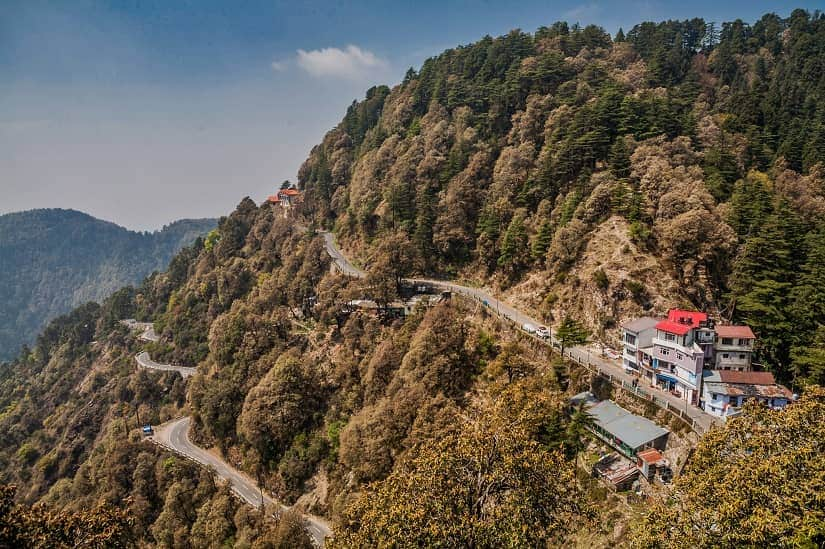
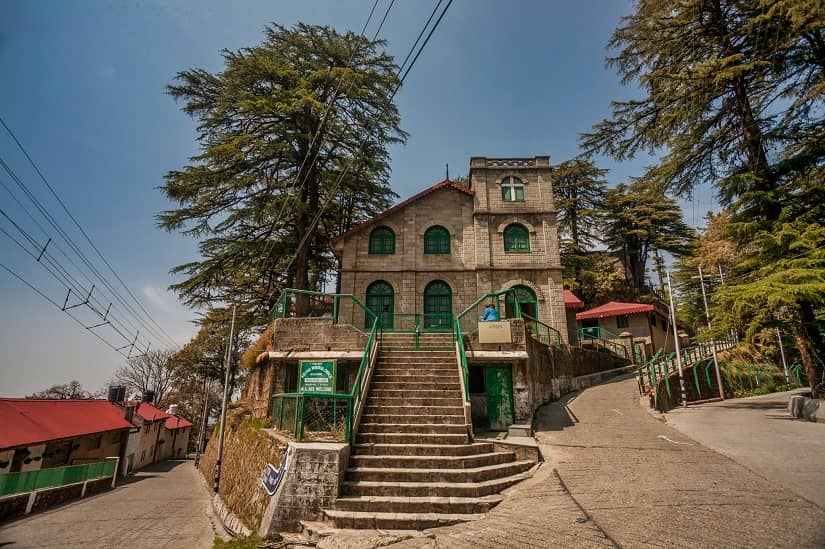
“This is the only tree he comes to. Let’s go there, I’ll show you,” Viru says, nonchalantly.We walk down a path covered in the red petals of the buransh (the local name for the rhododendron), stopping at what Viru says is the Masura tree, or the Mussoorie berry tree. He takes a closer look at the bark, and indicates: “See, these are the scratchings.”The marks have been made by a leopard. And this is its favourite tree in the 110-acre reserve. We had followed the leopard’s footsteps (quite literally) to reach this point.When we first thought of visiting Landour, a laidback hill station dotted with old Colonial bungalows came to mind. That’s just what Landour proved to be. As we navigated the figure-of-eight road from Sister’s Bazaar to the Kellogg Church onto Lal Tibba and then Char Dukaan (which is exactly that: four shops in a row), everything matched the picture we’d built up in our minds — from the British era cemetery to the palatial stone bungalows.
 The locals of the neighbouring villages were involved as well, in this drive to rebuild the ecosystem. Convincing them not to bring their cattle inside (the reserve) to graze or chop the wood was tough. Ecological preservation had to go hand-in-hand with economic sustenance for the locals.The efforts, kick-started in 2013, have come to fruition now. Endemic trees like deodar and silver oak have flourished. Fifty species of ferns, 40 species of grass, 80 species of fungi and mushrooms, 300 of flowering plants and over a 100 of birds have been recorded at the Jabarkhet Nature Reserve.Viru, our guide at Jabarkhet suggested we go to the reserve late afternoon, so we could experience the forest come alive at sunset. We met at the gate of the reserve. Three women from the village of Kolti (7 km below Jabarkhet), were in charge of entry that day. We paid our entry fees and stepped inside.Viru now gave us a broad orientation of the nature reserve. Comfortable walking trails were laid along different parts of the reserve; most of these trails could be completed in anything between 2-4 hours, depending on how often we halted. Anyone with basic fitness levels could traverse most of these trails.The trails were named according to their characteristic feature: For instance, the Ridge Trail took you to the Flag Hill Top, which is the highest point of the Jabarkhet Nature Reserve. The Wildflower Trail led to a meadow covered in a carpet of summer flowers. The Mushroom Trail had mushrooms of all colours and sizes (these flourish in the monsoon). The Leopard Trail was, well, the one that the leopard took.
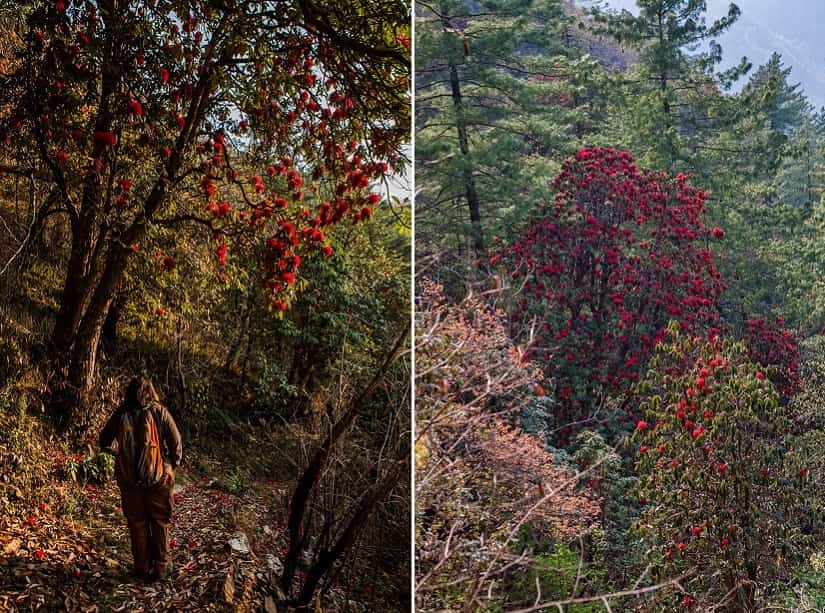 We started with the Rhododendron Trail, since the big red flowers were in full bloom. They grow at elevations of over 6,000 feet. When they are in bloom, in late spring and early summer, they cover the entire mountain slope in a burst of red. The evergreen trees get their new leaves in spring, so we saw the green pointed leaves of the deodar while the silver oak (also an evergreen) was covered in a coat of shimmering silver (hence its name). In between the deodar and oak were the red rhododendrons. Viru informed us that this trio was characteristic to these elevations and a sign of a balanced and flourishing ecosystem.Walking on the red petal-strewn forest floor, we learnt a lot about Himalayan biodiversity. Every now and then, we stopped to observe the wild flowers and ferns. Tiny spots of pink on the floor proved to be black-eyed geraniums. Hairy bergenia (the hairy leaves giving the plant its name) grew on the rocks. The bearded fern (with a base that looks like the beard of an old man) was a native fern, first to rejuvenate after a forest fire.The Rhododendron Trail ended at the Lone Oak Tree point. A sturdy native tree, it is an extremely important one as well since it holds on to the soil and water, thus preventing landslides and increasing the ground water level.We now walked down a part of the Mushroom Trail. “You should see this path in the monsoon, it’s full of colourful fungi,” Viru told us. His words made us realise how the forest would have a completely different look every season. There would be new colours, new smells — and always, new life.A diversion on the Mushroom Trail took us on the Leopard Trail, where Viru pointed out the Masura tree. What he was telling us about the leopard always coming to this particular tree in the entire 110-acre forest was fascinating. But we had to ask: How did he know for sure?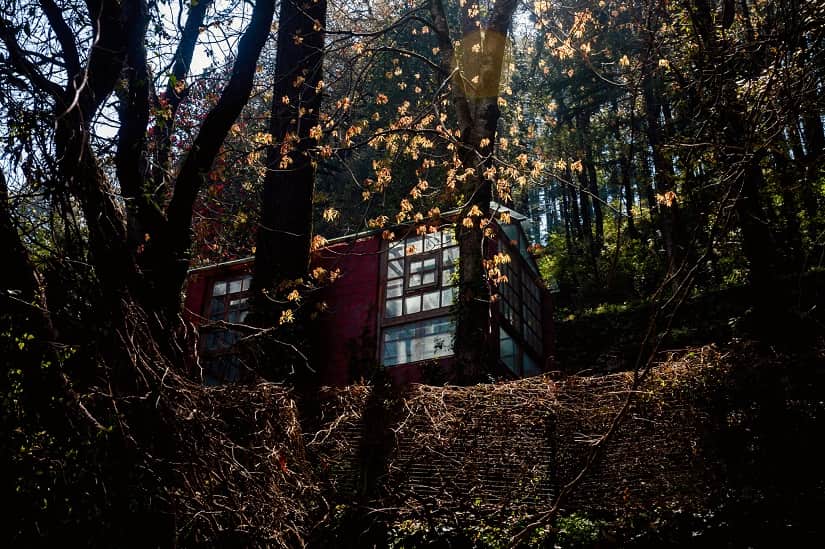
 Viru went to the next tree and pointed to a small device strapped to its bark. We had missed seeing it while walking here; it was well camouflaged — a motion sensor camera. Viru took out its memory chip and inserted it into his phone. There was no new footage which meant that since the last time this was checked, no new animal had walked through this patch of the forest.These cameras are strategically placed at different sections of the forest. When an animal crosses it, its motion sensors activate the camera and capture the footage. The reserve guides regularly check the footage of all these cameras. This has provided them with valuable real-time research material, allowing them to study animal behaviour and keep track of the forest’s health.This was fascinating! We had visited forests before, but never had we seen such sincere efforts at conservation and regeneration firsthand. And so easily replicable. We could only imagine what an ecological revolution could come about, if a handful of land owners came together and decided to implement the Jabarkhet model! Nature and people — all growing together.The reserve has not only restored and nourished the endemic eco system, but also generated work opportunities for local youth like Viru. Today, Viru, who grew up in the nearby Kolti village not only accompanies guests as a guide to the nature reserve but also works towards the conservation process. He interacts with renowned flora, fauna experts, birders, even the WWF. And he loves his work!At a time when migration and ghost villages are real problems in the Garhwal Himalayas, an initiative like the Jabarkhet Nature Reserve can play a vital role in reverse migration.After all, if the mountains are home, who would willingly leave them?Sandeepa and Chetan are full-time travel bloggers and photographers. You can follow their work here.
Here's why you crave sweets after every meal: This one thing can fix it
India's most beloved national parks for wildlife lovers
Even the Beckhams break: The rise of family estrangement
European Council Chief has an OCI card: What is it?
The 90s show Friends, and why we misread modern friendships