


Castration and slaughter : If we care about cows and bulls so much, why do we treat them so badly?
If talk of castration, homosexuality, slaughter and animal sex disturb you, don't read any further

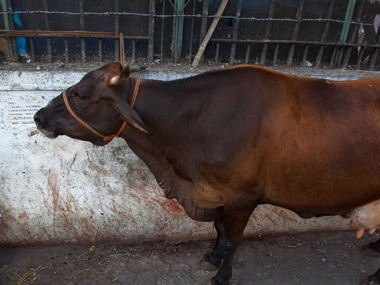
Representational image. Reuters[/caption]We humans have found various ways in which to be cruel to animals. You just need to look around in the cities to see overloaded bullock carts, abandoned cattle roaming the streets, and eating gummed paper to stay alive. But, in terms of cruelty, nothing surpasses the practice of castration, which deprives the animal of its very right to breed and procreate.You may ask why you would want to castrate any animal. On Indian farms, male calves (yes, it’s done very early in the animal’s life) are castrated to make them docile when they grow up. Bulls are full of testosterone and are unfit for work, besides they can be very aggressive. No farmer wants to handle an unruly animal that doesn’t listen to commands. On dairy farms, you don’t need bulls, as is explained below.Castration is a nasty business. In the old days, when no vets were available, all a farmer needed was a razor blade, needle, and thread. By the time the operation was over, there would be blood everywhere. This, thankfully, gave way to the Burdizzo bloodless castrator, probably named after the gentleman who invented it. Around two-and-half feet long, the Burdizzo is a blunt plier that is pressed from both sides into the top of the scrotum. This irreparably damages the vessels that supply blood to the testicles.While it is bloodless, it is not painless. About four people have to hold down the calf while the fifth wields the vile instrument.The cries of the calf are something that you can never unhear. After the procedure, which lasts a few minutes, the calf continues to be in great pain for days. The testicles swell up with liquid and become the size of coconuts. After a few days, the swollen testicles start to shrivel and disappear. The calf begins to walk normally and grows up into a sensible bullock that takes orders easily.Keeping bullocks for farming or draught is cruel, nothing romantic about it.The sad thing is that only a few dozen calves among thousands remain uncastrated. If it was carried out on all, the species would die out. When these uncastrated calves grow up, their lives are no better. They remain confined away from the cows they are supposed to service. In fact, some bulls may never get to see the cows at all. This is so that breeding can be controlled.Semen collection is interesting. It requires two or three stockmen working together. I won’t go into the sordid details, but it involves a teaser animal (usually another male!) to arouse the bull and an artificial vagina to collect the precious liquid. The semen is diluted and frozen and stored till it is needed. A single semen collection can be used on multiple cows. A single bull can, in its breeding life, father around 10,000 calves!The time when a cow is ready to receive semen is called oestrus. You know this is happening when the cow gets frisky and starts exhibiting lesbian behavior by mounting other cows (yes folks, homosexuality is a naturally occurring phenomenon). The semen is inserted into the cow with an instrument known as a gun. The procedure necessitates the stockman inserting his hand deep into the cow’s uterus, while his other hand is deep inside the rectum directing the gun. If the cow abandons its friskiness and lesbian behavior, you know you have been successful. Otherwise, you try again. The process is called artificial insemination. I doubt there is any enjoyment in the process for both bull and cow.A bull is considered useful for about five years, after which it is usually led off to the slaughterhouse. Bullocks on dairy farms are not so lucky; these are slaughtered early to be sold as veal. Work bullocks live to the end of their productive lives, after which a similar fate awaits them.MA Deviah is a senior journalist and communications expert. He is based in Bengaluru.

Here's why you crave sweets after every meal: This one thing can fix it
India's most beloved national parks for wildlife lovers
Even the Beckhams break: The rise of family estrangement
European Council Chief has an OCI card: What is it?
The 90s show Friends, and why we misread modern friendships