
Advertisement


Sections
Feminism is not about shutting things down. It's about claiming your pleasure: Geeta Patel
Geeta Patel, author of Risky Bodies & Techno-intimacy, talks to us about feminism, colonialism and how not to be a 'dunda-bearer' of any kind.

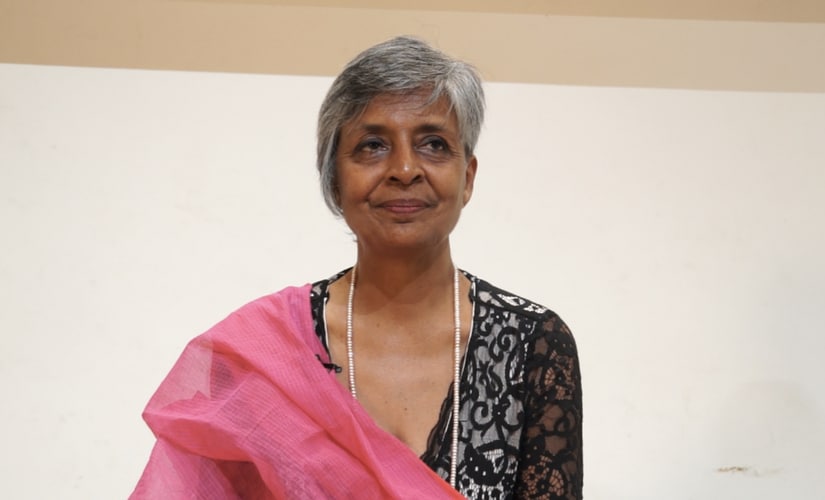
She then adds, "Actually a chapter on aravani kinara (the transgender community) is set in Mumbai, where I grew up and the other is on the film Fire when it was banned. People came to the streets to protest the ban. The film was stopped from being shown... People in Mumbai asked for the film to be shown and generally asked for a different kind of life where they would not be stopped from doing what they like. "Languages Of LoveSince Patel specialises in poetry across Sanskrit, Urdu and Hindi, we asked if the portrayal of women and sexuality differs when it comes to different languages. She said, "Well, not really. South Asia is full of sexual poetry. Look at the Tamra Sangam. Bengali prose has a whole different set of sexual poetry. If you look at each language, the lexicon for sexuality might be different for every language, because different languages have different characters."She adds, "But I must say, Urdu is a stunning language to listen to. Since Urdu is familiar to everyone, maybe through Bollywood films, Urdu gets assigned the most pleasurable poetry of desire. We all get our little lexicon of love from Urdu. I mean, haven't you?"Feminism Through The AgesWe asked Patel about the history of feminism in India, and the religious traditions that are not very woman-friendly, like being forcefully isolated when you are on your period. She tells us, "Tradition is constituted at the moment when it becomes useful as a political device. So practices actually change a lot of times. I have to say one thing as a woman and as someone who has spent a lot of time in the village — if you do not have access to the temple and there were things that you couldn't do, it wasn't so bad. Because one of the things it let you out of is domestic work. But what I have an issue with is that gendered bodies are curtailed and power is organised through gendered bodies. People actually use gender as a way of establishing power."Has the way women are treated in India changed for the better? Is it safer to talk about sexuality as a woman, in spaces like this panel? Patel is not so sure about that. "Women wrote sexual poetry through the ages. We have an idea that now we have more freedom to say things because it makes us feel better than everybody else. I say that we can certainly go back to the past and find a possibility for a future that we want. I don't think it is easy for women to talk about sexuality, it is definitely hard, but it has always been hard and women do take a stand."She says about the history of feminism in India, "Other people have said this, but interestingly enough, the control of women's bodies and sending back women to the domestic (space) was something that comes out of a British practice. It is a British critique of Indian communities. The British critique was that we treat our women really badly; South Asians treat their women really badly. They don't know how to govern themselves, they don't know how to govern their women."What about the current government's stance on curtailing the freedom of women? Patel explains in this video.
The Femi-Nazi ChroniclesWhile the feminism moment is gathering force in India, women shy away from being labeled as feminists. She says, "That is because women don't want to claim the best part of feminism. Feminism is not about shutting things down. Feminism is about claiming your pleasure. I'm the kind of person who wants to claim pleasure and desire and not only protest as a feminist."As for the term 'Feminazi', hear what Geeta has to say, in this video:
First Published:Apr 22, 2017, 14:14:26 IST
Advertisement
Advertisement

Here's why you crave sweets after every meal: This one thing can fix it
It's common to crave something sweet after meals. However, what's often dismissed as "having a sweet tooth," is mostly nutritional deficiency
1 min read
India's most beloved national parks for wildlife lovers
India holds some of the world’s most wonderful wilderness spaces. Forests and jungles where myth, beauty and survival exist side by side. From mangroves that swallow rivers to grasslands shaped by centuries of migration, the country’s national parks offer more than sightings. They offer moments of stillness, surprise, and reverence.
1 min read
Even the Beckhams break: The rise of family estrangement
People are choosing to cut off contact with their families, prioritising mental health.
4 min read
European Council Chief has an OCI card: What is it?
The OCI Scheme, introduced in 2005, grants foreign nationals of Indian origin a life-long visa for India, but no political rights.
1 min read
The 90s show Friends, and why we misread modern friendships
We’ve all heard about the loneliness epidemic at this point. It isn’t even particularly shocking — it seems like the result on the obvious — people consistently glued to their phones, seeking intimacy and even sex through phone screens, consistent comparison to other peoples’ partners, and what their relationships look like, to how far everyone has come in their jobs — there is much to feel diminished about.
5 min read
Advertisement
Advertisement