
Advertisement


Sections
Every Drop Counts: Watch how water is life for families in Cambodia
Getting a drink of water is often not as simple as turning on a tap. For families in Kampong Speu, Cambodia, it's a labour-intensive process that often results in diseases like diarrhoea and typhoid.

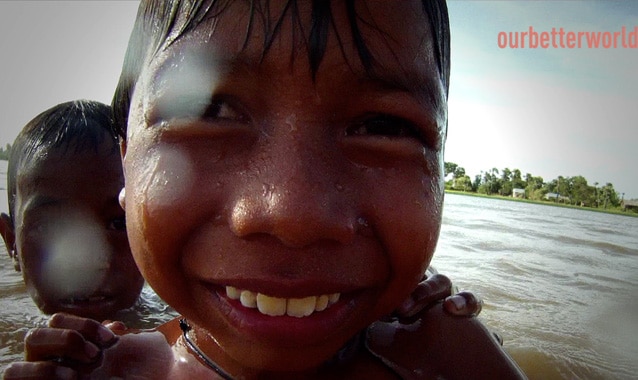 Screen Grab from video[/caption]Dealing with typhoid and diarrhoea is not funny. Spending twice your family’s monthly income to get to a clinic and buy medicine is even worse.Um Cheung, the chief of Kbhal Tra Lach village in Cambodia’s Kampong Speu province, explains that when villagers fall ill, “we have to spend money on travelling to the government clinic far from the village and on medication. It can cost US$50”.Adds village teacher Sot Sean: “When I get sick, I even have to borrow money and pay back with interest."The culprit? Dirty water.With little access to clean water, a vicious cycle of falling ill and paying for medical treatment leaves the villagers unable to escape the poverty trap.For the villagers who mostly work in the numerous rice fields surrounding their village of colourful houses on high stilts, getting drinking water has always been difficult: carrying heavy pails of water from a well, waiting for rainwater to collect or even siphoning muddy, rusty water from a pond, followed by collecting firewood to boil the water.ReliefSo it was welcomed relief for Pov Ran, a rice farmer, to have a water filter installed in her home.“I was the first in the village to have it, and neighbours and relatives would come and get filtered water from me," she said.Pov Ran’s family no longer struggles with typhoid and diarrhoea, and 8,400 fellow villagers will soon see the backs of those diseases too. Over the next three years, 1,400 more filters are set to be installed in the village, thanks to the joint efforts of Cambodian NGO Sao Sary Foundation and the Singapore International Foundation.The bio-sand filters, which cost US$28, are expected to last 10 years. They are built and installed by groups of visiting volunteers.Muhammed Yusof has already made two trips to Kampong Speu in the space of a few months, volunteering with the Singapore International Foundation.Besides enjoying a reunion with one of the families he helped install filters for, he was truly happy to see families sending their children to school with the money saved from medical bills.How You Can HelpGet involved with the Singapore International Foundation's efforts to help Cambodian villagers get clean water.Learn moreVolunteer
First Published:Mar 21, 2015, 11:34:53 IST
Advertisement
Advertisement

Here's why you crave sweets after every meal: This one thing can fix it
It's common to crave something sweet after meals. However, what's often dismissed as "having a sweet tooth," is mostly nutritional deficiency
1 min read
India's most beloved national parks for wildlife lovers
India holds some of the world’s most wonderful wilderness spaces. Forests and jungles where myth, beauty and survival exist side by side. From mangroves that swallow rivers to grasslands shaped by centuries of migration, the country’s national parks offer more than sightings. They offer moments of stillness, surprise, and reverence.
1 min read
Even the Beckhams break: The rise of family estrangement
People are choosing to cut off contact with their families, prioritising mental health.
4 min read
European Council Chief has an OCI card: What is it?
The OCI Scheme, introduced in 2005, grants foreign nationals of Indian origin a life-long visa for India, but no political rights.
1 min read
The 90s show Friends, and why we misread modern friendships
We’ve all heard about the loneliness epidemic at this point. It isn’t even particularly shocking — it seems like the result on the obvious — people consistently glued to their phones, seeking intimacy and even sex through phone screens, consistent comparison to other peoples’ partners, and what their relationships look like, to how far everyone has come in their jobs — there is much to feel diminished about.
5 min read
Advertisement
Advertisement