
Advertisement


Sections
Dystopian fiction offers lessons in fighting injustice, but genre's proliferation can encourage violent rhetoric, action
Responses to dystopian fiction suggest that people might be more inclined to draw ‘political life lessons’ from a narrative about an imaginary political world than from fact-based reporting about the real world.

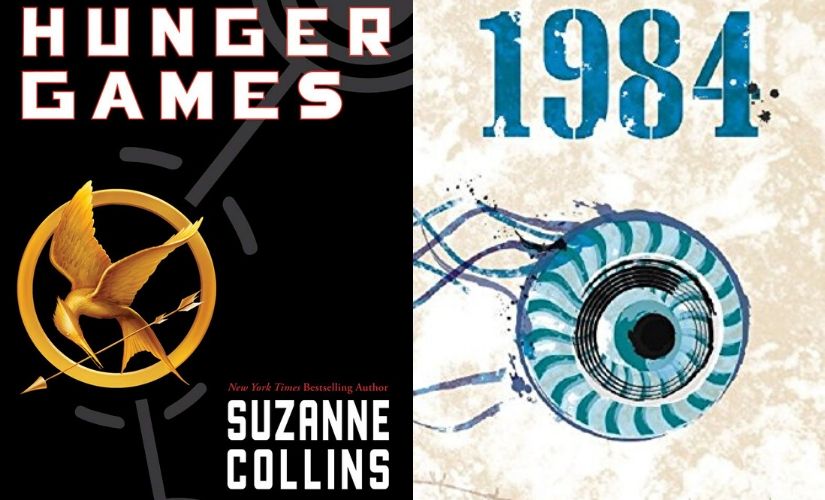
Read part 1 of this examination of the value of dystopian fiction here.By Calvert Jones and Celia ParisHumans are storytelling creatures: the stories we tell have profound implications for how we see our role in the world, and dystopian fiction keeps growing in popularity. According to Goodreads.com, an online community that has grown to 90 million readers, the share of books categorised as ‘dystopian’ in 2012 was the highest for more than 50 years. The boom appears to have begun after the terrorist attacks on the United States of 11 September 2001. The share of dystopian stories skyrocketed in 2010 as publishers flocked to capitalise on the success of the Hunger Games novels (2008-10), Suzanne Collins’s gripping trilogy about a totalitarian society ‘in the ruins of a place once known as North America’. What should we make of the fact that dystopian fiction is so popular?![825]() A great deal of ink has been spilled exploring why these narratives are so appealing. But another important question is: So what? Is dystopian fiction likely to affect anyone’s real-world political attitudes? If so, then how? And how much should we care about its impact? In our research, we set out to answer these questions using a series of experiments.Before we began, we knew many political scientists would likely be skeptical. After all, it seems unlikely that fiction – something known to be ‘made up’ – could be capable of influencing people’s real-world outlooks. Yet a growing body of research shows that there is no ‘strong toggle’ in the brain between fiction and nonfiction.
A great deal of ink has been spilled exploring why these narratives are so appealing. But another important question is: So what? Is dystopian fiction likely to affect anyone’s real-world political attitudes? If so, then how? And how much should we care about its impact? In our research, we set out to answer these questions using a series of experiments.Before we began, we knew many political scientists would likely be skeptical. After all, it seems unlikely that fiction – something known to be ‘made up’ – could be capable of influencing people’s real-world outlooks. Yet a growing body of research shows that there is no ‘strong toggle’ in the brain between fiction and nonfiction.![Aeon counter – do not remove]() Calvert Jones is an assistant professor in the Department of Government and Politics at the University of Maryland. She is the author of Bedouins into Bourgeois: Remaking Citizens for Globalization (2017). Celia Paris is a leadership development coach at the University of Chicago Booth School of Business. She lives in Chicago, Illinois. This article was originally published at Aeon and has been republished under Creative Commons.
Calvert Jones is an assistant professor in the Department of Government and Politics at the University of Maryland. She is the author of Bedouins into Bourgeois: Remaking Citizens for Globalization (2017). Celia Paris is a leadership development coach at the University of Chicago Booth School of Business. She lives in Chicago, Illinois. This article was originally published at Aeon and has been republished under Creative Commons.
 A great deal of ink has been spilled exploring why these narratives are so appealing. But another important question is: So what? Is dystopian fiction likely to affect anyone’s real-world political attitudes? If so, then how? And how much should we care about its impact? In our research, we set out to answer these questions using a series of experiments.Before we began, we knew many political scientists would likely be skeptical. After all, it seems unlikely that fiction – something known to be ‘made up’ – could be capable of influencing people’s real-world outlooks. Yet a growing body of research shows that there is no ‘strong toggle’ in the brain between fiction and nonfiction.
People often incorporate lessons from fictional stories into their beliefs, attitudes and value judgments, sometimes without even being aware that they are doing so.Dystopian fiction, moreover, is likely to be especially powerful because it is inherently political. We focus here on the totalitarian-dystopian genre, which portrays a dark and disturbing alternative world where powerful entities act to oppress and control citizens, violating fundamental values as a matter of course. (While post-apocalyptic narratives, including those about zombies, can also be considered ‘dystopian’, the standard setting is politically very different, emphasising chaos and the collapse of social order, and thus is likely to affect people in different ways.)Certainly, individual totalitarian-dystopian storylines vary. To give a few popular examples, torture and surveillance feature in George Orwell’s 1984 (1949); organ harvesting in the Unwind series (2007-) by Neal Shusterman; mandatory plastic surgery in the Uglies series (2005-7) by Scott Westerfeld; mind control in Lois Lowry’s The Giver (1993); gender inequality in Margaret Atwood’s The Handmaid’s Tale (1985); government-arranged marriage in the Matched trilogy (2010-12) by Ally Condie; and environmental disaster in the Maze Runner series (2009-16) by James Dashner. But all such narratives conform to genre conventions of character, setting and plot. As observed by Carrie Hintz and Elaine Ostry, the editors of Utopian and Dystopian Writing for Young Children and Adults (2003), in these societies ‘the ideals for improvement have gone tragically amok’.
While there are occasional exceptions, dystopian fiction typically valorises dramatic and often violent rebellion by a courageous few.To test the impact of dystopian fiction on political attitudes, we randomly assigned subjects from a sample of American adults to one of three groups. The first group read an excerpt from The Hunger Games and then watched scenes from the 2012 movie adaptation. The second group did the same, except with a different dystopian series – Veronica Roth’s Divergent (2011-18). It features a futuristic US in which society has split into factions dedicated to distinct values; those whose capabilities cross faction lines are viewed as a threat. In the third group – the no-media control group – subjects were not exposed to any dystopian fiction prior to answering questions about their social and political attitudes.
What we found was striking. Even though they were fictional, the dystopian narratives affected subjects in a profound way, recalibrating their moral compasses.Compared with the no-media control group, subjects exposed to the fiction were eight percentage points more likely to say that radical acts such as violent protest and armed rebellion could be justifiable. They also agreed more readily that violence is sometimes necessary to achieve justice (a similar increase of about eight percentage points).Why might dystopian fiction have these startling effects? Perhaps a simple priming mechanism was at work. The violent action scenes could easily have triggered excitement in a way that made our subjects more willing to justify political violence. Violent video games, for instance, can heighten aggressive cognitions, and dystopian fiction often contains violent imagery with rebels fighting against the powers that be.To test this hypothesis, we conducted a second experiment, again with three groups, and this time with a sample of college students around the US. The first group was exposed to The Hunger Games and, as before, we included a second, no-media control group. The third group, however, was exposed to violent scenes from the Fast and Furious movie franchise (2001-), similar in length and type to the violence in the Hunger Games excerpts.Once again, dystopian fiction shaped people’s ethical judgments. It heightened their willingness to justify radical political action compared with the no-media controls, and the increases were similar in magnitude to what we found in the first experiment. But the equally violent and high-adrenaline action scenes from Fast and Furious had no such effect. So violent imagery alone could not explain our findings.Our third experiment explored whether a key ingredient was the narrative itself – that is, a story about brave citizens contending with an unjust government, whether fictional or nonfictional. So this time, our third group read and watched media segments about a real-world protest against corrupt Thai government practices. Clips from CNN, BBC and other news sources showed government forces in riot gear using violent tactics such as tear gas and water cannons to suppress masses of citizens protesting injustice.Despite being real, these images had little effect on subjects. Those in the third group were no more willing to justify political violence than the no-media controls. But those exposed to the Hunger Games dystopian-fiction narrative were significantly more willing to see radical and violent political acts as legitimate, compared with those exposed to the real-world news story. (The difference was about seven to eight percentage points, comparable with the two previous experiments.)
Overall, then, it appears that people might be more inclined to draw ‘political life lessons’ from a narrative about an imaginary political world than from fact-based reporting about the real world.Does this mean that dystopian fiction is a threat to democracy and political stability? Not necessarily, although the fact that it is sometimes censored suggests that some leaders do think along these lines. For example, Orwell’s Animal Farm (1945) is still banned in North Korea, and even in the US, the top 10 books most frequently targeted for removal from school libraries in the past decade include The Hunger Games and Aldous Huxley’s Brave New World (1931). Dystopian narratives offer the lesson that radical political action can be a legitimate response to perceived injustice.
However, the lessons people take away from media, be it fiction or nonfiction, might not always stick and, even when they do stick, people don’t necessarily act on them.Dystopian fiction continues to offer a powerful lens through which people view the ethics of politics and power. Such narratives might have a positive effect in keeping citizens alert to the possibility of injustice in a variety of contexts, ranging from climate change and artificial intelligence to authoritarian resurgences worldwide. But a proliferation of dystopian narratives might also encourage radical, Manichaean perspectives that oversimplify real and complex sources of political disagreement. So while the totalitarian-dystopian craze might nourish society’s ‘watchdog’ role in holding power to account, it can also fast-track some to violent political rhetoric – and even action – as opposed to the civil and fact-based debate and compromise necessary for democracy to thrive.
 Calvert Jones is an assistant professor in the Department of Government and Politics at the University of Maryland. She is the author of Bedouins into Bourgeois: Remaking Citizens for Globalization (2017). Celia Paris is a leadership development coach at the University of Chicago Booth School of Business. She lives in Chicago, Illinois. This article was originally published at Aeon and has been republished under Creative Commons.
First Published:May 06, 2020, 12:40:35 IST
Advertisement
Advertisement

Here's why you crave sweets after every meal: This one thing can fix it
It's common to crave something sweet after meals. However, what's often dismissed as "having a sweet tooth," is mostly nutritional deficiency
1 min read
India's most beloved national parks for wildlife lovers
India holds some of the world’s most wonderful wilderness spaces. Forests and jungles where myth, beauty and survival exist side by side. From mangroves that swallow rivers to grasslands shaped by centuries of migration, the country’s national parks offer more than sightings. They offer moments of stillness, surprise, and reverence.
1 min read
Even the Beckhams break: The rise of family estrangement
People are choosing to cut off contact with their families, prioritising mental health.
4 min read
European Council Chief has an OCI card: What is it?
The OCI Scheme, introduced in 2005, grants foreign nationals of Indian origin a life-long visa for India, but no political rights.
1 min read
The 90s show Friends, and why we misread modern friendships
We’ve all heard about the loneliness epidemic at this point. It isn’t even particularly shocking — it seems like the result on the obvious — people consistently glued to their phones, seeking intimacy and even sex through phone screens, consistent comparison to other peoples’ partners, and what their relationships look like, to how far everyone has come in their jobs — there is much to feel diminished about.
5 min read
Advertisement
Advertisement