
Advertisement


Sections
Dalit writing, global contexts: The River Speaks by Bojja Tharakam stands as a poetic beacon against injustice
Even more than their content or literary merit, Bojja Tharakam’s poems stand tall for the history of resistance against oppression they narrate.

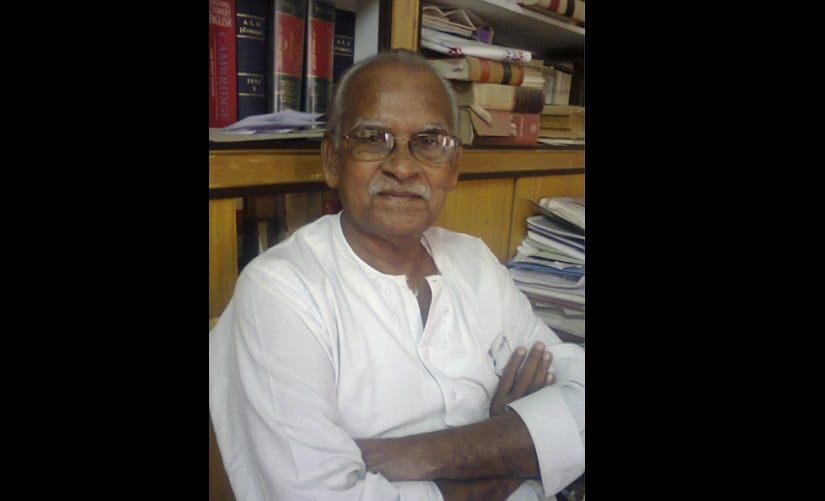 Bojja Tharakam. Image via Facebook/@bojjatharakam[/caption]I am convinced that these poems which were written in prison are freer than other poems, written at leisure. Prisons, after all, can be both — physical, as well as metaphysical. And as the history of human society suggests, among those who end up in prison are some who fight against oppression and injustice. Their hearts are compassionate; their vision is of a society both just and fraternal, one with a conscience. Even in prison, such individuals are free to sing, to speak, to stand for what they believe in, and became the architects of the Begumpura: the land without sorrow as the great Dalit saint and intellectual poet Ravidas envisioned.In this great tradition of those fighting for the sake of humanity, Bojja Tharakam’s is a significant name. His tireless and courageous battle was fought through the law, and most brilliantly, with his literary imagination that was channeled through both prose and poetry. Understanding his out-of-the-box approach as a lawyer, is essential to understanding the depth and honesty of Bojja Tharakam’s poetry. He was not one to lament over victims or his victimhood; instead, he would exhort victims to fight with all their might against the injustices they were subjected to. And he offered legal protection to their fight. These lines offer a glimpse:Tell the women you faceThe unfortunate, powerless womenTo turn their tears into sparksMake them Into a flood of swordsAnd that floodInto a bolt of thunderThat shall dismantleThe mountains of powerFrom their very roots,Tell that as my wordsThese poems were written in 1976, when Tharakam was imprisoned during the Emergency. Just as the principle of justice was part of his work as a lawyer championing human rights, it was a principle also enshrined in his literature. It was a principle reflected in his poetic imagination as well, in which the social overpowers the personal of a poet. That is why, for Tharakam, as a poet, his death was not the end, but a beginning, where he imagines himself a citizen in the battle against caste-class-feudalism. Read these lyrical verses:When the song playing on my lipsBecomes the theme of your voiceEchoing in the voices of tens and hundredsBecoming hundreds and thousands of tides,Travelling from one mouthTo another, in waves and waves,Joins the windAnd moves awayI’ll sing again.Then, lathis can’t choke my throat Jails Can’t muffle my voice.In his poem Mahatma Gandhi!, he radically changes our perception of Gandhi, questioning not only his work but his intentions as well, posing questions which only a handful of poets in India had dared to ask. He writes:Outcast lives,Sacrificed corpses —You’ll notice so many of them, wherever you go,Lives which never experienced touch;When the whole nation surged aheadAvoiding them, reducing them,They confronted youAnd asked you — what about us?What did you tell them, Bapu?What did you do for them, Bapu? You said, untouchability should go,But castes should remain as they are;The people will leave you behindAnd move ahead,When they realizeLife’s in movement;They won’t hover around graves —Bhangi colony,Or Birla BhavanWhich is your address?The poems in The River Speaks are translated by Kuffir Nalgundwar from Telugu into English without losing their vivid, powerful nature. It is a slim volume; only 22 poems. But these 22 poems carry the impact of no fewer than 22 of the world’s best poetry collections combined. Even more than the content or literary merit, Tharakam’s poems stand tall for the history of resistance against oppression they narrate.“Lawyer; writer; human rights, political and social activist; thinker; poet: all these words can’t capture the essence of Bojja Tharakam’s (1939-2016) personality and work. A personality that shone as a sterling example of commitment, integrity and wisdom in the intellectual, political and social firmament of India, particularly the Telugu states, for nearly five decades,” write Anu Ramdas and Kuffir Nalgundwar in their beautiful, brisk introduction to this book.
Or as Karthik Navayan Battula, an activist and human rights lawyer from Telangana, says, “He (Bojja Tharakam) was the first lawyer to ask Dalit victims, who had faced rape, killings, land-grabbing every day, to retaliate against the perpetrators. He stood with the affected.”The River Speaks is a manifestation of the poet’s zeal for justice, to free people from oppression, to make them realise their potential. Very few poets in India possess this zeal, this commitment to justice and hence their poems lack love and compassion for people. In Tharakam’s poems, people are asked to fight injustice with tooth and nail, in whatever capacity they can, because there is no sense in living life as a meek citizen.The world’s great poems have awakened people from hopelessness and offered a clarity and sense of purpose, to fight against the structures of oppression sabotaging humanity. Without this quality, literature cannot be developed into something that transforms human lives. The River Speaks — in Tharakam’s mature, poetic voice — can change the way we can imagine literature, can change even the way we imagine the world itself.***Yogesh Maitreya is a poet, translator and founder of Panther's Paw Publication, an anti-caste publishing house. He is pursuing a PhD at the Tata Institute of Social Sciences, Mumbai.
First Published:Oct 05, 2019, 09:04:44 IST
Advertisement
Advertisement

Here's why you crave sweets after every meal: This one thing can fix it
It's common to crave something sweet after meals. However, what's often dismissed as "having a sweet tooth," is mostly nutritional deficiency
1 min read
India's most beloved national parks for wildlife lovers
India holds some of the world’s most wonderful wilderness spaces. Forests and jungles where myth, beauty and survival exist side by side. From mangroves that swallow rivers to grasslands shaped by centuries of migration, the country’s national parks offer more than sightings. They offer moments of stillness, surprise, and reverence.
1 min read
Even the Beckhams break: The rise of family estrangement
People are choosing to cut off contact with their families, prioritising mental health.
4 min read
European Council Chief has an OCI card: What is it?
The OCI Scheme, introduced in 2005, grants foreign nationals of Indian origin a life-long visa for India, but no political rights.
1 min read
The 90s show Friends, and why we misread modern friendships
We’ve all heard about the loneliness epidemic at this point. It isn’t even particularly shocking — it seems like the result on the obvious — people consistently glued to their phones, seeking intimacy and even sex through phone screens, consistent comparison to other peoples’ partners, and what their relationships look like, to how far everyone has come in their jobs — there is much to feel diminished about.
5 min read
Advertisement
Advertisement