
Advertisement


Sections
Dalit writing, global contexts: In Days Will Come Back, Kamal Dev Pall unmasks an unseen, unspoken of Punjab
What makes Days Will Come Back significant is not only its status as the first Dalit Punjabi poetry collection to be translated in English, but also the literary imagination it offers; indeed it change the very way in which we look at the idea of Punjab.

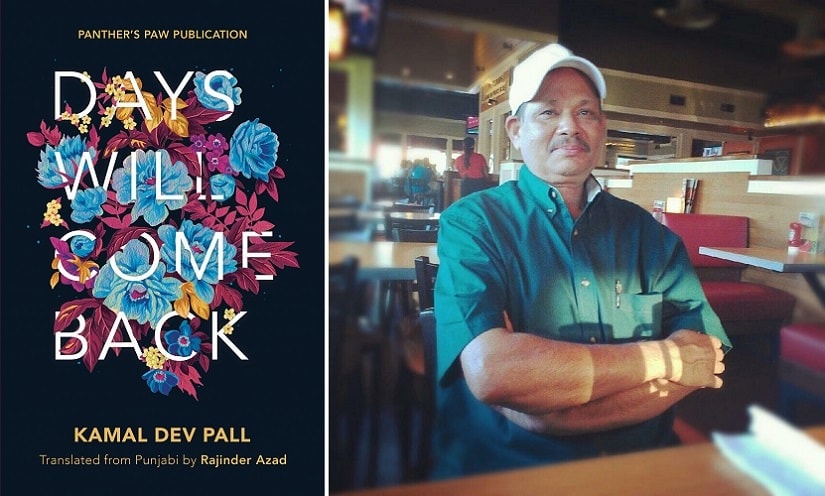 To read Kamal Dev Pall’s poetry collection Days Will Come Back (Panther's Paw Publication), is to enter a Punjab which most of us would have hardly imagined[/caption]Days Will Come Back introduces us to the value of their labour; it makes clear their role in the history of the nation, it details the aesthetics of their love and labour, their dreams and aspirations, and how crucial their imaginations were, in planting the seed of beauty in a land that has internalised the cruelty of caste. Vividly illustrated by Kamal Dev Pall in the last poem of this collection, the verses state —Neither the lawns nor the flowersExist in our courtyardsLike in a King’s palace gardensWe can hardly fit a camping bed hereHowever, our relationship with flowersIs as old as Harappa and Mohenjo-DaroThat is why we grow rosesIn the bottom of broken potsWith an expectationThat days will come backWhen we will fulfill our dreamsWe will grow the same roses in our backyardsThen lawns will not only exist in palacesBut also, in our courtyardsThe poem serves as an anthem of hope for the Dalit community across the globe, fighting the existing structural oppression around them. At the same time, these verses also offer a blueprint of the Dalit literary imagination. It reiterates that Dalit literature is not devoid of hope and aesthetics, while also explaining the correlation of theory and empiricism exercised by Dalit writers across generations and linguistic states.***In the birth of such an immaculate and dialectical imagination, a poet’s social, economic and cultural conditions play an inevitable role.Born in 1957 in Hoshiarpur, Punjab, Kamal Dev Pall now resides in California, America. Before moving to the US, he earned an MA in Punjabi from Punjab University, during which time he also published two books of poetry and one of ghazals.Working closely with Kanshi Ram during the BSP’s heyday in North India, Pall’s literary imagination was shaped by anti-caste political awakenings as well as anti-caste literary perceptions.
According to Punjab University professor Sukhdev Sirsa, “The central character of Kamal’s poems is not a worker who has accepted inhuman behaviour as his final destiny, or a middle-class man who only complains and cries. The main character of his poems is an enlightened man who comprehends the reasons behind his oppression and communicates his understanding to his fellow community members...”Going a step further, Days Will Come Back poses a question to the reader, explains the trajectories of oppression, and throws up a vision to get rid of the oppressive present. For Pall writes:Congratulations; for the hard work without benefitsSermons for next birth and war among brothersIf not a disguise, indeed it is a betrayalSermons are given every day to untouchables Acceptance of dominance, ignorance of exploitationThe life devoted to GodIf not slavery, it is indeed a surrenderIn another poem, he transforms hope into a vision for a just and fraternal life —We are transforming hands into steelWe are enlightening brains We are sowing seeds of conscience in dead bodiesWe think that a life without struggle Is the absolute silence of the graveyardEven as he lays bare brutal structural realities through his poems, Pall’s verses have a narrative background-ed in history and identity. Witness the poem titled Freedom, from this same collection:Migration is our destiny That time when the ownersSeparated a calf from its mother cowJust for the greed of milk Fundamental rights remained silent However, the ancestors of slavesKept learning the art of liberation from animalsThe literature about Punjab that we have encountered has been, overwhelmingly, the product a Brahmanical literary imagination. Even the discourse of Partition has not escaped. Our visual and literary imagination of Punjab is devoid of the existence of the Dalit community and their stories. In a state where the Dalit population is highest but members of the community hold hardly any land of their own, the dichotomy makes their narrative even more profound and needs greater attention to be fully understood.Days Will Come Back sings for us the songs of those who were deliberately not heard. It enshrines the song that has been historically muted and avoided. In these pages, this song is sung in all its vigour and honesty. Days Will Come Back encapsulates the history of the love and labour of Dalits, and a blueprint of their future. Rajinder Azad’s succinct yet soulful English translation of these Punjabi poems multiplies the verses’ meanings, removes the barriers of literary imagination, and presents an idea of a new life conceived by the person — a Dalit, a landless worker, dreaming of a life of dignity in foreign land.Reading Days Will Come Back is like experiencing a hitherto unseen, unspoken of Punjab.Yogesh Maitreya is a poet, translator and founder of Panther's Paw Publication, an anti-caste publishing house. He is pursuing a PhD at the Tata Institute of Social Sciences, Mumbai.
First Published:Jul 21, 2019, 11:15:24 IST
Advertisement
Advertisement

Here's why you crave sweets after every meal: This one thing can fix it
It's common to crave something sweet after meals. However, what's often dismissed as "having a sweet tooth," is mostly nutritional deficiency
1 min read
India's most beloved national parks for wildlife lovers
India holds some of the world’s most wonderful wilderness spaces. Forests and jungles where myth, beauty and survival exist side by side. From mangroves that swallow rivers to grasslands shaped by centuries of migration, the country’s national parks offer more than sightings. They offer moments of stillness, surprise, and reverence.
1 min read
Even the Beckhams break: The rise of family estrangement
People are choosing to cut off contact with their families, prioritising mental health.
4 min read
European Council Chief has an OCI card: What is it?
The OCI Scheme, introduced in 2005, grants foreign nationals of Indian origin a life-long visa for India, but no political rights.
1 min read
The 90s show Friends, and why we misread modern friendships
We’ve all heard about the loneliness epidemic at this point. It isn’t even particularly shocking — it seems like the result on the obvious — people consistently glued to their phones, seeking intimacy and even sex through phone screens, consistent comparison to other peoples’ partners, and what their relationships look like, to how far everyone has come in their jobs — there is much to feel diminished about.
5 min read
Advertisement
Advertisement