
Advertisement


Sections
But What Was She Wearing, India's first feature-length documentary on workplace harassment, faces funding crunch
India's only feature-length documentary on workplace sexual harassment — 'But What Was She Wearing?' by Vaishnavi Sundar — is struggling to be completed for lack of funds | #FirstCulture

“Do you know for people like us, who are freelancers not working in an organisation, there is supposed to be a local sexual harassment complaints committee that the district collector must set up?” Vaishnavi Sundar asks, then states emphatically: “There is no such thing. Nowhere in India. The collector has no clue in most cases.” she finished, restoring my cynical normalcy.Vaishnavi Sundar is an independent filmmaker, writer, speaker, activist, and the founder of the international filmmakers’ collective Women Making Films. In December 2016, with four successful films to their credit, Vaishnavi and her all-women international crew set out on a journey to make But What Was She Wearing, their fifth film in as many years. But What Was She Wearing is a feature-length documentary film on workplace sexual harassment, pivoted around the The Sexual Harassment of Women at Workplace (Prevention, Prohibition and Redressal) Act of 2013 and the shortcomings in its implementation.Going by the preview the clip below provides, Vaishnavi's is a powerful film that clinically and poignantly looks at workplace sexual harassment in India.Towards the end of 2016, Vaishnavi and her intern Hannah Latimer Snell began working on this film under the banner of her production company, Lime Soda Films. A year of research, several RTIs, over 35 interviews, and a crowdfunding campaign later, But What Was She Wearing was on its way to being a first-of-its-kind film in the Indian context.“When a law is passed, lawmakers hide behind it and ask ‘what more do you want?’, without considering the abysmal way in which it’s practised,” explains Vaishnavi. Her film aims to educate people about the law itself, discuss its intricacies, and encourage people to practice it in the spirit it’s intended. What constitutes harassment, what are the common prejudices, who can women complain to, what are their rights, how to handle retaliation — But What Was She Wearing brings together the various spoken and unspoken aspects of addressing the omnipresent problem of workplace sexual harassment.[caption id="attachment_4335889" align="alignnone" width="825"]![Filmmaker Vaishnavi Sundar]() Filmmaker Vaishnavi Sundar[/caption][caption id="attachment_4335893" align="alignnone" width="825"]
Filmmaker Vaishnavi Sundar[/caption][caption id="attachment_4335893" align="alignnone" width="825"]![Shoot of 'But What Was She Wearing' in progress]() Shoot of 'But What Was She Wearing' in progress[/caption]Swarna Rajagopalan of Prajnya, an NGO working in the area of gender violence — who has also been interviewed in the film — says, “This film will be a useful tool to us and others like us working to improve both understanding and legal compliance with the workplace sexual harassment law. So it was important to support it by being a part of it”.“One woman’s anger can only go so far,” says Vaishnavi, explaining why she chose to make this film feature-length with stories from several women from a wide range of backgrounds. “I wanted to take a scientific approach to this,” she says. “This film is certainly about the lived experiences of women at work, but it is also about the social, political, and cultural environment that enables it”.In doing so, she appears to have considered nearly every possibility. The flower seller whose workplace is on the streets, the manual scavenger, the construction worker, the domestic help, the standup comedian, the writer, the actor, the lawyer — “I’ve sought representation across class/caste/religion divide,” she says.Though her efforts began months ago, the importance of the film comes into sharp focus today in the backdrop of #MeToo. Ashwini Asokan, founder and CEO of Mad Street Den who was also interviewed in the film, says, “I find it important now more than ever before, for us women to take ownership of the mic. We are not passive observers, we are creators telling and retelling the stories everyone should hear. Vaishnavi is using film as the medium to amplify the voices we’ve heard for generations.”Vaishnavi tells me that some of her interviews stretched for hours; one went on for four hours. “When I reached out to these women, they were willing to tell me their stories, openly and without inhibition. They have been wanting to talk about their experiences, just that no one has asked them so far,” she says. She admits that this was not easy — the emotional cost of dwelling on issues that are largely triggering for all members of the crew. “At the end of each interview, all of us would come together and just sit in silence. We needed it to recoup and move forward,” she says. Yet, her film chooses to focus on not the victimhood, but on recovery and recourse.Suganthi P, state general secretary, All India Democratic Women's Association (AIDWA) — CPI (M), summarises the purpose of the film poignantly, “Only after several protests and life sacrifices do laws protecting women come into existence. But are these laws diligently implemented is the question to ask”. And that is the question Vaishnavi seeks to answer.But What Was She Wearing is an important film, being made at an important time in the history of women’s movements in India. For her endeavour to bear fruit, she has a few more steps to go. To complete this film — for post-production, crew remuneration and distribution — Vaishnavi still needs funds amounting to Rs 4,00,000. To contribute, click here.“No amount is small or big,” Vaishnavi insists.
Shoot of 'But What Was She Wearing' in progress[/caption]Swarna Rajagopalan of Prajnya, an NGO working in the area of gender violence — who has also been interviewed in the film — says, “This film will be a useful tool to us and others like us working to improve both understanding and legal compliance with the workplace sexual harassment law. So it was important to support it by being a part of it”.“One woman’s anger can only go so far,” says Vaishnavi, explaining why she chose to make this film feature-length with stories from several women from a wide range of backgrounds. “I wanted to take a scientific approach to this,” she says. “This film is certainly about the lived experiences of women at work, but it is also about the social, political, and cultural environment that enables it”.In doing so, she appears to have considered nearly every possibility. The flower seller whose workplace is on the streets, the manual scavenger, the construction worker, the domestic help, the standup comedian, the writer, the actor, the lawyer — “I’ve sought representation across class/caste/religion divide,” she says.Though her efforts began months ago, the importance of the film comes into sharp focus today in the backdrop of #MeToo. Ashwini Asokan, founder and CEO of Mad Street Den who was also interviewed in the film, says, “I find it important now more than ever before, for us women to take ownership of the mic. We are not passive observers, we are creators telling and retelling the stories everyone should hear. Vaishnavi is using film as the medium to amplify the voices we’ve heard for generations.”Vaishnavi tells me that some of her interviews stretched for hours; one went on for four hours. “When I reached out to these women, they were willing to tell me their stories, openly and without inhibition. They have been wanting to talk about their experiences, just that no one has asked them so far,” she says. She admits that this was not easy — the emotional cost of dwelling on issues that are largely triggering for all members of the crew. “At the end of each interview, all of us would come together and just sit in silence. We needed it to recoup and move forward,” she says. Yet, her film chooses to focus on not the victimhood, but on recovery and recourse.Suganthi P, state general secretary, All India Democratic Women's Association (AIDWA) — CPI (M), summarises the purpose of the film poignantly, “Only after several protests and life sacrifices do laws protecting women come into existence. But are these laws diligently implemented is the question to ask”. And that is the question Vaishnavi seeks to answer.But What Was She Wearing is an important film, being made at an important time in the history of women’s movements in India. For her endeavour to bear fruit, she has a few more steps to go. To complete this film — for post-production, crew remuneration and distribution — Vaishnavi still needs funds amounting to Rs 4,00,000. To contribute, click here.“No amount is small or big,” Vaishnavi insists.
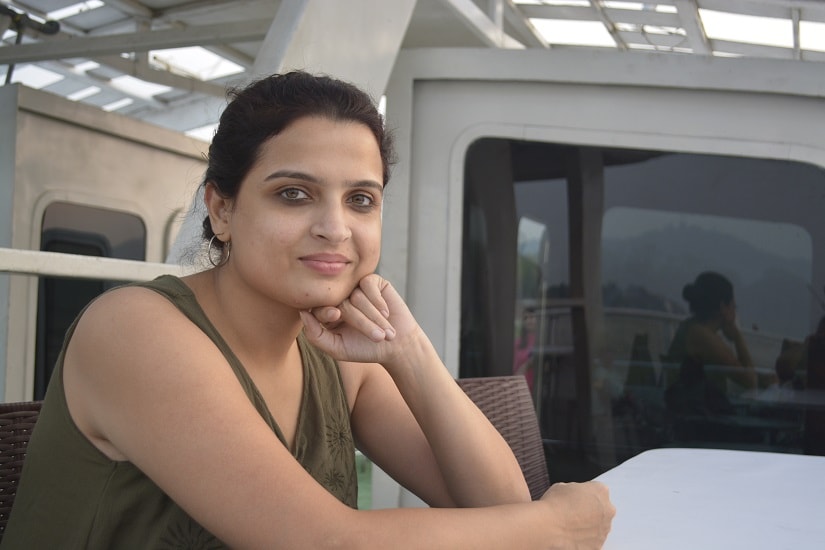 Filmmaker Vaishnavi Sundar[/caption][caption id="attachment_4335893" align="alignnone" width="825"]
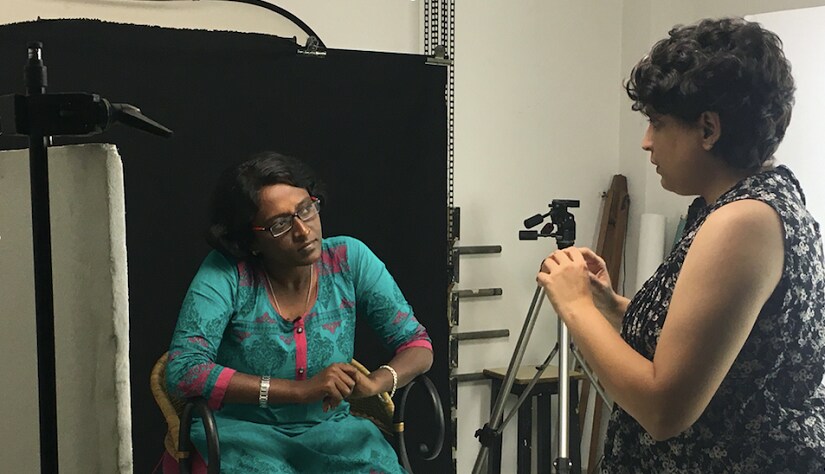 Shoot of 'But What Was She Wearing' in progress[/caption]Swarna Rajagopalan of Prajnya, an NGO working in the area of gender violence — who has also been interviewed in the film — says, “This film will be a useful tool to us and others like us working to improve both understanding and legal compliance with the workplace sexual harassment law. So it was important to support it by being a part of it”.“One woman’s anger can only go so far,” says Vaishnavi, explaining why she chose to make this film feature-length with stories from several women from a wide range of backgrounds. “I wanted to take a scientific approach to this,” she says. “This film is certainly about the lived experiences of women at work, but it is also about the social, political, and cultural environment that enables it”.In doing so, she appears to have considered nearly every possibility. The flower seller whose workplace is on the streets, the manual scavenger, the construction worker, the domestic help, the standup comedian, the writer, the actor, the lawyer — “I’ve sought representation across class/caste/religion divide,” she says.Though her efforts began months ago, the importance of the film comes into sharp focus today in the backdrop of #MeToo. Ashwini Asokan, founder and CEO of Mad Street Den who was also interviewed in the film, says, “I find it important now more than ever before, for us women to take ownership of the mic. We are not passive observers, we are creators telling and retelling the stories everyone should hear. Vaishnavi is using film as the medium to amplify the voices we’ve heard for generations.”Vaishnavi tells me that some of her interviews stretched for hours; one went on for four hours. “When I reached out to these women, they were willing to tell me their stories, openly and without inhibition. They have been wanting to talk about their experiences, just that no one has asked them so far,” she says. She admits that this was not easy — the emotional cost of dwelling on issues that are largely triggering for all members of the crew. “At the end of each interview, all of us would come together and just sit in silence. We needed it to recoup and move forward,” she says. Yet, her film chooses to focus on not the victimhood, but on recovery and recourse.
First Published:Feb 05, 2018, 10:44:17 IST
Advertisement
Advertisement

Here's why you crave sweets after every meal: This one thing can fix it
It's common to crave something sweet after meals. However, what's often dismissed as "having a sweet tooth," is mostly nutritional deficiency
1 min read
India's most beloved national parks for wildlife lovers
India holds some of the world’s most wonderful wilderness spaces. Forests and jungles where myth, beauty and survival exist side by side. From mangroves that swallow rivers to grasslands shaped by centuries of migration, the country’s national parks offer more than sightings. They offer moments of stillness, surprise, and reverence.
1 min read
Even the Beckhams break: The rise of family estrangement
People are choosing to cut off contact with their families, prioritising mental health.
4 min read
European Council Chief has an OCI card: What is it?
The OCI Scheme, introduced in 2005, grants foreign nationals of Indian origin a life-long visa for India, but no political rights.
1 min read
The 90s show Friends, and why we misread modern friendships
We’ve all heard about the loneliness epidemic at this point. It isn’t even particularly shocking — it seems like the result on the obvious — people consistently glued to their phones, seeking intimacy and even sex through phone screens, consistent comparison to other peoples’ partners, and what their relationships look like, to how far everyone has come in their jobs — there is much to feel diminished about.
5 min read
Advertisement
Advertisement