
Advertisement


Sections
An arts degree? Not just for wimps and losers anymore
Arts education was always the last refuge for the math-phobe and the unambitious. But now it's finally getting some respect. What's new isn't just more applicants but the kind of students who are opting for it.

Amidst all the end-of-civilisation-is-nigh hysteria, otherwise known as the proposal for a common IIT-JEE examination, the headline of one news item, tucked away in the Metro section of my daily newspaper, caught my eye. [/caption]When I was mulling my college options in the dark ages of pre-liberalisation India, it was no country for arts students. Especially for boys. The fact that I opted out of the medical stream was considered radical enough. I met a surgeon the other day who said he had wanted to be an engineer. But the moment he got through the medical JEE, his family said, “Nothing doing. We are all getting older. And we will need a doctor in the family.” So he became one.I too ended up in computer science. My family did not have to frog march me into it. Everyone said career prospects in the humanities in Kolkata meant what Bengalis called “schoolmastery”. Once you got into computer science, it seemed ridiculous not to do it. Engineering was a passport to a brighter future. With computer science, I consoled myself, at least it would hopefully be an air-conditioned one.Eventually I found my way back to writing. When I quit my software job, I told my family I’d changed jobs but neglected to mention I had changed careers. “Are you still in computers?” my mother asked suspiciously. “I still use them,” I replied guardedly.I still feel the lack of a humanities education everyday. “You can just look up what you need,” a friend, an electronics engineer, once told me. “Everything is online now.” But that’s the Wikipedia version of humanities. Deprived of its broad base, I often feel that I don’t even know what I don’t know.The plight of the humanities in India has become a well-worn sob story. In a developing nation’s race to modernity, humanities always got short shrift. Shreesh Chaudhary, a professor of English and linguistics at IIT Madras points out that the India’s UGC grants about 500 research fellowships for all humanities and social sciences. A single science and tech institution can offer almost as many in one year. “The HSIs are starved of funds. They cannot provide even a minimal standard working environment for their academics and neither can they for their students. They mostly, therefore, attract only those without another option. Peanuts do not attract lions.”But now we are seeing its fallout. We have legions of MBAs but the core is hollow. As Aatish Taseer writes in Hindustan Times:
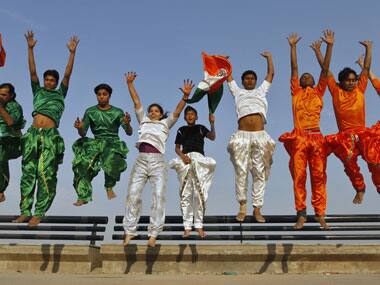
Arts aces admissions charts.Yes, humanities is climbing up the desirability charts. It’s still a long way behind medicine and engineering but “humanities is gradually becoming one of the most sought after streams among students because of new job opportunities” a school principal told The Telegraph. Even more reassuring, the profile of who is applying is changing. Once it used to be “the delicate and the ambitionless, the wimps and losers as opposed to the driven and go-getting ‘Joint-IIT’ lot”. “This year we have noticed that most of the candidates for humanities seats have scored higher marks in the matric exams compared to those aiming for science,” said a college principal.[caption id="attachment_347857" align="alignleft" width="380" caption="It's not just wimps and math-phobics who opt for humanities in college anymore. Representative image. Reuters."]
 [/caption]When I was mulling my college options in the dark ages of pre-liberalisation India, it was no country for arts students. Especially for boys. The fact that I opted out of the medical stream was considered radical enough. I met a surgeon the other day who said he had wanted to be an engineer. But the moment he got through the medical JEE, his family said, “Nothing doing. We are all getting older. And we will need a doctor in the family.” So he became one.I too ended up in computer science. My family did not have to frog march me into it. Everyone said career prospects in the humanities in Kolkata meant what Bengalis called “schoolmastery”. Once you got into computer science, it seemed ridiculous not to do it. Engineering was a passport to a brighter future. With computer science, I consoled myself, at least it would hopefully be an air-conditioned one.Eventually I found my way back to writing. When I quit my software job, I told my family I’d changed jobs but neglected to mention I had changed careers. “Are you still in computers?” my mother asked suspiciously. “I still use them,” I replied guardedly.I still feel the lack of a humanities education everyday. “You can just look up what you need,” a friend, an electronics engineer, once told me. “Everything is online now.” But that’s the Wikipedia version of humanities. Deprived of its broad base, I often feel that I don’t even know what I don’t know.The plight of the humanities in India has become a well-worn sob story. In a developing nation’s race to modernity, humanities always got short shrift. Shreesh Chaudhary, a professor of English and linguistics at IIT Madras points out that the India’s UGC grants about 500 research fellowships for all humanities and social sciences. A single science and tech institution can offer almost as many in one year. “The HSIs are starved of funds. They cannot provide even a minimal standard working environment for their academics and neither can they for their students. They mostly, therefore, attract only those without another option. Peanuts do not attract lions.”But now we are seeing its fallout. We have legions of MBAs but the core is hollow. As Aatish Taseer writes in Hindustan Times:
We fooled ourselves into believing that we did not need the humanities; and, even as the imaginations of our young people were paralysed, including those in the sciences - for they no less than artists need the past to enlarge their idea of human possibility - we did not build institutes of classical studies to rival our IITs and our IIMs. We let foreigners do the hard work of studying our past and humanities.Now it’s hitting us where it hurts the most – in the employment market. “Many employers feel people trained just in technical fields don't have a rounded education, they can't represent their corporation as a whole, particularly not on a global level,” says Homi Bhabha in an interview to the Times of India. “The humanities help you pull together the social sciences, the professions, technology and the sciences. They produce a crossroads which allows you to hold different aspects of a society together. Unfortunately, because that has fallen out, the centre of Indian education doesn't hold.”“Investment in science and technology alone could not save Eastern European nations,” writes Chaudhary. India might not be Bulgaria but we have created, at best, a monoculture of competence instead of a diversity of excellence. From my own batch of 200 odd schoolmates, almost everyone is in medicine, engineering, banking or business. I only know of three who are in academia. One teaches in the US, one is in a college in Kolkata. The third runs coaching classes for IIT-JEE prep.The Phoenix-like return of the humanities is a glimmer of hope in that wasteland. But it’s still just a glimmer. Part of its resurgence is because there are a lot more career options out there now beyond the drudgery of “schoolmastery”. While arts might not be the new computer science, it’s no longer the middle-class finishing school for girls who just want to get married and boys with math-phobia. A humanities degree can come with a decent salary whether it’s in fashion design or corporate law. But the new cool comes with its own risk worries The Telegraph in an editorial.
Especially with subjects like literature, history and the social sciences, there is a risk that this new careerism might reduce their teaching and study at the plus-two level to an excessively practical approach that restricts and flattens the expansive and humanizing potential of these subjects.The humanities require more than funds and students and high ideals. They need tough love as well. The faculty needs to face the publish or perish anxiety instead of stagnating in chalta-hai doldrums. There need to be more innovations whether its dual degree programmes or mix and match ones and an openness to courses that reflect a changing society.But for now, I’m thrilled to see even the hints of change. As my nephew mulls his college options, engineering, commerce and medicine, subjects he has little interest in, are not even on the table. Whatever the future holds, it’s a huge step forward, not just for him, but for his parents as well. As he downloads admission forms for English Literature and researches multimedia design degrees, I am excited for him.And I have to admit, a little bit envious.
First Published:Jun 18, 2012, 15:47:23 IST
Advertisement
Advertisement

Here's why you crave sweets after every meal: This one thing can fix it
It's common to crave something sweet after meals. However, what's often dismissed as "having a sweet tooth," is mostly nutritional deficiency
1 min read
India's most beloved national parks for wildlife lovers
India holds some of the world’s most wonderful wilderness spaces. Forests and jungles where myth, beauty and survival exist side by side. From mangroves that swallow rivers to grasslands shaped by centuries of migration, the country’s national parks offer more than sightings. They offer moments of stillness, surprise, and reverence.
1 min read
Even the Beckhams break: The rise of family estrangement
People are choosing to cut off contact with their families, prioritising mental health.
4 min read
European Council Chief has an OCI card: What is it?
The OCI Scheme, introduced in 2005, grants foreign nationals of Indian origin a life-long visa for India, but no political rights.
1 min read
The 90s show Friends, and why we misread modern friendships
We’ve all heard about the loneliness epidemic at this point. It isn’t even particularly shocking — it seems like the result on the obvious — people consistently glued to their phones, seeking intimacy and even sex through phone screens, consistent comparison to other peoples’ partners, and what their relationships look like, to how far everyone has come in their jobs — there is much to feel diminished about.
5 min read
Advertisement
Advertisement