


Affected by Iran-Israel war flight cancellations? Do this!
Israel Iran tensions have led to airspace closures across the West Asia, causing over 3,000 flight cancellations and 19,000 delays. DGCA rules ensure refunds, rebooking, and passenger care.

As tensions between Israel and Iran intensifies, global air travel has been thrown into significant disruption, with cancellations, delays, and even airspace closures affecting uncountable flights worldwide.
Consequently, the situation remains highly fluid, with airlines, aviation authorities and governments making daily changes to schedules in the name of passenger safety.
Can you fly back home right now?
Long story short, no. Operations at airports in Dubai, Abu Dhabi and Sharjah have been suspended until further notice. Additionally, airlines serving the UAE have temporarily halted flights because of regional airspace closures.
Travellers are strongly advised to confirm their flight status directly with the airline before heading to the airport. Airlines including Emirates, Etihad, Air India, Air India Express, IndiGo, etc. have also announced suspensions or schedule adjustments.
 More from Lifestyle
Why flights are being cancelled or delayed?
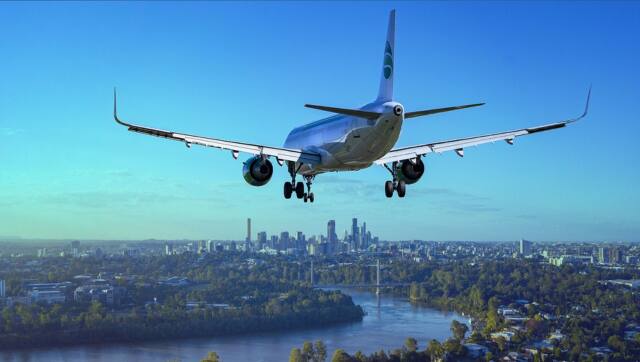
The current disruption stems from a series of air strikes by U.S. and Israeli forces on Iran, followed by retaliatory missile and drone attacks from Tehran. In response, several countries across the West Asia - including Iran, Iraq, Qatar, Kuwait, Bahrain, the United Arab Emirates (UAE) and Israel - have closed their airspace to civilian flights.
Major transit hubs such as Dubai, Abu Dhabi and Doha have either suspended operations altogether or suffered damage, which has led to a cascading effect on flights across Europe, Asia, and Africa.
Over 3,000 flights were called off in just one recent 24-hour period, and over 19,000 flights worldwide had been delayed amid the chaos.
Airlines have also been rerouting aircraft around the West Asia, adding hours to journeys and compounding delays.
UAE is covering your stay, meals if you're stranded
The General Civil Aviation Authority (GCAA) of the UAE announced that the state would cover accommodation and meal costs for passengers affected by flight cancellations and delays.
This initiative is part of an emergency plan designed to ensure that travellers stuck in transit hubs receive essential support until they can depart safely.
Know your rights: When your flight gets cancelled
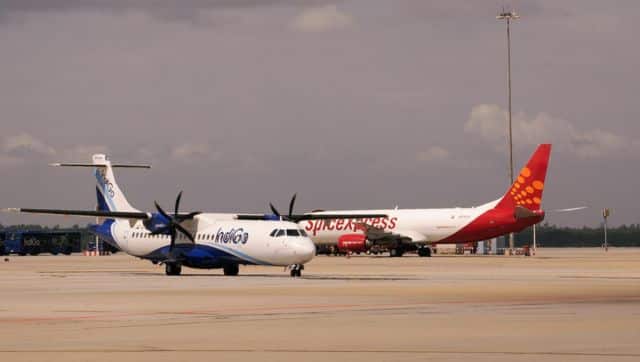
Under the Civil Aviation Requirement (CAR) issued by the Directorate General of Civil Aviation (DGCA), airlines must provide three options if a flight is cancelled:
1. Rebooking on the next available service.
2. Full refund of the ticket.
3. Travel vouchers in line with the airline’s policy.
If passengers arrive at the airport for the original departure, carriers are also obliged to offer meals and refreshments during the waiting period until an alternative arrangement is made.
If you are travelling on a connecting itinerary (say New Delhi - Dubai - Tel Aviv or Mumbai - Doha - Tehran), the airline remains responsible for completing your journey.
Even if the first sector is affected by Iran-Israel-related airspace closures, the carrier must either reroute you through an alternative hub or reschedule the trip. In practice, this may involve diversion via Europe or other parts of Asia.
However, if the revised option involves a lengthy delay of several days and you prefer not to travel, you are entitled to request a full refund under Directorate General of Civil Aviation (DGCA) rules.
It is also important to check how the cancellation is classified. Airlines may label such disruptions as “extraordinary circumstances” - such as war, airspace closures or security risks - and argue that this limits compensation.
Even so, under the DGCA’s Civil Aviation Requirement (CAR), passengers must still be offered at least a refund or rebooking, along with basic care in the form of meals and refreshments, irrespective of the reason for the disruption.
Know your rights: When your flight gets delayed
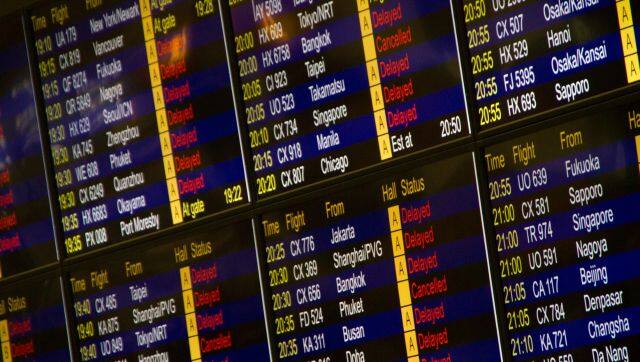
In case your flight gets delayed, the airlines must provide all passengers meals and refreshments, offer an alternate flight, or allow a full refund.
If the delay extends for several hours - particularly beyond the “reasonable” timeframe set out in the airline’s own policy - many carriers are also required to provide hotel accommodation and airport transfers at their expense, especially in cases of overnight disruption.
In the context of the Iran-Israel crisis, delays are frequently caused by long-haul aircraft being rerouted to avoid restricted airspace over Iraq, Iran and parts of the Gulf.
Such diversions can add several hours to overall journey times. If your revised itinerary means arriving more than a day later than originally scheduled, you may opt for a full refund and a reasonable alternative arrangement rather than accepting an overnight-heavy rerouting.
Passengers in India should also review their fare conditions carefully. While fully flexible tickets allow changes with minimal restriction, even non-refundable fares must be refunded if the airline cancels the flight. However, standard change fees may still apply if you choose to alter your travel dates voluntarily rather than as a result of cancellation.
Know your rights: If your flight is overbooked
If a flight has been overbooked, airlines are required to first seek volunteers willing to surrender their seats, usually in exchange for cash compensation, vouchers or other benefits.
If there are not enough volunteers, the carrier must arrange an alternative flight for the affected passengers, ideally departing within roughly an hour of the original scheduled time.
Where the substitute flight is scheduled more than 24 hours after the original departure, rules issued by the Directorate General of Civil Aviation (DGCA) provide for compensation of up to 400 per cent of the one-way basic fare plus fuel surcharge, subject to a maximum of ₹20,000.
This becomes particularly significant during conflict-related disruptions, when rerouting and reduced slot availability can heighten the risk of overbooking on already constrained alternative services.
Should you visit the airport?
Airlines have asked passengers not to proceed to the airport without thoroughly checking their flight status.
Keep a constant look at your email or SMS and ensure your contact information is up to date in your booking.
When will flights resume operations?
Airlines shall resume operations once airspace restrictions are lifted. There is no fixed timeline to that as authorities are calling the ongoing war as a "rapidly evolving situation."
Anuj is a senior sub-editor (lifestyle desk) at Firstpost who covers food, travel, health, and fitness, mostly because they’re all excellent excuses to leave the house. Powered by coffee, he spends his downtime airplane-spotting and exploring spirituality, hoping one day to understand both turbulence and the universe.

Trade the hustle for the Shire: Inside the "hobbitmaxxing" trend
Spices, health and the Indian plate: Why chilli can be good for you—but moderation is still key
The right way to break up without feeling groggy
How Spider-Man actor Tom Holland has been on a sobriety journey of 4.5 years after being "addicted to alcohol"
Why Chennai is India's filter coffee capital, one tumbler at a time