


Whose diamond is it anyway? All you need to know about the Kohinoor and its ownership
The Centre has said that the Kohinoor diamond was handed over to the Queen of England as per a legal agreement. It was was given to the British by Maharaja Ranjit Singh after he was defeated in the Anglo-Sikh War of 1849.

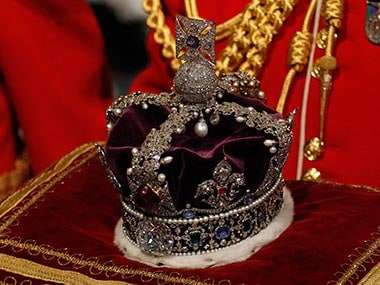
The Kohinoor diamond in the Queen's crown. Getty Images.[/caption]When Queen Elizabeth II visited India in 1997 to mark 50 years of Independence from Britain, many Indians demanded that the she return the diamond then. In the year 2000, quite a few members of the parliament signed on a letter demanding the diamond be given back. The letter claimed that it was taken illegally. Britain, however, said that ownership of the diamond was impossible to trace as there were myriad claims over it.Government’s sensible argumentThe Indian government in April 2016 said that it is not right for India to stake claims in the diamond as it was rightfully handed over to the British as per the treaty that Ranjit Singh signed. Under the Antiquities and Art Treasure Act, 1972, the only items the Archaeological Survey of India can retrieve are those that were illegally exported out of the country and this excluded items that were taken out before independence. The matter goes to courtThe apex court heard a PIL filed by All India Human Rights and Social Justice Front which was seeking directions to the High Commissioner of United Kingdom for return of the diamond besides several other treasures.The PIL had also made Ministry of External Affairs and Ministry of Culture, High Commissioners of UK, Pakistan and Bangladesh as parties in the case.Solicitor General Ranjit Kumar, who was appearing for the government in the court, is reported to have told the court that the 105-karat diamond, which has become a part of popular culture, was handed over to the East India Company by Punjab's Maharaja Ranjit Singh.There is really no basis on which the Queen should return the diamond. If people still care about the diamond, it makes things pretty complex. The United Kingdom will have to return a lot of other things. As David Cameron had said during his visit to India in 2010 “If you say yes to one you suddenly find the British Museum would be empty.” Let’s consider a scenario where the Queen does return the diamond. The priests in Puri may want the diamond claiming that it is "Lord Jagannath's property and should be handed over by the British government". Jaswinder Singh Sandhanwalia may fly down from Amsterdam, get all the Sikhs together and start a Kohinoor revolution. There will be war. Basically, there is no point arguing over the ownership of 100-year-old treasure, wasting taxpayers money in securing a diamond even if we were to get it back, misplacing national pride on a piece of carbon. Present day Republic of India never owned the diamond, only historical kingdoms did, so let's move on. With inputs from PTI

India rejects Pakistan's 'baseless' claims at Asean, says Indus Waters Treaty to remain on hold
India successfully tests long-range 'Kusha' air defence missile system
Indian trucker arrested in US over alleged theft of $3 million worth of tungsten powder
China has dominated Myanmar’s rare earth mines — now India eyes deal to harness country’s critical minerals
CJP protest in Delhi: New videos of stone pelting, violence emerge as police, agitators trade charges