
Advertisement


Sections
Tweaking laws to escape RTI a bad idea: Info Commissioner
The Information Commissioner says the provisions in the Nuclear Safety Regulatory Authority Bill will affect the Right to Information Act and could even lead to other laws that allow government bodies to be shielded from the transparency law.

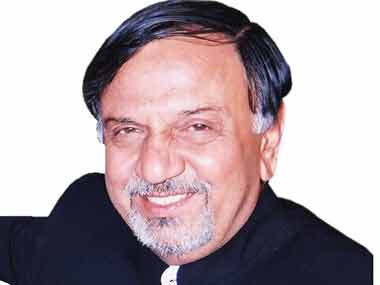 [/caption]Speaking to Firstpost on the need for transparency especially went it comes to nuclear safety, Gandhi said, “The word ‘safety’ itself should indicate that most things should be transparent...this Bill talks of putting all nuclear regulatory bodies outside the scope of the RTI Act. What was sought be included in Schedule II (which lists the government agencies exempted from RTI) of the Act was intelligence and security agencies.""Nuclear safety certainly does not qualify to be bracketed under intelligence or security agencies. Therefore, to classify it under Schedule II wouldn’t be right,” he said.Gandhi pointed out that ever since the RTI Act has come into force there hasn’t been a single instance of the country’s security suffering because of information being disclosed.“The government should realise that when there is lack of transparency, protests erupt at a later stage resulting in high cost to the economy and to itself. Therefore, being transparent is in the interest of the government and the economy. When there is opacity, the total cost of everybody becomes high and the trust deficit between the government and citizens keeps increasing.”Asked about his assessment of the government transparency record on the Kudankulam nuclear power plant, Gandhi said, “To be honest, I don’t know enough about it to comment. My point is, even if people are going to protest, transparency will ensure that it will happen in the early stages. The government has a right to make policy. We cannot take that away from it. And citizens have a right to put across their viewpoint, you cannot take that away from them. What transparency does is, it reduces the cost for everyone - the government and the people.”Coming back NSRA Bill, Gandhi is apprehensive that such proposals to amend the RTI Act could set a dangerous precedent.“If you go by this logic, various other bills will also start adding exemptions to the RTI Act. As democracy progresses, exemptions should be whittled down,” he said.Gandhi’s letter describes the proposals as “a regression in the journey of our Parliament towards a participatory democracy. Whereas, nuclear power and energy are important for the Nation, transparency and democracy are certainly more important and must not be whittled down.”Full text of letter written by the Information Commissioner to the Prime Minister: LettertoPM
First Published:Apr 02, 2012, 17:34:50 IST
Advertisement
Advertisement

China has dominated Myanmar’s rare earth mines — now India eyes deal to harness country’s critical minerals
India is deepening rare earth cooperation with Myanmar as New Delhi seeks alternative sources of critical minerals dominated by China, including dysprosium and terbium used in EVs, defence systems and clean energy technologies
6 min read
CJP protest in Delhi: New videos of stone pelting, violence emerge as police, agitators trade charges
Fresh videos of violence that broke out during the Cockroach Janta Party's (CJP) protest in Delhi have surfaced, with the police releasing footage showing alleged stone pelting, vandalism and attacks on security personnel
3 min read
'From make in India to launch from India': Skyroot COO on why Vikram-1 could change India’s space sector
Skyroot Aerospace’s successful Vikram-1 mission marks a major milestone for India’s private space sector, as the country seeks to shift from “Make in India” to “Launch from India” and compete in the global commercial satellite launch market
8 min read
Choke terror funding, keep international shipping lanes safe: Jaishankar at Asean Regional Forum
Jaishankar's remarks came against the backdrop of recent terror attacks targeting India and growing threats to commercial shipping amid conflicts in West Asia and Europe
2 min read
PM Modi announces fast-track courts for paper leak cases; CJP responds ‘Dharmendra Pradhan must go’
Amid protests demanding accountability for the leak of medical entrance test Neet and other irregularities in the education system, Prime Minister Narendra Modi has announced that the government has decided to set up fast-track courts to ensure swift and stringent punishment for those involved in paper leaks.
3 min read
Advertisement
Advertisement