


TRAI comes down hard on spam calls: Blacklists, bans telemarketers
To curb the menace of unsolicited business calls, the Telecom Regulatory Authority of India (TRAI) has decided to disconnect the unauthorised telemarketers immediately and blacklist them for two years, an official document has said.

To curb the menace of unsolicited business calls, the Telecom Regulatory Authority of India (TRAI) has decided to disconnect the unauthorised telemarketers immediately and blacklist them for two years, an official document has said.TRAI said it has taken a series of measures to regulate the telecom arena better. Among the steps it has taken -- and uploaded on its site Monday - to disconnect, after due investigation, all the telecom resources allotted to such unauthorised subscriber if there is a complaint of Unauthorised Commercial Communications (UCC). This provision comes into force with immediate effect.[caption id="attachment_819511" align="alignleft" width="380"]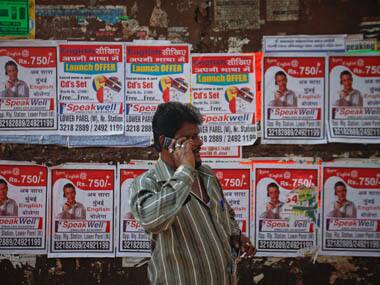 Reuters[/caption]Secondly, the name and address of such subscribers will be entered into a blacklist for a period of two years to be maintained separately for this purpose.“Upon entry in the blacklist, all access providers shall disconnect the telecom resources provided by it to such subscriber within 24 hours. No telecom resources will be allotted to such blacklisted subscriber by any access provider. This provision comes into force within 30 days from the date of publication in the Gazette.”TRAI issued “The Telecom Commercial Communications Customer Preference Regulations, 2010” Dec 1, 2010, which came into force from September 27, 2011.Subsequently, for addressing the operational issues and for tightening the regulatory framework, it issued a number of amendments to the principal regulations, besides directions from time to time.The Telecom Commercial Communications Customer Preference (Twelfth Amendment) Regulations, 2013, has been issued to further tighten the regulatory framework and also for addressing implementation issues, especially relating to commercial communication from subscribers indulging in telemarketing activities without registering as a telemarketer with TRAI.The document said: “The Authority has also observed that such unregistered telemarketers deliberately masquerade themselves as normal subscribers for indulging in telemarketing activities by using cheap Special Tariff Vouchers. Such subscribers, without any such rights, avoid payment of promotional or any other tariff (or deposits) as may be payable by registered telemarketers.”“They also circumvent the process laid down by the Authority for registration of telemarketers and the procedures for telemarketing by registered telemarketers. Such unregistered telemarketers acting in the guise of normal subscribers indulge in sending unsolicited commercial communications to even customers registered in NCPR (National Customer Preference Registry), for not receiving unsolicited commercial communications.”In another such release, TRAI said: “‘The Short Message Services (SMS) Termination Charges Regulations, 2013’, which prescribes cost-based SMS Termination Charge as 2 paise per SMS and amendment to the Telecom Commercial Communications Customer Preference Regulations, 2010, which prescribes a transactional SMS charge of 5 paise per transactional SMS. These regulations will be applicable from 1st June 2013.”SMS termination charges are the charges payable by originating access provider to the terminating access provider for each SMS, terminated by it on the network of Terminating Access Provider.IANS

China has dominated Myanmar’s rare earth mines — now India eyes deal to harness country’s critical minerals
CJP protest in Delhi: New videos of stone pelting, violence emerge as police, agitators trade charges
'From make in India to launch from India': Skyroot COO on why Vikram-1 could change India’s space sector
Choke terror funding, keep international shipping lanes safe: Jaishankar at Asean Regional Forum
PM Modi announces fast-track courts for paper leak cases; CJP responds ‘Dharmendra Pradhan must go’