


South Asia Satellite launch: Modi's chutzpah evident in India's move against Chinese hegemony
The latest episode of Star Wars is here and this sequel has been produced entirely by India.

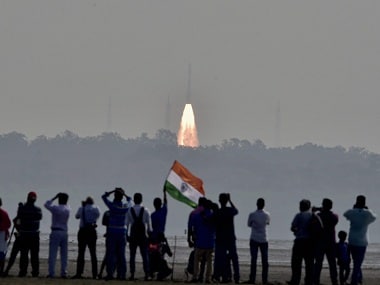
Representational image. PTI[/caption]BBC in a report calculates that this space-based platform would have set back the participating nations — Afghanistan, Bangladesh, Bhutan, Maldives, Nepal and Sri Lanka — by almost $1,500m, which indicates that India's space diplomacy has come at a price. But the benefits of this outreach promise to far outstrip the cost.Operating in the Ku-Band, its 12 transponders offer a bouquet of services including banking networks, weather forecast, telemedicine, disaster management, tele-education and broadcasting services such as television, DTH and the works. What's more, India will also aid participating nations in developing ground stations to access the data relayed by the satellite.While such collaborations are not unheard of — the European Space Agency (ESA) has 22 member states who pool in their financial and intellectual resources to share the fruits of space research — never before has one country funded an entire space programme and then 'gifted' the satellite services free of cost to other countries. As BBC points out, "this 'gift' from India has no parallels in the space-faring world. All other current regional consortia are commercial for-profit enterprises."That the benevolence has been driven by geostrategic concern isn't a secret. In an interview to The Indian Express, Isro chief AS Kirankumar was quite forthcoming that "in this region, you also have a large number of other players trying to come in and get into (space) operations."It hardly needs to be spelt out that the 'large number of other players' is a euphemism for China. Only two other nations in India's immediate neighbourhood have sent their communication satellites into space and both Pakistan and Sri Lanka have relied heavily on Chinese technological help. Pakistan, which opted out of the South Asia Satellite (SAS) programme after initially sounding enthusiastic when Prime Minister Narendra Modi had mooted the idea back in 2014 during Kathmandu Saarc summit, is set to deepen its dependence on China in space outreach.Pakistan's satellites are made with Chinese help, it launches those via Chinese vehicles and in 2018, Islamabad will 'launch' a remote-sensing satellite into space built by the Chinese using Chinese launchpad.There is more than just friendship at work here. It is a continuation of China's 'String of Pearls' strategy to increase its sphere of influence in India's immediate neighbourhood by collaborating with countries who share proximity of history and geography with India.As Sinosphere grows in influence, India has tried to push back by renewing its ties with its neighbours and the space programme is a part of that strategy. What's interesting is the date of the programme.The Saarc Satellite (later renamed SAS when Pakistan opted out) was announced in November 2014, shortly after Modi had assumed office. The boldness of the venture carries Modi's signature all over it — from using India's signature low-cost space technology to invest in a robust communication network and then offering it for free to other nations — and it signifies that Modi didn't waste much time in recognizing Chinese threat in his backyard.Along with GSAT-9, other ventures like the Motor Vehicle Agreement between Bimstec (Bay of Bengal Initiative for Multi-Sectoral Technical and Economic Cooperation) states that aims at better regional connectivity between seven south Asian nations (except Pakistan) or India's offer to build satellite tracking station in Vietnam show the PM's chutzpah in countering Chinese sphere of influence through better geopolitical and strategic relationship with neighbours.India cannot hope to match China dollar for dollar in buying sway. But it can certainly leverage its soft power and dividends from history in securing and furthering regional ties. It needs to, because the global power structure is rapidly changing as China exerts its unilateralism.

NEET protest: Sonam Wangchuk ends hunger strike after talks with JP Nadda, Jitendra Singh
Pakistan-based social media handles active during Op Sindoor spreading rumours amid NEET protest: Police
PM Modi says stricter action against paper leaks to be announced at Friday's Cabinet meeting
NEET protest: CJP delegation to meet ministers on Friday, sources say
Naresh Pal Gangwar appointed higher education secretary, Vineet Joshi moved to Panchayati Raj ministry