


Sikkim standoff: Fallout goes beyond heightened rhetoric from Beijing; China is eyeing India not Bhutan
A closer look at the Sikkim standoff reveals that the bilateral relations have endured more than just heightened rhetoric.

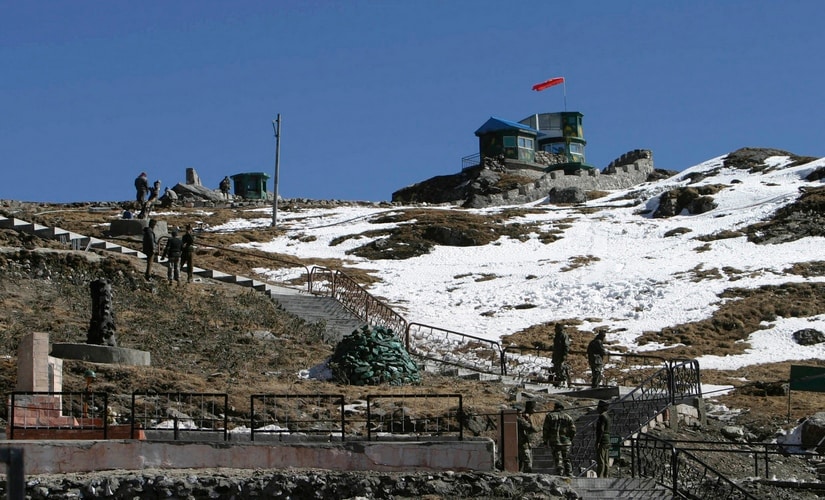
File image of India-China trade route at Nathu-La, 55 km (34 miles) north of Gangtok, capital of India's northeastern state of Sikkim. Reuters[/caption] A condemnatory commentary of Indian policy on China and Pakistan in Beijing's mouthpiece is hardly a surprise, with or without a border showdown. It has been a standard part of Beijing's multi-pronged approach in dealing with India. However, a closer look at the Sikkim standoff reveals that the bilateral relations have endured more than just heightened rhetoric.Beijing has been stealthily mounting pressure on India on multiple fronts, however, New Delhi has strategically tried to negotiate through diplomatic channels, despite being snubbed twice.Some more noticeable ones, also widely reported in Indian media include China's decision to disallow Indian pilgrims from visiting Kailash Mansarovar through Nathu La pass in the Sikkim sector.As a fallout of the standoff, the Chinese refused to allow the first batch of 47 pilgrims into Tibet on 23 June and cancelled visas of another batch of 50 pilgrims, forcing India to suspend pilgrimage through the route. The Sikkim route to Mansarovar was opened in 2015, enabling pilgrims to travel the 1,500-km long route from Nathu La to Kailash by buses. Beijing has made it clear that the further extension of the 'goodwill gesture' will depend on India's handling of the border dispute.Responding to India and Beijing's allegations that China was constructing a road in Bhutan's territory, China also released a map and two photographs to assert its claims that the fact that the Indian side transgressed the border was indisputable. The map shows Doka La as part of Chinese territory.On Sunday, China also cancelled a state-sponsored trip of Indian journalists to Tibet.China also tested a 35-tonne military tank in the Tibet area not far from the Indian border on 29 June. Even though Beijing later clarified that the test was not aimed at any particular country, the timing made analysts in India anxious about the move as five Indian states share a border with Tibet.Beijing's Peoples' Liberation Army also bulldozed two old Indian bunkers located at the tri-junction after the Indian side refused to accede to its request to dismantle it.China is believed to have not taken kindly to India building many new bunkers and upgrading older ones along the border in Sikkim in the recent past to augment its defences.China also declined India's request for a flag meeting between Indian and Chinese twice, maintaining that the "precondition for any meaningful dialogue" will be India withdrawing its troops. However, it later conceded to New Delhi's requests stating it was ready for a meaningful dialogue.Beijing's handling of the issue leads one to believe that the border standoff is more about India-China bilateral relations, rather than Bhutan, with which it has a boundary dispute. Sikkim is a part of the middle sector and experts have been warning the government of increased Chinese activities in this area.Defence experts believe China wants to exert its dominance over the Chumbi Valley, which is a part of the southern reaches of Tibet. By claiming the Doka La area, Beijing wants to maximise its geographical advantage so that it can monitor all movements along the India-Bhutan border.China has also increased diplomatic pressure on India and lodged a protest over the alleged "crossing of boundary" by Indian troops in the Sikkim section. Some analysts go as far as speculating that the current standoff at the tri-junction is just another way of arm twisting India into joining its One Belt One Road (OBOR) initiative.According to a report in The Times of India, an oped in the state-run news agency signalled that Beijing might reconsider its stand on the Sikkim border standoff if India decided to join OBOR. Beijing is also upset with New Delhi over the recent visit of the Dalai Lama to Arunachal Pradesh.India would do well to stay wary and recount China's expansionist and ruthless policy in border disputes, which is evident in it's handling of Hong Kong, Tibet, Taiwan and South China Sea.Chinese president Xi Jinping chided dissenters in Hong Kong even during an amicable trip. China has had land border disputes with all its neighbors and has resolved issues with 12 other nations, except India and Bhutan.With inputs from agencies

India rejects Pakistan's 'baseless' claims at Asean, says Indus Waters Treaty to remain on hold
India successfully tests long-range 'Kusha' air defence missile system
Indian trucker arrested in US over alleged theft of $3 million worth of tungsten powder
China has dominated Myanmar’s rare earth mines — now India eyes deal to harness country’s critical minerals
CJP protest in Delhi: New videos of stone pelting, violence emerge as police, agitators trade charges