


SC order to audit 30 lakh NGOs is another way for State to target and delegitimise their purpose
The Supreme Court, on 11 January, passed an order directing the government to audit about 30 lakh non-governmental organisations (NGOs) and voluntary organisations that receive public funds, but have invariably failed to explain their spending.

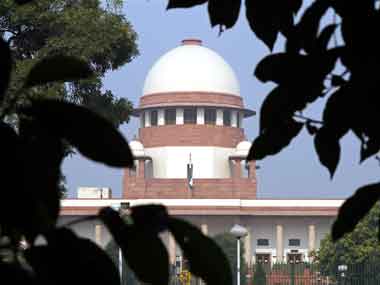
Representational image. Reuters[/caption]A Central Bureau of Investigation (CBI) report that compiled state-wise data of 32 lakh NGOs revealed that only 10 percent of NGOs filed annual income and expenditure statements.According to an RTI query by Asian Centre for Human Rights, between 2002 and 2009, the Centre had granted Rs. 4756 crore and the state governments released Rs 6654 crore to various NGOs. However, there is no statutory provision to regulate the NGOs, and therefore, in essence, no ombudsman mechanism to put checks and balances on the spending of these organisations.In September 2016, in a hearing of the same case, the then Chief Justice of India TS Thakur along with Justice AM Khanwilkar, had stated that creating an NGO and running it is not very regulated activity. CJI Thakur had suggested - “What is an NGO? Anyone can register a society and it becomes an NGO... There is no legal brain work done at the Central level to control them. Unless some mechanism is put in place centrally, nothing can be done... retired government employees and politicians run these NGOs drawing on their influence.” A possibility for passing the buck to the Law Commission for framing of an effective law to monitor the flow and use of state monies had been considered.The Supreme Court’s readiness to question the government’s lack of accountability in monitoring and regulating NGO spending is unparalleled as the court has, in agreement with amicus curiae, Rakesh Dwivedi also directed the government to lay down guidelines for their accreditation, and devise and implement a functional accounting strategy, along with a procedure for recovery in the event that the NGOs fail to submit their balance sheets and certificate of utilisation of funds. “There can be no doubt that the amount disbursed is public money and needs to be accounted for", the Bench has declared.In India, not-for-profits ideally can be registered under three main laws — the Societies Registration Act, 1860, the Trust Act and section 8 of the Companies Act, 2013. A plethora of organisations such as hospitals, religious organisations, resident welfare associations, clubs and educational institutions may be registered as a not-for-profit under one of these Acts. Inherently, there is a definite lacuna with how the term ‘NGO’ remains rather subjective. For a majority of people, an NGO would be an organisation that works around social development issues; however, legally, the scope of the term is too broad and generic, and does not set adequate boundaries to classify such organisations. It is, therefore, significant for the government to have a tool to differentiate between various types of organisations in order to set up a functional monitoring and regulatory system. Moreover, for an audit this extensive, and for so many NGOs, will be an expensive affair, both for the government as well as the organisations, and neither the apex court nor the Central government in general have given a clear thought on the finances for implementation and quality control of this process.Since 2014, civil society organisations, including NGOs, have been continually under the government radar. Moreover, about 10,000 NGOs had their licenses revoked to receive foreign funds under the Foreign Contributions Regulations Act (FCRA), thereby, impeding their work on a number of social issues such a health, environment and human rights. The Lokpal Bill also brings top officials and executives of local and foreign-funded NGOs under its ambit as ‘public servants’.The NGO community, therefore, is still divided on the impact and implications of the judicial order. Despite this, the court order has received some praise as it will help distinguish between the various entities that are registered as not-for-profits, but their functioning may be spurious. At this point, the fate of NGOs are enmeshed in a number of cross-cutting legislations — the FCRA and the Lokpal Bill — and this judicial order provides for another layer of quality control when it comes to governing the issues of NGO management vis-a-vis funds and legal compliance. But it seems like a deliberate attempt by the State to target NGOs and de-legitimise their purpose of providing checks and balances on the government and the protection of human rights and an open society.

No premium queues, 30-minute target: What changes for Indian passport applicants in UAE
CJP Protest in Delhi Live Updates: Heavy security deployed in Jantar Mantar ahead of student protests
Bharat Forge, Flying Whales sign pact to develop 60-tonne airships for India’s defence logistics
Air India to cut Delhi-Toronto flight time by 3 hours, resume non-stop services from August 1
J&K cop on Amarnath Yatra duty shot dead in Anantnag terror attack; TRF claims responsibility