
Advertisement


Sections
Sanitation is gendered occupation: How to get one step closer to making it inclusive in India
Social barriers along with inadequate up-skilling opportunities have limited the participation of women sanitation workers across the sanitation value chain.

Health and hygiene have traditionally been relegated within the private sphere of the household, making it primarily a women’s responsibility to mitigate and safeguard not just her family’s health but also the community’s wellbeing. Across rural and urban ecosystems, women hold the primary responsibility of nurturing the community’s health, while ironically their own access to clean hygiene resources is severely limited.Inadequate access, limited say and livelihoods opportunities Lack of access to clean and safe sanitation infrastructure impacts the lives of women and young girls across the country to live a dignified, equitable life - making inclusive sanitation a priority in the urban sanitation ecosystem. Thirty percent of marginalised women face violence while fulfilling their sanitation needs, 23 percent of girls in India drop out of school every year due to the lack of toilet infrastructures. The transgender community faces challenges of infrastructure as well as stigma while accessing public and community toilets.Social barriers along with inadequate up-skilling opportunities have limited the participation of women sanitation workers across the sanitation value chain. These professional stereotypes translate into the lack of opportunity or discrimination on the job for women and transgender groups. Even though women are 50 percent of the entire urban sanitation workforce in India, nearly all are engaged in low skilled jobs earning meagre salaries and limited growth opportunities. The lack of awareness about safety measures, access to financial support resources and technical and managerial training has long-term adverse effects on their socio- economic standing at the workplace and in society.[caption id="attachment_9943471" align="alignnone" width="640"]![Even though women are 50% of the entire urban sanitation workforce in India, nearly all are engaged in low skilled jobs earning meagre salaries. AFP]() Even though women are 50% of the entire urban sanitation workforce in India, nearly all are engaged in low skilled jobs earning meagre salaries. AFP[/caption]Despite these challenges affecting their quality and dignity of life, women have consistently worked towards improving the status of health and sanitation within their own communities. During the peak of the COVID 19 pandemic, women-led Self Help Groups (SHGs) played a critical role in undertaking surveys and identifying cases, sensitizing the communities about the preventive measures to be adopted such as handwashing with soap and water, the importance of wearing masks when out in public spaces, and maintaining adequate physical distance, providing cooked meals and rations for homes under isolation. They were also formally engaged by state and city governments to produce masks and sanitisers and provide support services at community quarantine centers. They worked tirelessly on the frontlines most times handling the hazardous Covid-19 waste without sufficient training or personal protective equipment (PPE) to protect themselves. Despite their tremendous contribution, they remain grossly underrepresented in decision making processes and bodies.Inclusive sanitation in the nation can only be successfully achieved when women, transgender communities and other marginalised groups have uniform representation across all aspects of the sanitation value chain – as beneficiaries, as service providers and as decision-makers. While we do have a long journey ahead of us in terms of achieving our goal, strides have been taken towards inculcating inclusive sanitation at the local levels. Fortunately, due to policy changes, inputs by civil society organizations and synergies of public-private partnerships, this scenario is quickly evolving. The past few years have seen the rise of best practices in inclusion across the country especially in the states of Telangana, Andhra Pradesh, and Odisha. A leading example of resilience and leadership is O Laila, a transgender woman who with her leadership skills and strong vision, brought together a group of transgender people under the umbrella of an NGO called the Modern Awareness Society (MAS). MAS is now working with Greater Warangal Municipal Corporation (GWMC) for the operation and maintenance of community toilets in Warangal. Moreover, Laila is also a member of the City Sanitation Task Force (CSTF) of Warangal, where she has taken the opportunity to be a spokesperson for her community, addressing critical areas like access to dedicated public toilets for the transgender community and opportunities for livelihoods in sanitation.Some state governments have encouraged the participation of women and transgender groups in decision making and operational roles along the sanitation value chain and ensured provisions for their safety with the use of ergonomic PPE. The government of Telangana through its Mission for Elimination of Poverty in Municipal Areas (MEPMA) is promoting sanitation livelihoods and entrepreneurship for women and transgender self-help groups and for people with special needs in areas such as operations and maintenance of public toilets, supply of personal protective equipment, providing mechanized desludging services and managing treatment plants. Similarly, the Government of Odisha closely worked to build capacity with women and transgender SHGs who are now managing SeTPs at par with their male technical counterparts. In addition to these several states, particularly the Government of Andhra Pradesh has announced special incentives to women sanitation workers and are enhanced wages to thus contributing to the overall economic well-being and social standing of women.[caption id="attachment_9943511" align="alignnone" width="640"]
Even though women are 50% of the entire urban sanitation workforce in India, nearly all are engaged in low skilled jobs earning meagre salaries. AFP[/caption]Despite these challenges affecting their quality and dignity of life, women have consistently worked towards improving the status of health and sanitation within their own communities. During the peak of the COVID 19 pandemic, women-led Self Help Groups (SHGs) played a critical role in undertaking surveys and identifying cases, sensitizing the communities about the preventive measures to be adopted such as handwashing with soap and water, the importance of wearing masks when out in public spaces, and maintaining adequate physical distance, providing cooked meals and rations for homes under isolation. They were also formally engaged by state and city governments to produce masks and sanitisers and provide support services at community quarantine centers. They worked tirelessly on the frontlines most times handling the hazardous Covid-19 waste without sufficient training or personal protective equipment (PPE) to protect themselves. Despite their tremendous contribution, they remain grossly underrepresented in decision making processes and bodies.Inclusive sanitation in the nation can only be successfully achieved when women, transgender communities and other marginalised groups have uniform representation across all aspects of the sanitation value chain – as beneficiaries, as service providers and as decision-makers. While we do have a long journey ahead of us in terms of achieving our goal, strides have been taken towards inculcating inclusive sanitation at the local levels. Fortunately, due to policy changes, inputs by civil society organizations and synergies of public-private partnerships, this scenario is quickly evolving. The past few years have seen the rise of best practices in inclusion across the country especially in the states of Telangana, Andhra Pradesh, and Odisha. A leading example of resilience and leadership is O Laila, a transgender woman who with her leadership skills and strong vision, brought together a group of transgender people under the umbrella of an NGO called the Modern Awareness Society (MAS). MAS is now working with Greater Warangal Municipal Corporation (GWMC) for the operation and maintenance of community toilets in Warangal. Moreover, Laila is also a member of the City Sanitation Task Force (CSTF) of Warangal, where she has taken the opportunity to be a spokesperson for her community, addressing critical areas like access to dedicated public toilets for the transgender community and opportunities for livelihoods in sanitation.Some state governments have encouraged the participation of women and transgender groups in decision making and operational roles along the sanitation value chain and ensured provisions for their safety with the use of ergonomic PPE. The government of Telangana through its Mission for Elimination of Poverty in Municipal Areas (MEPMA) is promoting sanitation livelihoods and entrepreneurship for women and transgender self-help groups and for people with special needs in areas such as operations and maintenance of public toilets, supply of personal protective equipment, providing mechanized desludging services and managing treatment plants. Similarly, the Government of Odisha closely worked to build capacity with women and transgender SHGs who are now managing SeTPs at par with their male technical counterparts. In addition to these several states, particularly the Government of Andhra Pradesh has announced special incentives to women sanitation workers and are enhanced wages to thus contributing to the overall economic well-being and social standing of women.[caption id="attachment_9943511" align="alignnone" width="640"]![Women’s leadership in water and sanitation is essential to challenging unconscious bias and changing how decisions are made. AFP]() Women’s leadership in water and sanitation is essential to challenging unconscious bias and changing how decisions are made. AFP[/caption]Moving towards an inclusive sanitation value chain The challenge of driving inclusion in sanitation from the grassroots, has been taken up by a few champion cities across the country. While 6 million household toilets and 5 lakh community and public toilets have been built under the Swachh Bharat Mission, a major component towards ensuring the ODF status and hygiene will be ensuring the smooth functioning of the entire sanitation value chain. To encourage states and cities to prioritize complete inclusive sanitation, the following measures should be undertaken:
Women’s leadership in water and sanitation is essential to challenging unconscious bias and changing how decisions are made. AFP[/caption]Moving towards an inclusive sanitation value chain The challenge of driving inclusion in sanitation from the grassroots, has been taken up by a few champion cities across the country. While 6 million household toilets and 5 lakh community and public toilets have been built under the Swachh Bharat Mission, a major component towards ensuring the ODF status and hygiene will be ensuring the smooth functioning of the entire sanitation value chain. To encourage states and cities to prioritize complete inclusive sanitation, the following measures should be undertaken:![Inclusive sanitation in the nation can only be successfully achieved when women, transgender communities and other marginalized groups have uniform representation across all aspects of the sanitation value chain – as beneficiaries, as service providers and as decision makers. AFP]() Inclusive sanitation in the nation can only be successfully achieved when women, transgender communities and other marginalized groups have uniform representation across all aspects of the sanitation value chain – as beneficiaries, as service providers and as decision makers. AFP[/caption]
Inclusive sanitation in the nation can only be successfully achieved when women, transgender communities and other marginalized groups have uniform representation across all aspects of the sanitation value chain – as beneficiaries, as service providers and as decision makers. AFP[/caption]
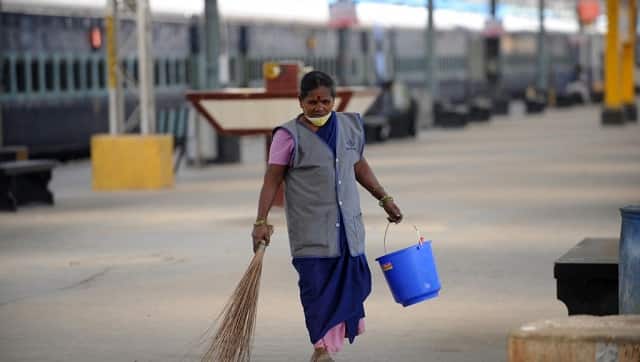 Even though women are 50% of the entire urban sanitation workforce in India, nearly all are engaged in low skilled jobs earning meagre salaries. AFP[/caption]Despite these challenges affecting their quality and dignity of life, women have consistently worked towards improving the status of health and sanitation within their own communities. During the peak of the COVID 19 pandemic, women-led Self Help Groups (SHGs) played a critical role in undertaking surveys and identifying cases, sensitizing the communities about the preventive measures to be adopted such as handwashing with soap and water, the importance of wearing masks when out in public spaces, and maintaining adequate physical distance, providing cooked meals and rations for homes under isolation. They were also formally engaged by state and city governments to produce masks and sanitisers and provide support services at community quarantine centers. They worked tirelessly on the frontlines most times handling the hazardous Covid-19 waste without sufficient training or personal protective equipment (PPE) to protect themselves. Despite their tremendous contribution, they remain grossly underrepresented in decision making processes and bodies.Inclusive sanitation in the nation can only be successfully achieved when women, transgender communities and other marginalised groups have uniform representation across all aspects of the sanitation value chain – as beneficiaries, as service providers and as decision-makers. While we do have a long journey ahead of us in terms of achieving our goal, strides have been taken towards inculcating inclusive sanitation at the local levels. Fortunately, due to policy changes, inputs by civil society organizations and synergies of public-private partnerships, this scenario is quickly evolving. The past few years have seen the rise of best practices in inclusion across the country especially in the states of Telangana, Andhra Pradesh, and Odisha. A leading example of resilience and leadership is O Laila, a transgender woman who with her leadership skills and strong vision, brought together a group of transgender people under the umbrella of an NGO called the Modern Awareness Society (MAS). MAS is now working with Greater Warangal Municipal Corporation (GWMC) for the operation and maintenance of community toilets in Warangal. Moreover, Laila is also a member of the City Sanitation Task Force (CSTF) of Warangal, where she has taken the opportunity to be a spokesperson for her community, addressing critical areas like access to dedicated public toilets for the transgender community and opportunities for livelihoods in sanitation.Some state governments have encouraged the participation of women and transgender groups in decision making and operational roles along the sanitation value chain and ensured provisions for their safety with the use of ergonomic PPE. The government of Telangana through its Mission for Elimination of Poverty in Municipal Areas (MEPMA) is promoting sanitation livelihoods and entrepreneurship for women and transgender self-help groups and for people with special needs in areas such as operations and maintenance of public toilets, supply of personal protective equipment, providing mechanized desludging services and managing treatment plants. Similarly, the Government of Odisha closely worked to build capacity with women and transgender SHGs who are now managing SeTPs at par with their male technical counterparts. In addition to these several states, particularly the Government of Andhra Pradesh has announced special incentives to women sanitation workers and are enhanced wages to thus contributing to the overall economic well-being and social standing of women.[caption id="attachment_9943511" align="alignnone" width="640"]
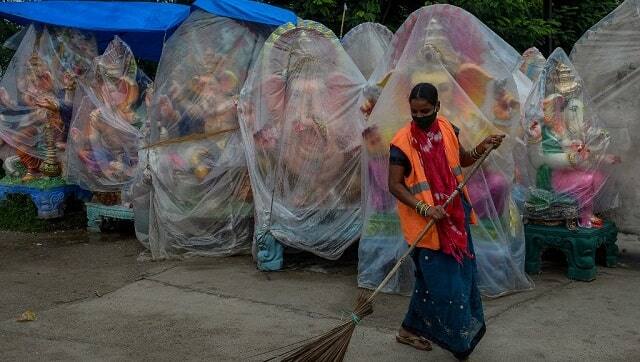 Women’s leadership in water and sanitation is essential to challenging unconscious bias and changing how decisions are made. AFP[/caption]Moving towards an inclusive sanitation value chain The challenge of driving inclusion in sanitation from the grassroots, has been taken up by a few champion cities across the country. While 6 million household toilets and 5 lakh community and public toilets have been built under the Swachh Bharat Mission, a major component towards ensuring the ODF status and hygiene will be ensuring the smooth functioning of the entire sanitation value chain. To encourage states and cities to prioritize complete inclusive sanitation, the following measures should be undertaken:
- Access to individual household toilets: Clean and usable toilet infrastructure is a basic human need. Greater focus needs to be put on working closely with local government on innovative financing options for the construction of individual household toilets, innovative designs, and methods so that toilets can be constructed even in clustered slum areas that have limited space.
- Inclusively designed sanitation infrastructure: In addition to toilets at households, it is critical to ensure availability and access to well-designed toilet infrastructure in adequate numbers in public places, workplaces, schools, and so on. Presence of supporting infrastructure like bars, handles, ramps for the differently-abled. Ensuring access to adequate infrastructure, separate toilets and menstrual hygiene products for women and young girls, and proper menstrual waste disposal mechanisms is an essential step towards inclusive sanitation.
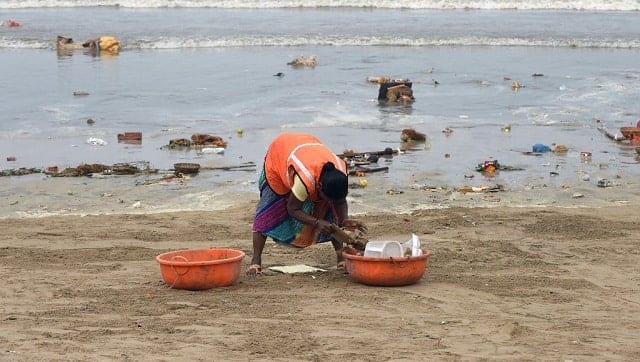 Inclusive sanitation in the nation can only be successfully achieved when women, transgender communities and other marginalized groups have uniform representation across all aspects of the sanitation value chain – as beneficiaries, as service providers and as decision makers. AFP[/caption]
- Livelihoods Development: It is important to bolster women and transgender leadership and entrepreneurship to equip them with requisite skillsets and help them achieve dignified livelihood. We need to create robust systems & process to engage with SHGs in WASH & other urban initiatives, build capacities to undertake O&M of sanitation infrastructure and services. With the convergence of Deendayal Antyodaya Yojana National Urban Livelihoods Mission (NULM) and Swachh Bharat Mission guidelines several cities are providing skills training, social mobilization, institution building, financial inclusion, self-employment, and capacity building for inclusion of marginalized groups in the sanitation sector.
- Capacity Building and Leadership Roles: Community based models like Self-help groups (SHGs) have proven to be impactful in not only achieving increased coverage of water and sanitation but also leading to empowerment of women and transgender. SHGs in the sanitation sector have a comprehensive understanding and trust of the local community and have been successful in initiating behavior change and improve participation. It is important that structured opportunities are built for women and vulnerable to voice their opinions, concerns, ideas, and demands. Women’s leadership and decision-making power in water and sanitation is critical. The gender gap often found in sanitation planning, design and construction will narrow as women assume more prominent roles: from managing water users’ committees, to making financial decisions, to overseeing business administration, technical operations, and maintenance.
First Published:Sep 07, 2021, 14:02:11 IST
Advertisement
Advertisement

Naresh Pal Gangwar appointed higher education secretary, Vineet Joshi moved to Panchayati Raj ministry
Gangwar is a 1994-batch Indian Administrative Service (IAS) officer of the Rajasthan cadre. Prior to his new appointment, he was serving as Secretary, Department of Animal Husbandry and Dairying under the Ministry of Fisheries, Animal Husbandry and Dairying.
1 min read
India rejects Pakistan's 'baseless' claims at Asean, says Indus Waters Treaty to remain on hold
India accused Pakistan of misusing the Asean Regional Forum to spread false narratives, reiterating that the Indus Waters Treaty will remain suspended until Islamabad credibly and irrevocably ends cross-border terrorism.
1 min read
India successfully tests long-range 'Kusha' air defence missile system
The DRDO-developed 'Kusha' missile system can engage fighter aircraft, missiles, drones and large enemy aircraft, marking a significant milestone in India's indigenous long-range air defence programme.
1 min read
Indian trucker arrested in US over alleged theft of $3 million worth of tungsten powder
A 39-year-old Indian national living illegally in the US has been arrested in California after authorities alleged he stole a truck carrying nearly $3 million worth of hazardous tungsten powder.
1 min read
China has dominated Myanmar’s rare earth mines — now India eyes deal to harness country’s critical minerals
India is deepening rare earth cooperation with Myanmar as New Delhi seeks alternative sources of critical minerals dominated by China, including dysprosium and terbium used in EVs, defence systems and clean energy technologies
6 min read
Advertisement
Advertisement