


Rot in PSBs Part 3: Nirav Modi scam shows it's time Parliament reexamined banking laws, brought in transparency
Transparency and information systems of the RBI need to be overhauled

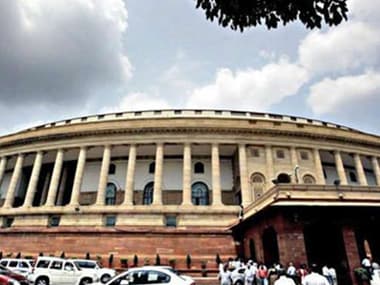
File image of Parliament. PTI[/caption]In contrast, the Federal Deposit Insurance Corporate of the U.S. (which plays a similar role in bank inspection) releases detailed manuals on the process of inspections. The compliance manual is 1,275 pages long and it has its own website. Any person can read the manual and comment on the robustness of the procedures. All the 1,28,755 words of the compliance manual is open to scrutiny. The Japanese financial regulator’s 446 page inspection manual for deposit taking institutions is available here. It provides detailed information about how inspections will be carried out, including a checklist for inspections.There are, no doubt, legitimate concerns about releasing inspection reports of banks and the RBI has, in the past, refused to release such information. Inspection reports contain commercially sensitive information not only of banks but of borrowers as well. Releasing that would harm businesses. Imagine you are trying to sell your house and negotiating to with a potential buyer. Through inspection reports, the potential buyer finds out that you have a large loan due for repayment in three months.The potential buyer will draw out the negotiation process to turn on the heat on you. You do not want that.However, this does not apply to the process of inspections. How much do we really know about RBI’s audit process? Why is there no transparency about the process followed? We do not know how much time is spent per day, how many auditors per branch of a bank, what template is followed, what aspects of banking are audited, etc. etc. Without public information on how RBI conducts banks’ audit, there is no accountability of the process. Since the CAG (Comptroller and Auditor General of India) does not audit RBI, even the normal accountability of other wings of government is missing for RBI.We do not know if RBI updates its supervision systems when it comes across these types of frauds. In September 2016, a Deputy Governor of RBI highlighted the risks associated with SWIFT systems. Union Banks SWIFT system had been hacked in July 2016. The strategy on Union Bank was similar to the one used on the Bangladesh central bank. He prophetically noted:…the incident has reinforced the fact that the various stakeholders have not learnt the lessons yet.While this may be true of PNB, it may also be true of RBI. Did RBI change its supervision process after the 2016? Was SWIFT messaging audit a part of the RBI inspections? We do not know.Banking inspection has issues with commercially important information, and there should be legitimate exemptions to disclosure of inspection reports. However, this does not extend to the system of inspections and supervision. The public has a legitimate right to know of systems and processes maintained by RBI to discharge its statutory duties.Transparency and information systems of the RBI need to be overhauled. This has to start at the top: the RBI board. As this article pointed out in January 2017, the functioning of the RBI board is opaque compared to other central banks. Minutes published by the RBI usually just a two line summary; most functions of the board have been delegated to a sub-committee where only two directors are needed to meet quorum; specific functions have not been delegated to sub-committees; annual budgets are approved without much deliberation.Laws which govern the functioning of RBI need to be changed to bring about transparency and accountability. This has to then be supported by scrutiny into the functioning of the institution. A tragedy is a terrible thing to waste. The legislature should take a relook at the legislative framework of transparency, accountability and governance of RBI. The Draft Indian Financial Code addresses many of these concerns and there is need to incorporate its principles in primary legislation.(The writer is legal consultant, National Institute of Public Finance and Policy (NIPFP) and would like to thank Rajeswari Sengupta of IGIDR and Seetha Parthasarathy for inputs.)Part I: Beyond PNB fraud, a deeper malaise lies in India’s state-run banks gifting them a slow deathPart 2: PNB, Nirav Modi, Vikram Kothari aren’t the first; India’s PSBs have long been beaten by frauds

No premium queues, 30-minute target: What changes for Indian passport applicants in UAE
CJP Protest in Delhi Live Updates: Heavy security deployed in Jantar Mantar ahead of student protests
Bharat Forge, Flying Whales sign pact to develop 60-tonne airships for India’s defence logistics
Air India to cut Delhi-Toronto flight time by 3 hours, resume non-stop services from August 1
J&K cop on Amarnath Yatra duty shot dead in Anantnag terror attack; TRF claims responsibility