


Report unearths bottled water scam: Here's how to check quality, ensure it's fit for consumption
Just as the demand for packaged water is going up in India, fraudsters are mushrooming across the country to make quick bucks by inundating the market with polluted and harmful water. Officials of state and central governments are throwing up their hands, claiming to be helpless

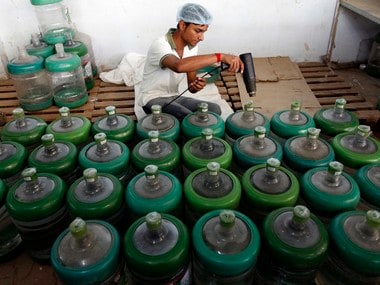
Representational image. Reuters[/caption]A third of the samples that Eenadu tested contained E-coli, a faecal bacteria found in the intestines of humans and animals, that causes diarrhoea. Another one-third were found to be unfit for consumption. Other samples contained hazardous contaminants including pseudomonas, salmonella and staphylococcus. Samples collected from Hyderabad were found to be polluted with sewage water.The investigation by Eenadu is not the first of its kind and won’t be the last either if the health authorities do not clamp down on what is clearly a nation-wide scam.Some twenty years ago, my colleagues at a newspaper conducted a similar investigation and found that bottled water of even well-known brands contained impurities beyond tolerable limits.Just as the demand for packaged water is going up in India, fraudsters are mushrooming across the country to make quick bucks by inundating the market with polluted and harmful water. Officials of state and central governments are throwing up their hands, claiming to be helpless.Mumbai’s bottled water may cause cancerThis is not to cause panic, but only to caution consumers that a significant amount of what passes off as packaged water that comes in both bottles and bigger cans in India is not only impure but even harmful to health.During 2014-15, Maharashtra’s Food and Drug Administration (FDA) raided 95 water packaging plants in the state, including ten in Mumbai, and tested samples collected from them. Of the 95 samples, 28 were found to be contaminated with bacteria and 23 didn’t meet quality standards.Four scientists of the Environmental Monitoring and Assessment Section of the Bhabha Atomic Research Centre analysed commercial brands of packaged drinking water available in Mumbai for the presence of bromide, bromate, chlorate and chlorite. Their startling findings were published in the January 2015 issue of Current Science.They found that, in 27 percent of the Mumbai samples, the proportion of potentially cancer-causing bromate was higher than the World Health Organisation (WHO) guideline value.Centre calls it a problem of statesAnswering a question from Santosh Ahlawat, BJP’s Lok Sabha member from Jhunjhunu in Rajasthan, consumer affairs minister Ram Vilas Paswan told the Parliament in May 2016 that of the 734 samples analysed across India during 2014-15, as many as 226 were adulterated.Paswan made it clear that the implementation and enforcement of Food Safety And Standards Act – 2006 and the rules framed under it, which govern the packaged water industry as well, "primarily rests with" governments of states and union territories.According to Paswan’s information tabled in the Lok Sabha, detection of impurities found in packaged water during 2014-15 in some of the states is as listed in the table below.
| State | Bottled water samples analysed | Samples found adulterated |
| Maharashtra | 89 | 29 |
| Gujarat | 74 | 15 |
| Andhra Pradesh | 54 | 38 |
| Karnataka | 43 | 29 |
| Tamil Nadu | 57 | 34 |
| Kerala | 16 | 3 |

India successfully tests long-range 'Kusha' air defence missile system
Indian trucker arrested in US over alleged theft of $3 million worth of tungsten powder
China has dominated Myanmar’s rare earth mines — now India eyes deal to harness country’s critical minerals
CJP protest in Delhi: New videos of stone pelting, violence emerge as police, agitators trade charges
'From make in India to launch from India': Skyroot COO on why Vikram-1 could change India’s space sector