


Rahul Gandhi's minimum income guarantee scheme, if it comes to fruition, will be the biggest in the world
Rahul Gandhi's blockbuster announcement of a minimum income guarantee scheme of Rs 72,000 per household per year if the UPA comes to power in the Lok Sabha election will be the biggest social protection scheme attempted anywhere in the world

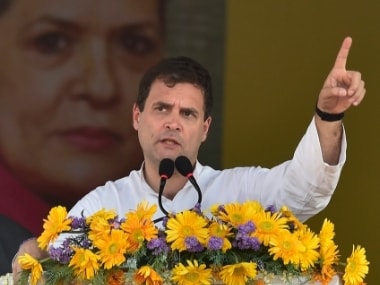
File image of Congress president Rahul Gandhi. PTI[/caption]Social protection schemes that exist to protect people from economic shocks have become a common theme in the international development agenda mostly after the East Asian economic crisis of the 1990s. Although the countries in East Asia had embraced liberalisation early and registered impressive GDP growth and per capita income during the currency crisis, a large number of households fell into distress and poverty. Since then, multilateral agencies, development experts and national governments have taken steps for safety nets to ensure that people are protected from unexpected shocks and that vulnerable populations are not in distress.As compared to conventional charity-style social welfare, modern social protection schemes were mostly cash-based, considered to be forward-looking, rights-based and empowering. The beneficiaries need not stay in the social nets for long and often such schemes were a form of relief to tide over a difficult situation. East Asian counties have different models — both in cash and kind ranging from food coupons to fuel subsidies — that are considered to be good practices.The MNREGA, that the UPA — under Manmohan Singh on advice from Sonia Gandhi's National Advisory Council (NAC) — launched, was hailed globally as a unique social protection programme given its reach, scale, and design. It guaranteed 100 days of work in a year at a minimum income as a matter of right. The biggest innovation of MNREGA was the it was self-targeting while targeted intervention (in which the government identifies who the beneficiaries are) had been the norm in any form of welfare in most parts of the world.This element was important because poverty is a dynamic condition into which people can fall in and out depending on their life situations and earning capacities. Allowing people to choose if they want to benefit, the scheme provided an unprecedented right to work that all Indians could assert. It also ensured that men and women got the same wages. And it's not surprising that MNREGA became a global best practice hailed by organisations such as the UN. "It has brought the right to work to the front stage of the discussion on social protection" is how the UNDP summarised it.Rahul's income guarantee scheme, in comparison, will be targeted. It will be meant only for the poorest 20 percent of the population. It's eminently justified because this is a much bigger commitment and making it universal in a large and poor country such as India will render it completely unviable. Had the population been smaller and the citizen databases been more organised and fraud-proof, the UPA could probably have gone in for a universal scheme as in the case of MNREGA.The idea behind universality is that even though some people may wrongly benefit, the bigger beneficiaries will by and large be the poor people. Impact assessment studies on MNREGA have shown that it's indeed the poor who benefited more than the non-poor.The advantage of an income guarantee scheme is that availability of a threshold income relieves people from distress and debt traps and allows them to reverse poverty. It also improves health, housing and education standards of households. Studies on MNREGA beneficiaries have shown that their proclivity to take loans and payment of higher interests have come down, school enrolment and education standards have improved and the overall quality of life of entire households, including empowerment of women, has become better.Moreover, a basic guaranteed income also enables people to skill themselves better so that they have better professional avenues in future. In other words, even minor financial relief, allows them to focus on skills with better earning potential than to desperately look for work on a daily basis. This was one of the learnings from the impact assessment studies in Scandinavian countries.Although the big bang announcement sounds good, there's still a long way to go. For it to really work as a poverty eradication scheme, the government has to certainly universalise education and health — which account for catastrophic expenses — and make enabling policies in agriculture manufacturing, labour, and social welfare to ensure that the income benefits are not offset by higher inflation, deepened unemployment and poor growth.The author tweets @pramodsarang

Naresh Pal Gangwar appointed higher education secretary, Vineet Joshi moved to Panchayati Raj ministry
India rejects Pakistan's 'baseless' claims at Asean, says Indus Waters Treaty to remain on hold
India successfully tests long-range 'Kusha' air defence missile system
Indian trucker arrested in US over alleged theft of $3 million worth of tungsten powder
China has dominated Myanmar’s rare earth mines — now India eyes deal to harness country’s critical minerals