
Advertisement


Sections
Pakistan reacts to Pulwama attack with denial, dismissiveness; experts warn surgical strike will trigger 'retaliation'
While the Pakistan foreign office did officially condemn the attack, their intention was to send a message to the world saying India blames Pakistan for its own flawed policies in Jammu and Kashmir

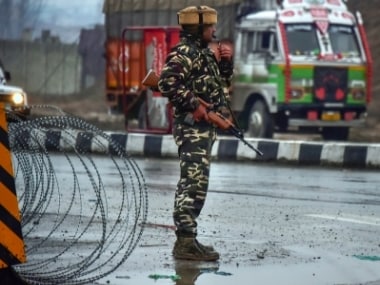
Islamabad: Pakistan’s reaction to the recent Pulwama attack that killed 42 Central Reserve Police Force (CRPF) soldiers has been defensive, as its foreign office urged New Delhi not to point fingers at Islamabad “without investigations”, while calling the militant attack “a matter of grave concern”.While the foreign office did officially condemn the attack, their intention was to send a message to the world saying India blames Pakistan for its own flawed policies in Jammu and Kashmir. Their official statement did not mention the militant group Jaish-e-Mohammad (JeM) — who claimed responsibility the attack — whose leadership is not only rooted in Pakistan, but which also allegedly has ties to the military’s intelligence.[caption id="attachment_6096081" align="alignleft" width="380"]![At least 40 CRPF personnel were killed in a JeM attack in Pulwama on Thursday. PTI]() At least 42 CRPF personnel were killed in a JeM attack in Pulwama on Thursday. PTI[/caption]The narrative Islamabad is looking to peddle has been evident across local media, with the attack being dubbed a ‘brave act’ in the struggle for freedom and the perpetrator being glorified as a "freedom fighter". This narrative has been reinforced by the all-powerful military, which has completely taken over the media’s strings under the current regime, by squeezing media houses financially.An editor working with a leading English daily, speaking on the condition of anonymity, revealed how the Inter-Services Public Relations (ISPR) is micromanaging editorial policies. A prominent example of the military’s control over many media houses is the absolute blackout of the Pashtun Tahaffuz Movement, and complete censoring of dissent in Pakistan-administered Kashmir, including the Gilgit-Baltistan region.“Indian Kashmir has to be clearly written as Indian-occupied Kashmir – not even Indian-held or Indian-administered. The attack in Kashmir can’t be called a terrorist attack. Meanwhile, we have also been instructed that any Pakistani security official killed anywhere is to be called a martyr,” she explained.Even so, while the military maintains a firm grip on the media, the stance showcased by Islamabad in the aftermath of the Pulwama attack has popular support across Pakistan. The attacks launched by Kashmiri militants were wholeheartedly welcomed by the general public, a sample of which can be seen in the reactions across social media:This opinion has been reinforced across by Islamist parties that endorse jihad in Kashmir. As recent as last year, after the Pakistani government issued a fatwa (decree) against terrorism entitled Paigham-e-Pakistan, Islamist parties united in urging the State to announce jihad in Kashmir.These Islamist groups and the rallies they orchestrate to promote jihad in Kashmir often see the participation of members from proscribed groups such as Lashkar-e-Taiba (LeT) and Jaish-e-Mohammed. While Islamabad has issued a firm denial to India’s allegations, there are concerns among officials about the global reaction to Pakistan, particularly at a time when the State is accused of harbouring terrorists.Previously supported by China — which has vetoed India’s move to declare JeM chief Masood Azhar a terrorist at the United Nations — Islamabad is concerned about Beijing backing out in the aftermath of the Pulwama attack. This is especially true given the attack comes days before Islamabad is to explain the functioning of Hafiz Saeed-led groups in the country at the Financial Action Task Force (FATF) meeting in Paris.“China backed out of supporting us at the FATF last year, after the US initiated the process to grey-list us, saying that there is little point in backing us since we were bound to be put on the watchlist. And given the allegations from countries around the globe, China might back out from its veto on Masood as well,” said a government official, speaking on the condition of anonymity, who was a part of the Pakistani delegation at the FATF.Where many express concern about the reaction of global powers, others point to the ‘electoral benefits’ for the ruling Bharatiya Janata Party in India. Shamshad Ahmed, former foreign secretary of Pakistan, said, “With the general elections in India coming up in a few months, obviously the Narendra Modi regime will look to use the attack to help facilitate its election bid. This is the regime that falsely claimed it carried out surgical strikes in Pakistan, so it’s obvious that they will increase the anti-Pakistan rhetoric.”Analysts in Pakistan largely place the blame on Indian policies in Kashmir, maintaining that their use of violence is enhancing militancy in the Valley. “Sure, this attack bears all the hallmarks of a typical jihadi hit, but the Modi administration is guilty of employing a very oppressive militant State policy on indigenous Kashmiris throughout its tenure,” said leading geopolitical analyst and Pakistan Today’s opinion editor Shahab Jafry, referring to the government’s widely-debated use of force, including pellet guns, against civilians.“As for [Pakistan’s] jihadi policy, whatever its current position is, or whether or not there is a partial or complete rollback; these measures will be incorporated away from the public eye. Friends like China have been pushing for a change for a while, but in this particular instance the Indians have also hurt their own position somewhat,” he added.Analysts also maintain that given the verbal hostility expressed by India, should a military option be exercised by New Delhi in any way, Islamabad will be willing to reciprocate. “Exercising the military option would mean entering into a zone which is filled with escalation trigger. If there was a military response from India such as surgical strikes, Pakistan should be expected to retaliate,” said Umair Jamal, a professor of International Relations at Lahore’s FC College & University and a correspondent for The Diplomat.The author is an-Islamabad based reporter and a member of 101Reporters
At least 42 CRPF personnel were killed in a JeM attack in Pulwama on Thursday. PTI[/caption]The narrative Islamabad is looking to peddle has been evident across local media, with the attack being dubbed a ‘brave act’ in the struggle for freedom and the perpetrator being glorified as a "freedom fighter". This narrative has been reinforced by the all-powerful military, which has completely taken over the media’s strings under the current regime, by squeezing media houses financially.An editor working with a leading English daily, speaking on the condition of anonymity, revealed how the Inter-Services Public Relations (ISPR) is micromanaging editorial policies. A prominent example of the military’s control over many media houses is the absolute blackout of the Pashtun Tahaffuz Movement, and complete censoring of dissent in Pakistan-administered Kashmir, including the Gilgit-Baltistan region.“Indian Kashmir has to be clearly written as Indian-occupied Kashmir – not even Indian-held or Indian-administered. The attack in Kashmir can’t be called a terrorist attack. Meanwhile, we have also been instructed that any Pakistani security official killed anywhere is to be called a martyr,” she explained.Even so, while the military maintains a firm grip on the media, the stance showcased by Islamabad in the aftermath of the Pulwama attack has popular support across Pakistan. The attacks launched by Kashmiri militants were wholeheartedly welcomed by the general public, a sample of which can be seen in the reactions across social media:This opinion has been reinforced across by Islamist parties that endorse jihad in Kashmir. As recent as last year, after the Pakistani government issued a fatwa (decree) against terrorism entitled Paigham-e-Pakistan, Islamist parties united in urging the State to announce jihad in Kashmir.These Islamist groups and the rallies they orchestrate to promote jihad in Kashmir often see the participation of members from proscribed groups such as Lashkar-e-Taiba (LeT) and Jaish-e-Mohammed. While Islamabad has issued a firm denial to India’s allegations, there are concerns among officials about the global reaction to Pakistan, particularly at a time when the State is accused of harbouring terrorists.Previously supported by China — which has vetoed India’s move to declare JeM chief Masood Azhar a terrorist at the United Nations — Islamabad is concerned about Beijing backing out in the aftermath of the Pulwama attack. This is especially true given the attack comes days before Islamabad is to explain the functioning of Hafiz Saeed-led groups in the country at the Financial Action Task Force (FATF) meeting in Paris.“China backed out of supporting us at the FATF last year, after the US initiated the process to grey-list us, saying that there is little point in backing us since we were bound to be put on the watchlist. And given the allegations from countries around the globe, China might back out from its veto on Masood as well,” said a government official, speaking on the condition of anonymity, who was a part of the Pakistani delegation at the FATF.Where many express concern about the reaction of global powers, others point to the ‘electoral benefits’ for the ruling Bharatiya Janata Party in India. Shamshad Ahmed, former foreign secretary of Pakistan, said, “With the general elections in India coming up in a few months, obviously the Narendra Modi regime will look to use the attack to help facilitate its election bid. This is the regime that falsely claimed it carried out surgical strikes in Pakistan, so it’s obvious that they will increase the anti-Pakistan rhetoric.”Analysts in Pakistan largely place the blame on Indian policies in Kashmir, maintaining that their use of violence is enhancing militancy in the Valley. “Sure, this attack bears all the hallmarks of a typical jihadi hit, but the Modi administration is guilty of employing a very oppressive militant State policy on indigenous Kashmiris throughout its tenure,” said leading geopolitical analyst and Pakistan Today’s opinion editor Shahab Jafry, referring to the government’s widely-debated use of force, including pellet guns, against civilians.“As for [Pakistan’s] jihadi policy, whatever its current position is, or whether or not there is a partial or complete rollback; these measures will be incorporated away from the public eye. Friends like China have been pushing for a change for a while, but in this particular instance the Indians have also hurt their own position somewhat,” he added.Analysts also maintain that given the verbal hostility expressed by India, should a military option be exercised by New Delhi in any way, Islamabad will be willing to reciprocate. “Exercising the military option would mean entering into a zone which is filled with escalation trigger. If there was a military response from India such as surgical strikes, Pakistan should be expected to retaliate,” said Umair Jamal, a professor of International Relations at Lahore’s FC College & University and a correspondent for The Diplomat.The author is an-Islamabad based reporter and a member of 101Reporters
 At least 42 CRPF personnel were killed in a JeM attack in Pulwama on Thursday. PTI[/caption]The narrative Islamabad is looking to peddle has been evident across local media, with the attack being dubbed a ‘brave act’ in the struggle for freedom and the perpetrator being glorified as a "freedom fighter". This narrative has been reinforced by the all-powerful military, which has completely taken over the media’s strings under the current regime, by squeezing media houses financially.An editor working with a leading English daily, speaking on the condition of anonymity, revealed how the Inter-Services Public Relations (ISPR) is micromanaging editorial policies. A prominent example of the military’s control over many media houses is the absolute blackout of the Pashtun Tahaffuz Movement, and complete censoring of dissent in Pakistan-administered Kashmir, including the Gilgit-Baltistan region.“Indian Kashmir has to be clearly written as Indian-occupied Kashmir – not even Indian-held or Indian-administered. The attack in Kashmir can’t be called a terrorist attack. Meanwhile, we have also been instructed that any Pakistani security official killed anywhere is to be called a martyr,” she explained.Even so, while the military maintains a firm grip on the media, the stance showcased by Islamabad in the aftermath of the Pulwama attack has popular support across Pakistan. The attacks launched by Kashmiri militants were wholeheartedly welcomed by the general public, a sample of which can be seen in the reactions across social media:This opinion has been reinforced across by Islamist parties that endorse jihad in Kashmir. As recent as last year, after the Pakistani government issued a fatwa (decree) against terrorism entitled Paigham-e-Pakistan, Islamist parties united in urging the State to announce jihad in Kashmir.These Islamist groups and the rallies they orchestrate to promote jihad in Kashmir often see the participation of members from proscribed groups such as Lashkar-e-Taiba (LeT) and Jaish-e-Mohammed. While Islamabad has issued a firm denial to India’s allegations, there are concerns among officials about the global reaction to Pakistan, particularly at a time when the State is accused of harbouring terrorists.Previously supported by China — which has vetoed India’s move to declare JeM chief Masood Azhar a terrorist at the United Nations — Islamabad is concerned about Beijing backing out in the aftermath of the Pulwama attack. This is especially true given the attack comes days before Islamabad is to explain the functioning of Hafiz Saeed-led groups in the country at the Financial Action Task Force (FATF) meeting in Paris.“China backed out of supporting us at the FATF last year, after the US initiated the process to grey-list us, saying that there is little point in backing us since we were bound to be put on the watchlist. And given the allegations from countries around the globe, China might back out from its veto on Masood as well,” said a government official, speaking on the condition of anonymity, who was a part of the Pakistani delegation at the FATF.Where many express concern about the reaction of global powers, others point to the ‘electoral benefits’ for the ruling Bharatiya Janata Party in India. Shamshad Ahmed, former foreign secretary of Pakistan, said, “With the general elections in India coming up in a few months, obviously the Narendra Modi regime will look to use the attack to help facilitate its election bid. This is the regime that falsely claimed it carried out surgical strikes in Pakistan, so it’s obvious that they will increase the anti-Pakistan rhetoric.”Analysts in Pakistan largely place the blame on Indian policies in Kashmir, maintaining that their use of violence is enhancing militancy in the Valley. “Sure, this attack bears all the hallmarks of a typical jihadi hit, but the Modi administration is guilty of employing a very oppressive militant State policy on indigenous Kashmiris throughout its tenure,” said leading geopolitical analyst and Pakistan Today’s opinion editor Shahab Jafry, referring to the government’s widely-debated use of force, including pellet guns, against civilians.“As for [Pakistan’s] jihadi policy, whatever its current position is, or whether or not there is a partial or complete rollback; these measures will be incorporated away from the public eye. Friends like China have been pushing for a change for a while, but in this particular instance the Indians have also hurt their own position somewhat,” he added.Analysts also maintain that given the verbal hostility expressed by India, should a military option be exercised by New Delhi in any way, Islamabad will be willing to reciprocate. “Exercising the military option would mean entering into a zone which is filled with escalation trigger. If there was a military response from India such as surgical strikes, Pakistan should be expected to retaliate,” said Umair Jamal, a professor of International Relations at Lahore’s FC College & University and a correspondent for The Diplomat.The author is an-Islamabad based reporter and a member of 101Reporters
First Published:Feb 16, 2019, 19:58:38 IST
Advertisement
Advertisement

China has dominated Myanmar’s rare earth mines — now India eyes deal to harness country’s critical minerals
India is deepening rare earth cooperation with Myanmar as New Delhi seeks alternative sources of critical minerals dominated by China, including dysprosium and terbium used in EVs, defence systems and clean energy technologies
6 min read
CJP protest in Delhi: New videos of stone pelting, violence emerge as police, agitators trade charges
Fresh videos of violence that broke out during the Cockroach Janta Party's (CJP) protest in Delhi have surfaced, with the police releasing footage showing alleged stone pelting, vandalism and attacks on security personnel
3 min read
'From make in India to launch from India': Skyroot COO on why Vikram-1 could change India’s space sector
Skyroot Aerospace’s successful Vikram-1 mission marks a major milestone for India’s private space sector, as the country seeks to shift from “Make in India” to “Launch from India” and compete in the global commercial satellite launch market
8 min read
Choke terror funding, keep international shipping lanes safe: Jaishankar at Asean Regional Forum
Jaishankar's remarks came against the backdrop of recent terror attacks targeting India and growing threats to commercial shipping amid conflicts in West Asia and Europe
2 min read
PM Modi announces fast-track courts for paper leak cases; CJP responds ‘Dharmendra Pradhan must go’
Amid protests demanding accountability for the leak of medical entrance test Neet and other irregularities in the education system, Prime Minister Narendra Modi has announced that the government has decided to set up fast-track courts to ensure swift and stringent punishment for those involved in paper leaks.
3 min read
Advertisement
Advertisement