


Overburdened ASHA workers, lack of access to contraceptives: How COVID-19 impacted family planning services across India
COVID-19 impact on family planning: In the wake of the pandemic, ASHA workers had to shoulder additional responsibilities, which prevented them from creating awareness about family planning and distributing contraceptive pills and condoms

The COVID-19 pandemic and the resultant strain on the healthcare system have only made matters worse. A study by global non-governmental organisation Marie Stopes International estimated in August 2020 that 1.3 million women in India lost access to contraceptives and adoption services between January and June of that year.Speaking to Firstpost on this issue, Poonam Muttreja, executive director of PFI said, “When the first lockdown came into place in March 2020, several essential health services including family planning, sexual and reproductive health (SRH), institutional deliveries, antenatal care and immunisation services were impacted. This had a ripple effect on family planning services, especially in rural areas. These services were again disrupted by the second wave of COVID-19 and consequent lockdown in a number of states.”She added, “The unmet need for family planning is already high in India and this disruption could have far-reaching consequences. Projections suggest that as a result of the pandemic and disruptions in family planning and sexual and reproductive health services, 26 million couples in India will have no access to contraceptives. The inability to access contraceptives during the lockdown is likely to result in an additional 2.4 million unintended pregnancies in India.”Challenges of healthcare workersThe government provides contraceptive services to people through the National Health Mission. The contraception methods that are provided at public health centres include oral contraceptive pills, condoms, intrauterine contraceptive devices (IUCDs) and injectable contraceptives.At the grassroots level, the role of ASHAs (Accredited Social Health Activists) is crucial in ensuring the success of these family planning measures. ASHA workers distribute contraceptives to people at their houses, and they are also tasked with disseminating information on contraceptives and providing family planning counselling.However, in the wake of the novel coronavirus, ASHA workers have had to shoulder several new responsibilities as part of efforts to battle the pandemic. These include contact tracing, awareness programmes, ensuring implementation of quarantine regulations and reporting suspected COVID-19 cases. This has had an inevitable impact on their ability to carry out their responsibilities towards family planning.[caption id="attachment_9708801" align="alignnone" width="640"]
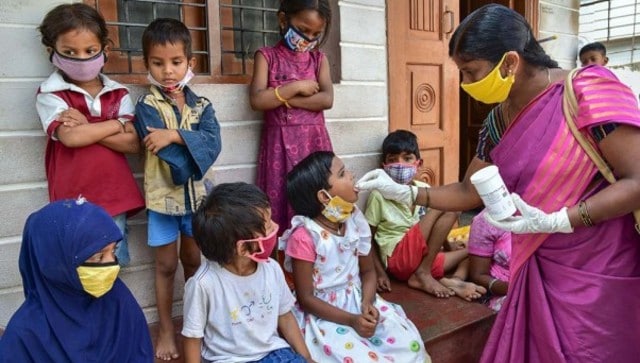
ASHA workers in Hyderabad taking part in a COVID-19 awareness programme. PTI[/caption]Amrapali Kharat, an ASHA worker in the Thane district, described the new challenges that the pandemic posed in a conversation with Firstpost. She said, “In the initial days of the pandemic, we had to visit several places outside of our regular area of work for surveys related to COVID-19. Due to this, we could not carry out our usual responsibilities in our regular areas. We could not distribute pills or condoms during this period. Often, the pills or condoms did not reach us in the first place.”The outbreak of the virus and quarantine norms also seem to have led to new apprehensions among the people.
Kharat said, “Since the outbreak of COVID-19, women are required to get tested for COVID-19 before undergoing a sterilisation procedure. Due to this, many women became reluctant to undergo operations. If they tested positive, they would need to be quarantined, and would thus have to skip work. There was also a widespread belief among people that if they got tested, they were sure to test positive."Speaking about the broad picture, Kharat said, “On the whole, distribution of contraceptives and other related activities reduced a lot in 2020. In the second wave of coronavirus as well, family planning services suffered. It is only now that things are slowly getting back to normal.”Nevertheless, the COVID-19 pandemic continues to pose a grave challenge to sexual and reproductive health. Grassroots healthcare workers, who have already been on the frontlines of efforts to combat the virus, are now also engaged in the vaccination process. This, combined with the possibility of a third wave of the coronavirus, can make the implementation of family planning activities even more difficult.Commenting on the measures that should be taken to streamline access in the future, Muttreja said, “The second wave has reached the villages, although it appears to be abating in urban areas. Public health experts haven’t ruled out the possibility of a third wave of COVID-19. While the need of the hour is to combat COVID-19, this must not be done at the expense of other essential health priorities. There is a need to ensure uninterrupted provision of family planning and sexual and reproductive health services, as well as to step up investments for them."
"Studies from across the globe have revealed that investing in family planning is one of the most cost-effective public health measures, and is a development ‘best buy’," added Muttreja.She added, “Strengthening of health systems and increased health budget allocation is the need of the hour. The government must re-evaluate and revamp the public health system in order to ensure system preparedness to combat health emergencies at scale. The mechanism for the distribution of contraceptive services also needs to be properly planned. It is important to ensure greater engagement of social marketing and family planning service delivery organisations to support the government and take some burden off the public health system. Online platforms and telemedicine services should be leveraged for the provision of information and counselling on family planning and sexual and reproductive health services.”

No premium queues, 30-minute target: What changes for Indian passport applicants in UAE
CJP Protest in Delhi Live Updates: Heavy security deployed in Jantar Mantar ahead of student protests
Bharat Forge, Flying Whales sign pact to develop 60-tonne airships for India’s defence logistics
Air India to cut Delhi-Toronto flight time by 3 hours, resume non-stop services from August 1
J&K cop on Amarnath Yatra duty shot dead in Anantnag terror attack; TRF claims responsibility