


Narendra Modi-Donald Trump bilateral talks at UN: Indian media needs to learn there's more to India-US relationship than just Pakistan
The fact remains that India's relationship with the US is multifaceted and has way more dimensions than US-Pakistan ties — that is limited to security concerns of a strictly transactional nature. It was disheartening to see Indian media restrict itself only to Pakistan, when ties between the world's oldest and largest democracy had many more areas to cover.

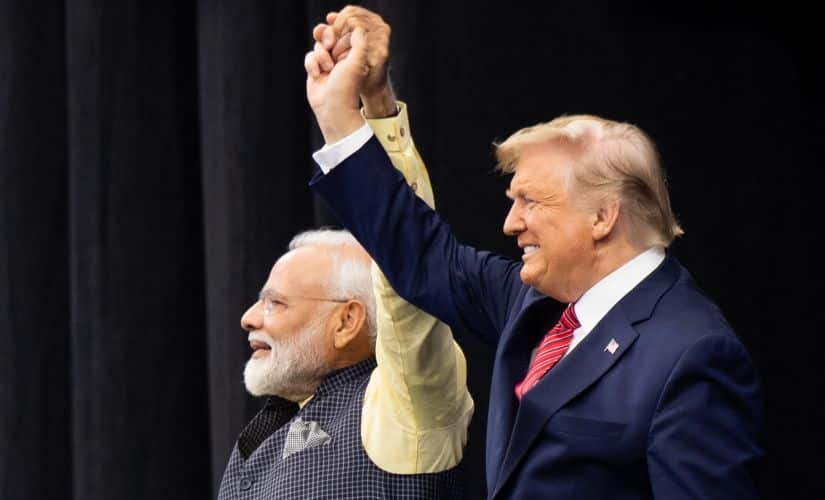
If Trump's understanding of India's position on Kashmir is the first thing that the presser made clear, the second thing that became evident is POTUS's faith in Modi's ability as a leader of a complex, diverse nation. Getty Images[/caption]Second, even though Trump is loathe to repeat India's position that Pakistan is the epicenter of global terror — Trump has obviously bigger beef with Iran and all nations set their foreign policy guidelines and narratives according to self-interests — but he still did not contest the reporter's core argument that Pakistan is a sponsor of terror. He merely said, "Iran would have to be at the top of the list," leaving unsaid the suggestion that Pakistan's name also features prominently on that purported "list". This is again a tacit endorsement of India's narrative (though not to the degree that New Delhi would have liked) that Pakistan's sponsorship of terrorism is a global concern.Third, this exchange also indicates that Trump is not ready to throw Khan under the bus. Though Indian media would have nothing more but that is not how nations conduct diplomacy. Afghanistan "peace talks" (a euphemism if ever there was one) might be going nowhere and Pakistan may have temporarily lost its best leverage with the US, but as long as American troops remain on Afghan soil, Trump is aware that the clock is ticking. Trump's desperation to "win" the "unwinnable war" and bring the troops back home just before campaign for 2020 Presidential election kicks off translates into another chance for Pakistan to become relevant again. In any case, nations rarely design foreign policy based on ideals. Had that been the case, India wouldn't have been buying oil from Iran or striking up arms deals with Russia despite the track records of these two nations in sponsoring terrorism.One more exchange points to the conclusion that Trump doesn't want to sound too harsh on Pakistan, but he doesn't contest the core argument that it has role in sponsoring radical Islamic/Islamist terrorism. Let's have a look."Q …Mr. President, in Houston, you said that you stand with India in fight against Islamic radical terrorism. How do you see the statement coming from the Pakistani Prime Minister admitting (at an event organised by a think tank) that the Pakistani state, the ISI trained al Qaeda?PRESIDENT TRUMP: Well, I haven't heard that. I haven't heard that. And I know this: that your Prime Minister (Modi) will take care of it. So, if there's a problem, he'll - if there's a problem, he'll take care of it. It would be great if they could work out something on Kashmir. We all want to see that. I'm sure we all want to see it."If Trump's understanding of India's position on Kashmir is the first thing that the presser made clear, the second thing that became evident is POTUS's faith in Modi's ability as a leader of a complex, diverse nation lodged in a tough neighbourhood. Trump repeatedly pointed towards Modi's ability to handle complex situations and used similes and monikers to describe him that have sparked political debates in India. He compared Modi to Elvis Presley for his ability to draw crowds and called him the "father of India" which Modi's rivals and critics back home have found difficult to digest.Trump described his personal chemistry with Modi as "as good as it can get", claimed that he has "great respect" and "great admiration" and also added that Modi is a "great gentleman and a great leader." Given Trump's limited vocabulary, that is as superlative as he can possibly get.In true Trumpian style, he also somewhat airily described India before Modi as a "very torn" place. "There was a lot of dissension, a lot of fighting. And he brought it all together, like a father would bring it together. Maybe he's the father of India. We'll call him "the father of India." I think that's not so bad. But he brought things together. And you don't hear that anymore. So I think he's done a fantastic job. But I think that what the event showed is how much I like the country of India and how much I like your Prime Minister."Such Trumpian monikers must be taken with caution but it doubtless indicates that he was impressed with Modi, and by what he saw at Houston.However, the final point evident from the presser is that despite the strategic closeness and convergence of values and interests, trade will likely remain the defining feature of US-India bilateral ties — at least till Trump occupies the Oval Office. At the presser, too, Trump very clearly mentioned the chief agenda of his bilateral with Modi that took place shortly after the presser on the sidelines of UNGA."…We have many things to discuss. One of them — and perhaps in our case, one of the biggest ones is trade. We do a lot of trade together and we're working on that. We'll also be discussing Kashmir. I imagine it'll be brought up." Later in the new conference, he expressed hope that "very soon we'll have a trade deal. We'll have the larger deal down the road a little bit, but we will have a trade deal very soon" but that hope, according to latest news reports, appears to have been belied with the US and Indian negotiators (led by Union External Affairs Minister S Jaishankar, Commerce Minister Piyush Goyal, foreign secretary Vijay Gokhale and Indian Ambassador to the US, Harsh Shringla) failing to reach to a conclusion.A report in The Hindu noted that despite progress in talks, a trade deal could not be chalked out because both sides failed to "reach an agreement on Information and communications technology (ICT) products. The US has wanted India to eliminate tariffs (20 percent) on ICT products, but New Delhi is concerned that this could open up the market to flooding by Chinese technology."While that may be the case, the fact remains that India's relationship with the US is multifaceted and has way more dimensions than US-Pakistan ties — that is limited to security concerns of a strictly transactional nature. It was disheartening to see Indian media restrict itself only to Pakistan, when ties between the world's oldest and largest democracy had many more areas to cover.

No premium queues, 30-minute target: What changes for Indian passport applicants in UAE
CJP Protest in Delhi Live Updates: Heavy security deployed in Jantar Mantar ahead of student protests
Bharat Forge, Flying Whales sign pact to develop 60-tonne airships for India’s defence logistics
Air India to cut Delhi-Toronto flight time by 3 hours, resume non-stop services from August 1
J&K cop on Amarnath Yatra duty shot dead in Anantnag terror attack; TRF claims responsibility