


#MeToo never set out to be balanced; movement aimed at making us confront biases on sexual violence and consent
#MeToo cannot be balanced because it is finally voicing centuries of sexual violence against people who have been silenced and essentially stripped of their humanity.

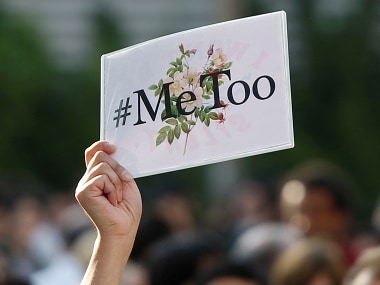
Representational image. Reuters[/caption]Granted, the resurgence of this movement in India primarily started by exposing harassment in the media and entertainment industry, it is still important to remember that #MeToo is a social justice movement, not a criminal justice one. Distinguishing between the two is imperative — while criminal justice operates within legal frameworks, social justice continually questions the validity of these frameworks to make them better equipped to address inequity. Social justice and criminal justice often go hand in hand, but as the Christine Blasey Ford versus Brett Kavanaugh case has shown us, criminal justice can, at times, let us down in heartbreaking ways.In the context of social justice, #MeToo as a movement is meant to force us to confront our own biases of what sexual violence and victims/survivors of sexual violence can look like. In January, I saw a lot of people I care about struggle with confronting their own biases, after a woman accused comedian and actor Aziz Ansari of harassing her. The Atlantic published an article that said labelling Ansari a harasser was both racist and a step too far. My inbox was flooded with messages from family members and acquaintances triumphantly linking to the article and saying, “See, #MeToo isn’t a balanced movement!” I responded to them by angrily saying that consent was revocable.In retrospect, I realise that all the people who sent me those messages were afraid that the definitions and ideas they had held true of sex and consent were being challenged, which made their own behaviour and actions suspicious. But because their ideas were being challenged, people whose trauma and emotions hadn’t been validated before were able to speak up, as they are now in India. If we refuse to empower their narratives with our empathy at this crucial moment, we will get lost in the pedantics of legal definitions and our own rigidity.Confronting our own rigidity is extremely difficult work because it refuses to absolve any of us from being complicit. It does away with the notion that sexual violence is solely a gendered, class, sexuality or religious issue, where only the relevant privileged community deserves all the blame. I have had moments where I have questioned whether someone’s narrative is stretching the definition of sexual violence. In those moments, I was reminded by friends of how essential it is, at this juncture, to be uncomfortable with myself. In those moments, I was compelled to examine my privilege in the multiple spaces in which I exist, instead of gleefully shaming those accused.Yes, it is important to name and shame. I am in no way suggesting that we should go easy on those who have abused, harassed, coerced and terrified people into keeping quiet about their trauma. But the sheer volume of people who have vocalised their experiences in the past couple of weeks is not only reflective of the exploitative monsters built by skewed power dynamics, but our own apathy. We shouldn’t let ourselves off the hook so easily for cherry-picking who we stand behind based on our definition of what constitutes as a painful ‘enough’.#MeToo is not meant to be a movement that is balanced. It cannot be because it is finally voicing centuries of sexual violence against people who have been silenced and essentially stripped of their humanity. It must be a complete upheaval of how each of us views consent and sex, so we can interact with those concepts more responsibly than we have till now. Anything less ‘extreme’ would be an injustice to this beautiful moment of emotional justice and catharsis.

Pakistan-based social media handles active during Op Sindoor spreading rumours amid NEET protest: Police
PM Modi says stricter action against paper leaks to be announced at Friday's Cabinet meeting
NEET protest: CJP delegation to meet ministers on Friday, sources say
Naresh Pal Gangwar appointed higher education secretary, Vineet Joshi moved to Panchayati Raj ministry
India rejects Pakistan's 'baseless' claims at Asean, says Indus Waters Treaty to remain on hold