
Advertisement


Sections
LCA programme: India's Rs 10,397 crore disaster may finally be handed over to the private sector
More than three decades after it was initiated, the Indian government’s Light Combat Aircraft programme continues to flounder in uncertainty. Here is a timeline of events.

More than three decades after it was initiated, the Indian government’s Light Combat Aircraft programme continues to flounder in uncertainty. The Economic Times on Friday reported that the government is considering whether to hand over the project to the private sector. The cost of the project was initially slated to be Rs 575 crore but has since escalated to Rs 10,397 crore.The Aeronautical Development Agency's (ADA) delays in delivery have only served to frustrate the government and the Indian Air Force. The CAG had also slammed the execution, saying that the Tejas MK I was unsafe. The claims that the first LCA Mk 2 prototype -- which will have the more powerful General Electric F414-GE-INS6 engines -- will conduct its maiden test flight in 2018-19 and go into series production three years later have also been treated with suspicion by the IAF.According to a report in the IHS Jane's 360, "IAF officers question this timeline, as the LCA Mk 2's rear fuselage will need re-engineering to accommodate the heavier engine, thereby altering the fighter's air dynamics. They said this would necessitate time-consuming and technologically complex alterations to the platforms avionics and related systems to stabilise it, which could involve overseas consultants."Series-production aircraft may cost India 1.6 billion rupees (US $25,220,512) each still a fraction the price of a Western fighter -- the 36 Rafale's would cost $4.5 billion -- but whether they will be the answer to the IAF's requirements is another issue altogether.The ADA's delays have also meant that India have needed replacements in flyaway condition. A few days back, the IAF has informed the Ministry of Defence (MoD) that it needs an additional 44 Dassault Rafale fighters to supplement the 36 Rafales that India is negotiating to acquire.The Indian Air Force's combat readiness is being severely affected by the delays. According to the latest Parliamentary Defence Committee report, the IAF's combat squadrons will total 25 by 2022, down from the authorised strength of 45 squadrons.Here is a timeline of events leading up to this situation:[caption id="attachment_2336600" align="alignleft" width="380"]![The Tejas has overshot it's delivery targets by a long way.]() The Tejas has overshot it's delivery targets by a long way.[/caption]1983: In a bid to replace the ageing Russian-designed MiG-21 aircrafts, the government launched the Light Combat Aircraft (LCA) programme. The programme was to be completed in eight to ten years.1984: The government set up the Aeronautical Development Agency as the nodal agency to develop the LCA.1986: An allocation of Rs 575 crores was made for the programme.1987: The phase of project definition began, with French aircraft major Dassault Aviation as consultants.1990: Design of LCA programme’s aircraft was completed1993: First full scale engineering development phase was sanctioned.1995: LCA missed deadline for rollout of first aircraft by six months.2001: First flight of the first aircraft was conducted in January. It missed the deadline of December 1996 by a long way.2002: Second flight was conducted in June, misses deadline of September 1997.2003: In November, first Prototype version (PV I) took off, misses deadline of December 1999.2009: LCA aircraft Tejas completed 1000 flights.January 2015- Defence minister Manohar Parrikar handed over Tejas aircraft to Indian Air Force.May 2015- CAG report criticized project for delays and technical shortcomings.
The Tejas has overshot it's delivery targets by a long way.[/caption]1983: In a bid to replace the ageing Russian-designed MiG-21 aircrafts, the government launched the Light Combat Aircraft (LCA) programme. The programme was to be completed in eight to ten years.1984: The government set up the Aeronautical Development Agency as the nodal agency to develop the LCA.1986: An allocation of Rs 575 crores was made for the programme.1987: The phase of project definition began, with French aircraft major Dassault Aviation as consultants.1990: Design of LCA programme’s aircraft was completed1993: First full scale engineering development phase was sanctioned.1995: LCA missed deadline for rollout of first aircraft by six months.2001: First flight of the first aircraft was conducted in January. It missed the deadline of December 1996 by a long way.2002: Second flight was conducted in June, misses deadline of September 1997.2003: In November, first Prototype version (PV I) took off, misses deadline of December 1999.2009: LCA aircraft Tejas completed 1000 flights.January 2015- Defence minister Manohar Parrikar handed over Tejas aircraft to Indian Air Force.May 2015- CAG report criticized project for delays and technical shortcomings.
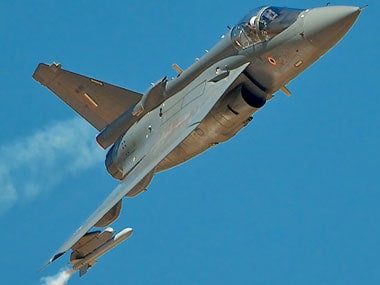 The Tejas has overshot it's delivery targets by a long way.[/caption]1983: In a bid to replace the ageing Russian-designed MiG-21 aircrafts, the government launched the Light Combat Aircraft (LCA) programme. The programme was to be completed in eight to ten years.1984: The government set up the Aeronautical Development Agency as the nodal agency to develop the LCA.1986: An allocation of Rs 575 crores was made for the programme.1987: The phase of project definition began, with French aircraft major Dassault Aviation as consultants.1990: Design of LCA programme’s aircraft was completed1993: First full scale engineering development phase was sanctioned.1995: LCA missed deadline for rollout of first aircraft by six months.2001: First flight of the first aircraft was conducted in January. It missed the deadline of December 1996 by a long way.2002: Second flight was conducted in June, misses deadline of September 1997.2003: In November, first Prototype version (PV I) took off, misses deadline of December 1999.2009: LCA aircraft Tejas completed 1000 flights.January 2015- Defence minister Manohar Parrikar handed over Tejas aircraft to Indian Air Force.May 2015- CAG report criticized project for delays and technical shortcomings.
First Published:Jul 10, 2015, 14:19:22 IST
Advertisement
Advertisement

Indian trucker arrested in US over alleged theft of $3 million worth of tungsten powder
A 39-year-old Indian national living illegally in the US has been arrested in California after authorities alleged he stole a truck carrying nearly $3 million worth of hazardous tungsten powder.
1 min read
China has dominated Myanmar’s rare earth mines — now India eyes deal to harness country’s critical minerals
India is deepening rare earth cooperation with Myanmar as New Delhi seeks alternative sources of critical minerals dominated by China, including dysprosium and terbium used in EVs, defence systems and clean energy technologies
6 min read
CJP protest in Delhi: New videos of stone pelting, violence emerge as police, agitators trade charges
Fresh videos of violence that broke out during the Cockroach Janta Party's (CJP) protest in Delhi have surfaced, with the police releasing footage showing alleged stone pelting, vandalism and attacks on security personnel
3 min read
'From make in India to launch from India': Skyroot COO on why Vikram-1 could change India’s space sector
Skyroot Aerospace’s successful Vikram-1 mission marks a major milestone for India’s private space sector, as the country seeks to shift from “Make in India” to “Launch from India” and compete in the global commercial satellite launch market
8 min read
Choke terror funding, keep international shipping lanes safe: Jaishankar at Asean Regional Forum
Jaishankar's remarks came against the backdrop of recent terror attacks targeting India and growing threats to commercial shipping amid conflicts in West Asia and Europe
2 min read
Advertisement
Advertisement