


Lacking powerful leaders and worldly-wise elders, today's young Muslims have had to teach selves secularism, political savvy
The 1980s-born Muslims, like me, had seen their childhood go through the trauma of the Babri Masjid demolition and subsequent riots. They grew up with fear, care, and patience

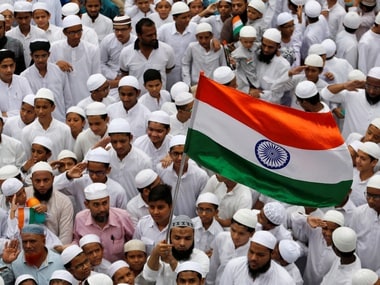
Representational image. Reuters[/caption]The communication deficitThe Muslim leaders, mostly in their 60s, 70s and 80s, have no experience of providing leadership in real time when young Muslims access information about happenings in real time. The non-Muslim leadership was much better in upgrading its communication with its following. The Art of Living, Baba Ramdev and all major non-political, religious leaders of Hindu society realised the need to communicate through the new powerful medium, which was becoming a new message in itself. Even today, most of the Muslim leadership has no connection with this medium and stays in denial about the game-changing capability of the new medium.The new Muslim generation does not find the much talked-about Muslim leadership there. It finds the BJP's social media machine, known as its IT cell, spewing hatred against it, demonising it and degrading its equal citizenship status on a daily basis. Elsewhere members of this young generation find the Kanhaiya Kumars, Umar Khalids, Shehla Rashids and media personalities such as Ravish Kumar weighing in on the Great Indian Debate. Nowhere have they found Muslim leadership speaking and offering something that could have stopped the IT cell demonisation.In fact, Urdu itself was a latecomer on the internet as it failed to hitch a ride on the IT revolution on time. Even today, Urdu newspapers are struggling to make their publications online in the most easily accessible format. The Urdu multimedia in India is a failed story. The Urdu that produced the most wonderful poetry for common men, the popular film stories and dialogues, failed to register its presence on digital media. The limited presence of Urdu on the internet became a blessing in disguise that helped young Muslims — educated in Hindi, English or regional languages — see the world beyond Urdu's nostalgic and past-facing world view. The young generation's relationship with its country and society is being shaped by an increasingly noisy media, where it has more opportunities to speak and engage in a two-way debate — something that was not much available to previous generations.Empowered and engaged The young generation had more opportunities and space to interact with non-Muslim society and its interaction with non-Muslims is beyond the rhetoric of Hindu-Muslim unity. This generation talks with non-Muslims with great confidence on a variety of issues, not limited to contentious issues. The old generation didn't have that many opportunities or space to engage with non-Muslims in a significant way.Muslims of today are angry with their community leaders for not offering any solution, and worse, because they have no understanding of their problems at all. The disconnect between them and the Muslim leadership is one of the causes of rising discontent. The traditional Muslim leadership failed by not trusting the young generation. They don't assign them leadership roles, they don't welcome their voices in Muslim leadership forums. The Muslim Personal Law Board has not seen any change in its faces for many decades.Both religious leaders such as the Jamiat al Ulema, the Jamat Islami, the Ahl-e-Hadith, or non-cleric leaders such as Azam Khan, Asaduddin Owaisi or others have effectively maintained control of their families in key positions. The Muslim leaders of the Congress have rarely opened their doors for the young Muslim generation. Owaisi could have been the best hope, but he too is preoccupied by the "family politics" syndrome. You will find the young Muslim generation having lost hope in affiliating with mainstream political parties or religious groups and wanting to act independent of affiliations and orientations to society.Unapologetic secular MuslimAgitating Muslim youths are asserting their voices without fear because they are the New Muslims of India who are ready to assume bigger roles, to participate in mainstream processes and want to be heard. They are non-ideological but passionate, non-political but politically sensitive, secular but unafraid of aggressions on their identity as a Muslim. They are secular by training and by choice, not by political compulsions that have propped up only an apologetic Muslim leadership within the secular ranks.Apologetic secular Muslims shy from speaking on Muslim issues, from defending Muslim identity, from criticising Muslim clerics. The young Muslims are unapologetic, simultaneously secular in public affairs, critical of the Muslim Personal Law Board's reckless approach to Muslim women, madrassa education and modernisation. Proving that an unapologetic Muslim identity is not an antithesis of secular identity is yet to happen, but you can see them asserting to get themselves recognised and respected for all aspects of their identities — as a Muslim, an Indian, a gender, a local, a generation and a language.Movements such as Pasmanda have taken these aspirations further to the level of multiplicity of identities within Muslim societies. In Delhi, Saudi Arabia, Oman or elsewhere, you can see a Keralite Muslim asserts her/himself first as Keralite making her/his bonds with Malayalis, and secondary to it, s/he finds oneself a Muslim. To them, the multiple identities of an Indian Muslims are as normal as the multiple identities of an Indian Hindu or Indian Sikh.This young Muslim generation is a new opportunity for both Muslim and non-Muslim leadership, for the country and society alike. Let them speak and let them be heard, let them be part of the national public sphere without pushing them to religious, secular, regional or ideological ghettos.The author is a PhD from Jawaharlal Nehru University. He tweets @omairanas

India rejects Pakistan's 'baseless' claims at Asean, says Indus Waters Treaty to remain on hold
India successfully tests long-range 'Kusha' air defence missile system
Indian trucker arrested in US over alleged theft of $3 million worth of tungsten powder
China has dominated Myanmar’s rare earth mines — now India eyes deal to harness country’s critical minerals
CJP protest in Delhi: New videos of stone pelting, violence emerge as police, agitators trade charges