
Advertisement


Sections
Jammu and Kashmir Ramadan ceasefire welcome, but a lot hinges on Hizbul Mujahideen's cooperation
As Kashmir was sliding into chaos with regular gunfights, the killing of militants and swelling ranks of rebels, New Delhi’s approval for a halt in counterinsurgency operations during Ramadan has come as a relief for many in the Valley

As Kashmir was sliding into chaos with regular gunfights, the killing of militants and swelling ranks of rebels, New Delhi’s approval for a halt in counterinsurgency operations during Ramadan has come as a relief for many in the Valley. For at least a month, the move may bring down the number of militant and security forces casualties, and also reduce the post-encounter civilian deaths that have heightened tensions in the Valley.Those who have lost their children to the fresh wave of violence, including the parents of militants and policemen killed recently in encounters, are now saying the halt in anti-militancy operations for the holy month of Ramadan should become the basis for a sustainable dialogue process that paves the way for the resolution of the Kashmir conflict."No one wants to see the blood of innocent children and mujahideen (militants) spilled on the streets," said Maqbool Ahmad Bhat, whose son Sameer Bhat, also known as Sameer Tiger, was killed recently in an encounter with forces in a gunfight in Draubgam area of Pulwama in south Kashmir. "But they have to solve the dispute of Kashmir once and for all. If a serious effort is made, why would young men decide to choose the path of violence?" Bhat asked Firstpost on Wednesday.[caption id="attachment_4472873" align="alignnone" width="825"]![Mohammad Abbas Shah being comforted after the death of his son. Firstpost/Hilal Shah]() Mohammad Abbas Shah being comforted after the death of his son. Firstpost/Hilal Shah[/caption]Before the announcement about halting the counterinsurgency operations was made by the Union Home Minister Rajnath Singh, both the state as well as Central governments were exploring ways to reduce the civilian death toll in Kashmir. Besides, they were are also working on ways to motivate Kashmiri militants to surrender. A surge in attacks on the Jammu and Kashmir Police have left at least 17 policemen dead so far this year."My son died young," said Mohammad Abbas Shah, whose 27-year-old policeman son was killed a few days ago in the Bijbehara area of Anantnag in south Kashmir. Shah said only those parents whose children have been lowered into graves in the past 29 years of turmoil understand why the spilling of blood should end soon, and before it is to late.
Mohammad Abbas Shah being comforted after the death of his son. Firstpost/Hilal Shah[/caption]Before the announcement about halting the counterinsurgency operations was made by the Union Home Minister Rajnath Singh, both the state as well as Central governments were exploring ways to reduce the civilian death toll in Kashmir. Besides, they were are also working on ways to motivate Kashmiri militants to surrender. A surge in attacks on the Jammu and Kashmir Police have left at least 17 policemen dead so far this year."My son died young," said Mohammad Abbas Shah, whose 27-year-old policeman son was killed a few days ago in the Bijbehara area of Anantnag in south Kashmir. Shah said only those parents whose children have been lowered into graves in the past 29 years of turmoil understand why the spilling of blood should end soon, and before it is to late.![Mohammad Subhan Khanday (centre) kissing the forehead of his slain son. Image procured by Sameer Yasir]() Mohammad Subhan Khanday (centre) kissing the forehead of his slain son. Image procured by Sameer Yasir[/caption]"Given the rate at which Kashmiris are getting killed, it's time to think and save the lives of our children," he added."Our children lost their lives fighting for a political belief," Ghulam Hassan Tak, a resident of Panzgam village in Pulwama, whose son Showkat Ahmad Tak was among the three militants killed in Srinagar recently. "It doesn’t matter how hard you fight a war, eventually you have to come to the table to resolve the matter through talks," he said."The problem is Kashmiris have been deceived since 1947 and how this offer plays out remains to be seen," he added.[caption id="attachment_4472867" align="alignnone" width="825"]
Mohammad Subhan Khanday (centre) kissing the forehead of his slain son. Image procured by Sameer Yasir[/caption]"Given the rate at which Kashmiris are getting killed, it's time to think and save the lives of our children," he added."Our children lost their lives fighting for a political belief," Ghulam Hassan Tak, a resident of Panzgam village in Pulwama, whose son Showkat Ahmad Tak was among the three militants killed in Srinagar recently. "It doesn’t matter how hard you fight a war, eventually you have to come to the table to resolve the matter through talks," he said."The problem is Kashmiris have been deceived since 1947 and how this offer plays out remains to be seen," he added.[caption id="attachment_4472867" align="alignnone" width="825"]![Ghulam Hassan Tak, the father of Showkat Ahmad Tak. Image procured by Sameer Yasir]() Ghulam Hassan Tak, the father of Showkat Ahmad Tak. Image procured by Sameer Yasir[/caption]Unlike the 2000 ceasefire between Hizb militants and New Delhi, a different situation prevails in Kashmir today. The situation remains tense in southern Kashmir, which is up in arms against the establishment since the 2016 summer when Hizb commander Burhan Wani was killed in an encounter. Since then, the ruling PDP has avoided its stronghold. Even the by-elections for the Anantnag Parliamentary seat have been postponed on more than one occasion.
Ghulam Hassan Tak, the father of Showkat Ahmad Tak. Image procured by Sameer Yasir[/caption]Unlike the 2000 ceasefire between Hizb militants and New Delhi, a different situation prevails in Kashmir today. The situation remains tense in southern Kashmir, which is up in arms against the establishment since the 2016 summer when Hizb commander Burhan Wani was killed in an encounter. Since then, the ruling PDP has avoided its stronghold. Even the by-elections for the Anantnag Parliamentary seat have been postponed on more than one occasion.
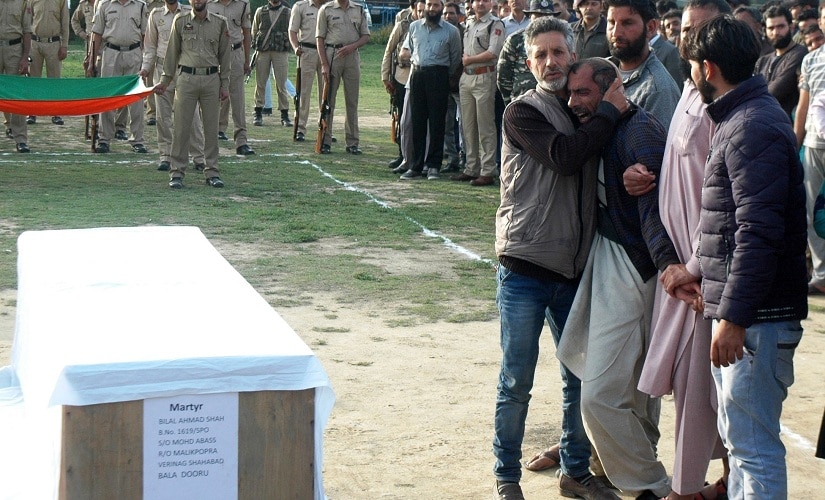 Mohammad Abbas Shah being comforted after the death of his son. Firstpost/Hilal Shah[/caption]Before the announcement about halting the counterinsurgency operations was made by the Union Home Minister Rajnath Singh, both the state as well as Central governments were exploring ways to reduce the civilian death toll in Kashmir. Besides, they were are also working on ways to motivate Kashmiri militants to surrender. A surge in attacks on the Jammu and Kashmir Police have left at least 17 policemen dead so far this year."My son died young," said Mohammad Abbas Shah, whose 27-year-old policeman son was killed a few days ago in the Bijbehara area of Anantnag in south Kashmir. Shah said only those parents whose children have been lowered into graves in the past 29 years of turmoil understand why the spilling of blood should end soon, and before it is to late.
Stating that it doesn’t matter whether it is the father of a policeman, a militant, a political worker or even the father of army soldier, he said that no one wants to see their children getting killed at such a young age."All your life, you raise you children so that they can take care of you when you are old. But when you have to shoulder the coffin of your young son, how can you support this mayhem?" asked Shah on Wednesday evening from his home in the Malikpora area of Verinag in Anantnag district. Given how the number of counterinsurgency operations had fiercely risen with the last summer’s Operation All Out that has continued this year, things were fast heading towards a serious crisis in Kashmir. The separatists even drew parallels with Afghanistan in the face of the worsening situation in Kashmir.Public opinion largely favours the Centre's move but it remains to be seen if the Hizbul Mujahideen, the biggest militant outfit that draws its cadre from local population, will respond in kind. In Kashmir, it is not the Lashkar-e-Taiba or Jaish-e-Mohammad, but Hizb whose reciprocity to New Delhi's offer would offer a clue as to the longevity of the ceasefire. "Bloodshed must stop," said Mohmmad Subhan Khanday, the father of slain policeman, Jalal-ud Din Khanday, who was killed in Kulgam district last year in December.[caption id="attachment_4472861" align="alignnone" width="825"]
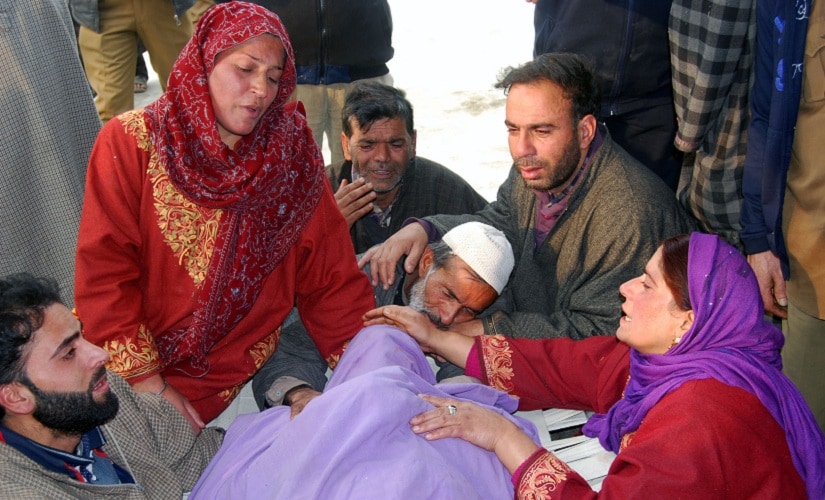 Mohammad Subhan Khanday (centre) kissing the forehead of his slain son. Image procured by Sameer Yasir[/caption]"Given the rate at which Kashmiris are getting killed, it's time to think and save the lives of our children," he added."Our children lost their lives fighting for a political belief," Ghulam Hassan Tak, a resident of Panzgam village in Pulwama, whose son Showkat Ahmad Tak was among the three militants killed in Srinagar recently. "It doesn’t matter how hard you fight a war, eventually you have to come to the table to resolve the matter through talks," he said."The problem is Kashmiris have been deceived since 1947 and how this offer plays out remains to be seen," he added.[caption id="attachment_4472867" align="alignnone" width="825"]
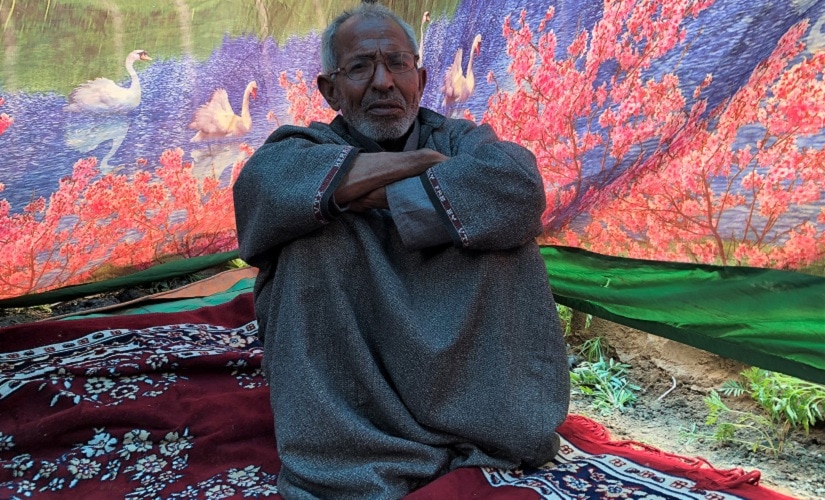 Ghulam Hassan Tak, the father of Showkat Ahmad Tak. Image procured by Sameer Yasir[/caption]Unlike the 2000 ceasefire between Hizb militants and New Delhi, a different situation prevails in Kashmir today. The situation remains tense in southern Kashmir, which is up in arms against the establishment since the 2016 summer when Hizb commander Burhan Wani was killed in an encounter. Since then, the ruling PDP has avoided its stronghold. Even the by-elections for the Anantnag Parliamentary seat have been postponed on more than one occasion.
Following the all-party meeting earlier this month, the move by Mehbooba Mufti and her party regarding the ceasefire is seen as an attempt by the PDP to restore some confidence in people, besides regaining some of its lost turf.That is perhaps why Mehbooba welcomed the Central government’s announcement of halting operations in the state during the holy month of Ramadan."They have got tired of killing our children. I don’t believe this is something we should even talk about," said Abdul Ahad Bhat, a resident of Gopalpora village in Kulgam, whose son, a civilian protester, was killed in the first week of this month."Before you close your eyes, the ceasefire balloon would be pricked and we will be left to count the dead bodies of our children," he said.
First Published:May 17, 2018, 11:45:10 IST
Advertisement
Advertisement

China has dominated Myanmar’s rare earth mines — now India eyes deal to harness country’s critical minerals
India is deepening rare earth cooperation with Myanmar as New Delhi seeks alternative sources of critical minerals dominated by China, including dysprosium and terbium used in EVs, defence systems and clean energy technologies
6 min read
CJP protest in Delhi: New videos of stone pelting, violence emerge as police, agitators trade charges
Fresh videos of violence that broke out during the Cockroach Janta Party's (CJP) protest in Delhi have surfaced, with the police releasing footage showing alleged stone pelting, vandalism and attacks on security personnel
3 min read
'From make in India to launch from India': Skyroot COO on why Vikram-1 could change India’s space sector
Skyroot Aerospace’s successful Vikram-1 mission marks a major milestone for India’s private space sector, as the country seeks to shift from “Make in India” to “Launch from India” and compete in the global commercial satellite launch market
8 min read
Choke terror funding, keep international shipping lanes safe: Jaishankar at Asean Regional Forum
Jaishankar's remarks came against the backdrop of recent terror attacks targeting India and growing threats to commercial shipping amid conflicts in West Asia and Europe
2 min read
PM Modi announces fast-track courts for paper leak cases; CJP responds ‘Dharmendra Pradhan must go’
Amid protests demanding accountability for the leak of medical entrance test Neet and other irregularities in the education system, Prime Minister Narendra Modi has announced that the government has decided to set up fast-track courts to ensure swift and stringent punishment for those involved in paper leaks.
3 min read
Advertisement
Advertisement