


India-China frictions raise potential for open conflict: Congressional Research Service report
Frictions between India and China raise the potential for an open conflict and could serve as an "impetus" for further US-India strategic cooperation.

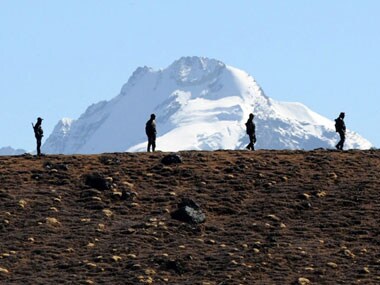
Representational image. AFP[/caption]"Intensified frictions raise the potential for open conflict and could serve as an impetus for further US-India strategic cooperation that could have implications for China. An issue for Congress is whether to call on the Trump Administration to put forth a strategy and report on this strategic development," the CRS said in its insight report.CRS is an independent research wing of the US Congress, which prepares reports and policy papers for US lawmakers on issues of their interest for the Congressmen to take informed decision. Its reports are not considered as an official view of the US Congress.The insight dated 9 August was released by non-profit Federation of American Scientists on Friday.The US has maintained neutrality on the India-China border standoff and repeatedly encouraged the two countries to resolve their dispute through talks."Recent border tensions between India and China may be indicative of a new phase of heightened Sino-Indian rivalry. This rivalry is manifesting itself not only along the two nations' 2,167-mile-long disputed Himalayan border, but also throughout South Asia and the broader Indian Ocean littoral region," said the CRS insight authored by Bruce Vaughn.A specialist in Asian Affairs, Vaughn notes that the border standoff at Doka La marks a shift in China-India ties that likely has more to do with the broader relationship than with the Himalayan border alone."An intensification of rivalry between China and India appears to be under way," he wrote."For New Delhi, China's efforts to block India from membership in the Nuclear Suppliers Group, develop the China- Pakistan Economic Corridor through a part of Kashmir (PoK) claimed by India, protect a Pakistan-based terrorist from UN sanctions, and develop China's strategic presence in the Indian Ocean littoral have combined to increase New Delhi's frustration with and suspicion of China," Vaughn wrote."China has been wary of India's decisions to not attend China's Belt and Road summit in May 2017, allow the Dalai Lama to visit Arunachal Pradesh, and continue to develop strategic ties with the US. Given these larger dynamics, as well as specific statements and posturing on Doka La, it may be some time before the dispute is fully resolved," the report concluded.

NEET protest: Sonam Wangchuk ends hunger strike after talks with JP Nadda, Jitendra Singh
Pakistan-based social media handles active during Op Sindoor spreading rumours amid NEET protest: Police
PM Modi says stricter action against paper leaks to be announced at Friday's Cabinet meeting
NEET protest: CJP delegation to meet ministers on Friday, sources say
Naresh Pal Gangwar appointed higher education secretary, Vineet Joshi moved to Panchayati Raj ministry