


India can play big role in curbing use of autonomous weapons, says Red Cross official
Red Cross official said India can play a big role in diplomacy to maintain human control over the use of autonomous weapons

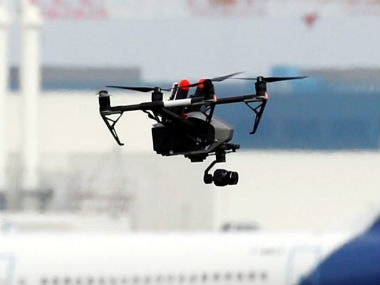
Representational image. Reuters.[/caption]"We need States to come together to form an inter- governmental agreement soon about what is good practice and good operational principles in design, creation and use of autonomous weapons," he told PTI in an interview."We believe very strongly that we must maintain human control in this modern form of weapons. We have to keep humans in the loop," he said.Stressing that India was playing a very "responsible global role" in development of humanitarian norms for these new weapons, he said New Delhi could collaborate with agencies working on maintaining human control on the use of autonomous weapons.Slim said the collaboration between the Indian government and the ICRC was a very constructive example of humanitarian diplomacy."India is a very significant power in the world which has a unique position between east and west. India can play a great part in humanitarian diplomacy and for supporting and innovating humanitarian norms in the years ahead," he said.India had last year chaired the UN's first official talks on the use of autonomous weapons, where Permanent Representative to the Conference on Disarmament Amandeep Gill had said there were varying opinions on the mechanics through which "human control" must govern these deadly weapons.Expressing concern over the weaponisation of improvised commercial drones by non-State Armed Groups (NSAGs), Slim said the diversification, proliferation and increasing autonomy of these weapons was happening fast."This rapid escalation is taking place alongside impressive new progress in deep thinking in game-playing machines, which may soon represent a step change in machineautonomy," he said in the interview on the sidelines of the recent Raisina Dialogue here.Slim said the ICRC wanted that nations should focus on three key operating principles for autonomous weapons to ensure minimum human control of these critical functions: predictability, reliability and human supervision."A weapons system must have a level of human supervision which can take responsibility for the machine and which has the ability to intervene after activation of the machine," he added.

NEET protest: Sonam Wangchuk ends hunger strike after talks with JP Nadda, Jitendra Singh
Pakistan-based social media handles active during Op Sindoor spreading rumours amid NEET protest: Police
PM Modi says stricter action against paper leaks to be announced at Friday's Cabinet meeting
NEET protest: CJP delegation to meet ministers on Friday, sources say
Naresh Pal Gangwar appointed higher education secretary, Vineet Joshi moved to Panchayati Raj ministry