


Solar policy: Delhi government clears solar policy with 1 GW target by 2020
Delhi CM Arvind Kejriwal implements solar policy, targeting installation of 1 GW solar power capacity by 2020 with an aim to make the national capital a solar city.

New Delhi: The Delhi government on Monday announced implementation of its solar policy with the aim of making the national capital a solar city with installation of 1 GW solar power capacity by 2020.Following that it is proposed that the target will double to 2 GW during the next five years (by 2025).[caption id="attachment_2820334" align="alignleft" width="380"]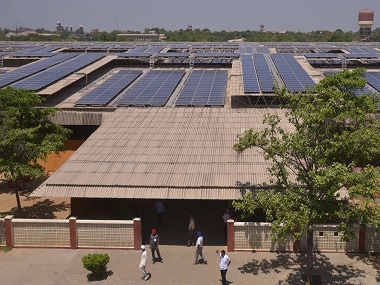 Representational image. AFP[/caption]The decision to clear the policy, which "outlines a combination of regulations, mandates, incentives, and tax breaks for the growth of rooftop solar power in the capital" was taken by Delhi cabinet in a meeting, chaired by Chief Minister Arvind Kejriwal, said a statement."The policy promotes net-metering for all solar plants above 1 kW based on the net-metering regulations already issued by the Delhi Electricity Regulatory Commission. It also mandates the deployment of solar plants on all government-owned rooftops in the next five years. It requires Discoms to meet at least 75 percent of their solar renewable purchase obligation (RPO) within Delhi," it added.Speaking of his vision Kejriwal said, "Making Delhi a solar city is one of our 70 point agenda points. This policy which is very progressive will help in providing clean and green energy."Rooftop solar systems offer sustainable energy, environmental benefits, low gestation period and minimum transmission and distribution losses."Power Minister Satyendar Jain said that solar power was the most viable form of green energy in Delhi."It has the potential of lowering the state’s expenditure on energy through peak shaving, strengthening its energy security, and reducing its reliance on unsustainable fossil fuels. It will also reduce the burden on the existing transmission & distribution system hence less expenditure will be required on their maintenance," he said.The policy supports all models of ownership and maintenance of solar plants, including self-owned (“CAPEX”) and third-party-owned models (“RESCO”), the statement said.The Delhi government also expressed its commitment to work towards increasing Delhi’s share of renewable energy to help combat climate change, reduce air pollution, and enhance energy security.The key highlights of the policy are mandatory deployment of solar on government/public institutions, concept of virtual net-metering, group net-metering, generation based incentive for three years, building bylaws amendment for rooftop solar installations, tax breaks, benefits and subsidies, and solar system up to 200 KWp being exempt from certification by an electrical inspector.

No premium queues, 30-minute target: What changes for Indian passport applicants in UAE
CJP Protest in Delhi Live Updates: Delhi metro shuts 16 stations as protests continue in Jantar Mantar
Bharat Forge, Flying Whales sign pact to develop 60-tonne airships for India’s defence logistics
Air India to cut Delhi-Toronto flight time by 3 hours, resume non-stop services from August 1
J&K cop on Amarnath Yatra duty shot dead in Anantnag terror attack; TRF claims responsibility