
Advertisement


Sections
Dahanu, a green zone in peril: Locals protest as taluka's environment protection authority faces the axe
Dahanu taluka has enjoyed special protection since 1991, when the MoEF — at the behest of the Supreme Court — passed a notification declaring it as ecologically fragile and restricting hazardous industries, among other things.

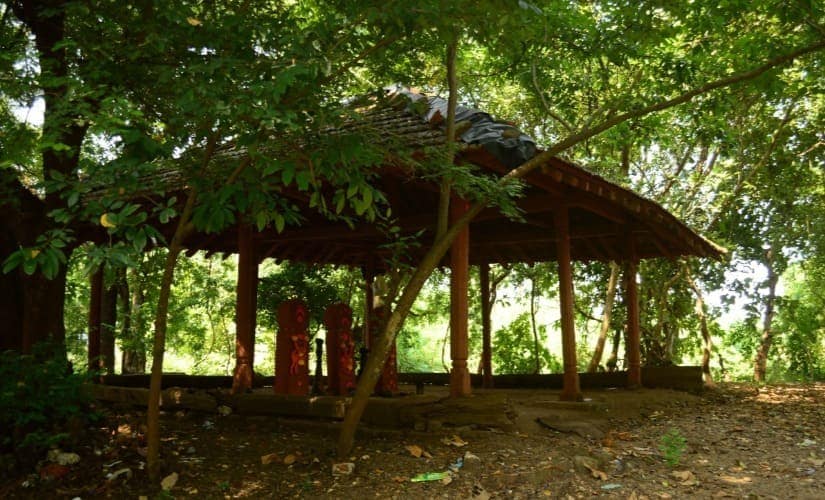 The Waghiya Totem poles of the Warlis[/caption][caption id="attachment_7312401" align="alignnone" width="825"]
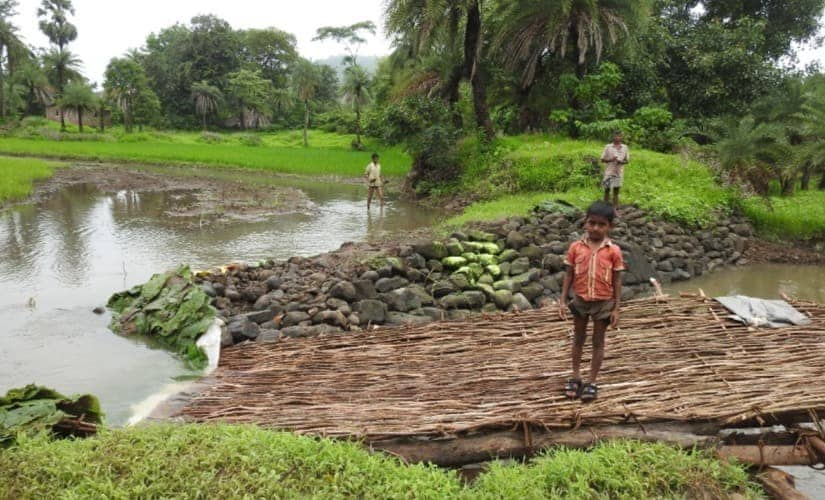 An ingenious fishing net made by Warli locals[/caption]Present-day problemsThe MoEF in its application has now contended that the DTEPA has become superfluous since there are other authorities that can oversee pollution control. The Ministry’s application stated: “Over the last two decades, a number of rules and regulations have been made by the Central Government and the State Government to safeguard and conserve the environment, including the coastal environment. In order to implement these rules, separate authorities — namely, State Coastal Zone Management Authority, Water Quality Assessment Authority, Aquaculture Authority and Central Ground Water Authority, etc. — were established. Moreover, the National Green Tribunal has been established to address grievances…regarding compliance of environmental and forest laws.”The Ministry has suggested that the monitoring and supervision of developmental activities in the ecologically fragile area of Dahanu may be carried out by a Monitoring Committee having a fixed tenure of three years — similar to the practice of the MoEF&CC in relation to all eco-sensitive zones, to ensure uniformity. The chairperson of the monitoring committee “shall be an eminent person with proven managerial or administrative expertise and understanding of local issues”. The other members shall include a representative of the environment ministry; a senior town planner of the area; an expert on eco sensitive zones; two local residents with knowledge of the area (to be nominated by the Maharashtra government); two NGO representatives; the assistant director of tourism, Palghar; regional officer, Maharashtra State Pollution Control Board; deputy conservator of forests, wildlife, Palghar; and the district collector, who will be member secretary.The Dahanu Taluka Environment Protection AuthorityIn contrast to the composition of the Monitoring Committee, the DTEPA was not only to be headed by a retired High Court judge (Chandrasekhar Dharmadhikari was chairperson till he passed away in January 2019; no one has been appointed in his place), but also members with expertise in hydrology, oceanography, terrestrial and aquatic ecology, environmental engineering, developmental and environmental planning, and information technology.The application by the Ministry stated that the DTEPA has been funded by the MoEF since its inception, and the funds required are Rs 50 lakh per annum.Debi Goenka of the Conservation Action Trust (CAT), however, points out that this is not a significant sum, and there were times when Justice Dharmadhikari had paid staff salaries from his own pocket.Goenka, who is challenging the MoEF application in the Supreme Court, told this correspondent, “The continued existence of the DTEPA is vital for the protection of Dahanu, or else a large number of environmentally destructive projects would be allowed. It is ironic that the one agency trying to sabotage the functioning of the DTEPA is the Ministry of Environment itself.”[caption id="attachment_7312411" align="alignnone" width="825"]
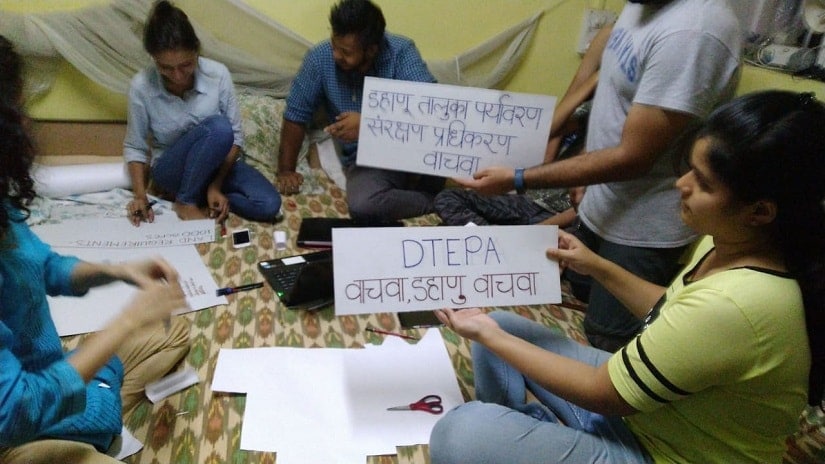 'Save Dahanu' protest posters being made[/caption][caption id="attachment_7312421" align="alignnone" width="825"]
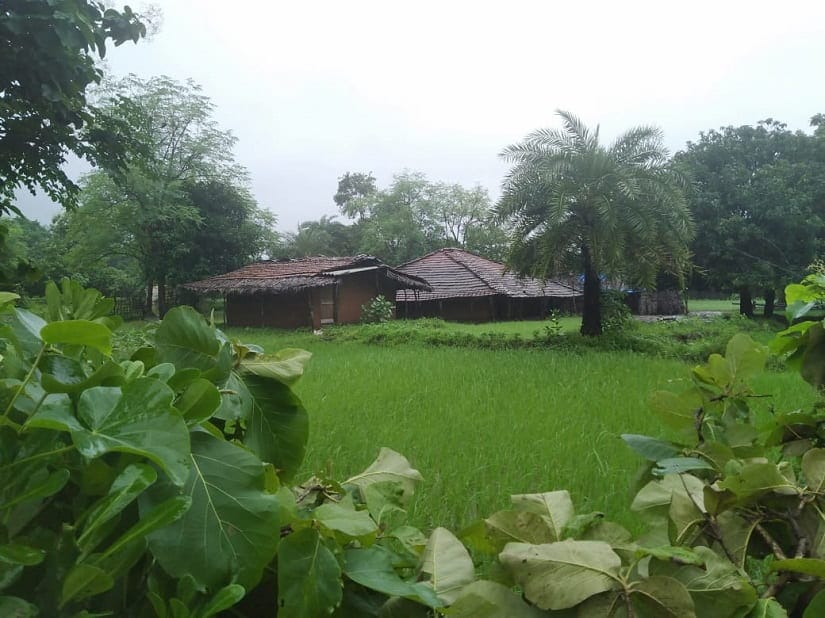 Lush paddy fields at Dahanu[/caption]MoEF’s attempts to scrap DTEPAIn 2002 as well, the MoEF had unsuccessfully moved an application in the Supreme Court, seeking to scrap the DTEPA. In 2004, the apex court ruled that the DTEPA should be allowed to function since there was no concrete alternative in place. The DTEPA had also disallowed the Vadhavan port, proposed back in 1998, as it was not in the regional plan. For the new port, no application has been made before the DTEPA.The existing organisations that the MOEF has listed as regulatory authorities are rubber stamps, according to Debi Goenka. Union minister Prakash Javadekar has spoken of speedy clearance for projects — but this is hardly a criterion to assess the performance of the MOEF. In the case of the Matheran and Mahabaleshwar-Panchgani ecologically sensitive zones, the lack of a dedicated oversight authority is evident, as there are a number of glaring violations. Goenka wonders why the Ministry wants to replicate a non-functioning model like the Monitoring Committee.Power to the people?The MoEF has said (in its application) that Dahanu taluka has been notified and covered under Maharashtra Village Panchayats Extension to Scheduled Areas (PESA) Rules, 2014; therefore, the local villagers have the power to make decisions about development-related and economic activities in the area. However, it is not so simple, as villages that have opposed the bullet train project and passed resolutions against giving up land have learned. Their concerns are not treated with due seriousness, and land is being acquired despite opposition in some cases, according to sources from Dahanu who do not wish to be identified.Environmentalist Nergis Irani, who has campaigned since the 1980s for a sustainable Dahanu, said that The MoEF’s move to scrap the DTEPA was shocking. “We will fight this to our last breath. The government should take a leaf out of what is happening in Dahanu and apply it to other areas. Instead, it is trying to destroy a green belt. You cannot eat industries and cars. In Dahanu, the tribals and other farmers grow their own crops, they have livelihoods. And the taluka supplies so many things to the outside world, thanks to the protection it enjoys,” she said.Opposition to scrapping the DTEPA has come from across the spectrum — from Warlis or the local adivasis, to fisherfolk and farmers, and the citizens of Dahanu town. Ganesh mandals have also taken up the theme of protecting the environment this year. A protest is being planned soon. However, a section of the local industrialists and some farmers do support the DTEPA’s scrapping as they feel the body has hindered development in the region. In fact, there has been a campaign to get rid of the ‘ecologically fragile’ notification as well.Aniket Patil of the Vadhavan Bandar Virodhi Sangharsh Samiti, points out that those against the DTEPA and eco-fragile notification are residents of Dahanu town, whereas people from the rest of the taluka are supportive of the agency and strict environmental regulations. The Samiti will be challenging the MoEF application in court. Already on the shores of Vadhavan beach, there are oil slicks, and pollution is a reality, Patil pointed out. Yet, it is still one of the finest fishing areas and much of the Bombay duck catch is exported from here, he said.[caption id="attachment_7312431" align="alignnone" width="825"]
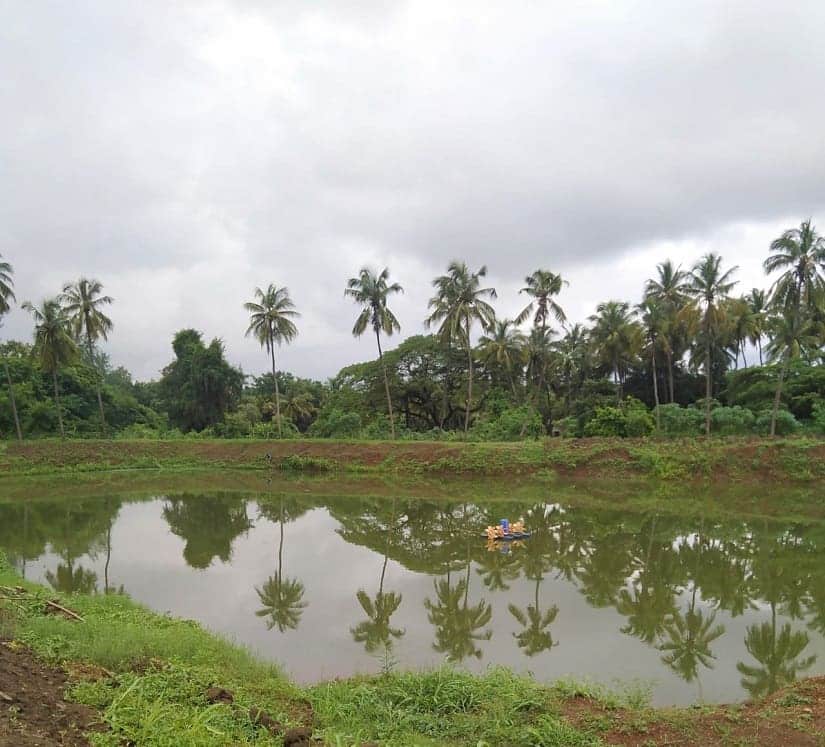 Palm trees, Dahanu[/caption][caption id="attachment_7312441" align="alignnone" width="825"]
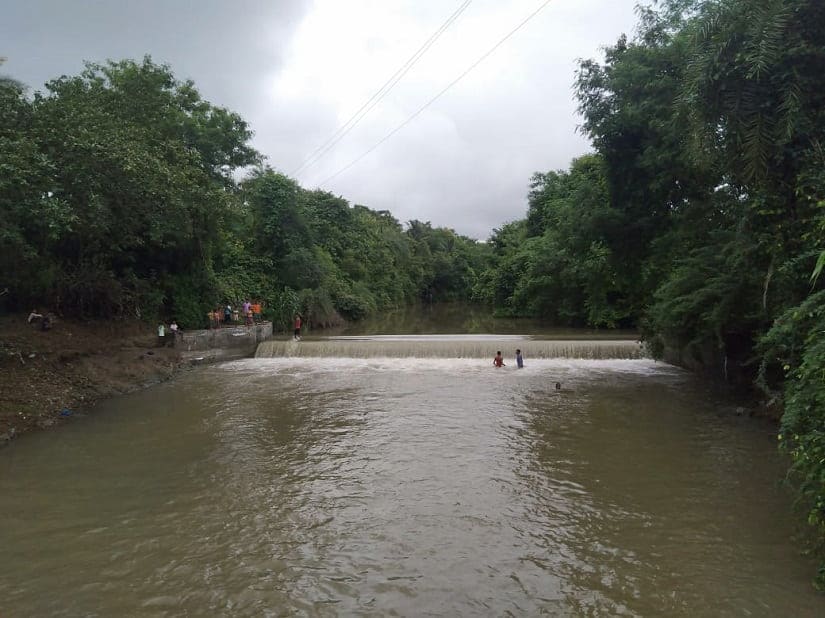 By the river in Dahanu[/caption]Dahanu’s ecological richesDahanu is the only green zone between the highly polluted industrial area of Vapi in Gujarat, and the industrial unit complex at Boisar (not known for its pollution control either) in the adjacent taluka, also home to the Tarapur Atomic Power Station. The chikoos of Dahanu are famous all over the country and the tiny taluka sends out hundreds of tonnes of fruit, vegetable, and fodder. The Bombay duck is one of the major exports from the area along with fish and lobster.Changes in land use have been responsible for environmental degradation elsewhere. States like Kerala and Karnataka, which have disregarded the 2011 report submitted by Dr Madhav Gadgil’s Western Ghats Ecology Expert Panel (WGEEP) and the need to demarcate eco- sensitive zones, have suffered the most. It is a lesson the Maharashtra government cannot ignore.The scrapping of the DTEPA will have a direct impact on Dahanu, says Brian Lobo of the Kashtakari Sanghatana. The proposed Monitoring Committee is composed of government officials and there is a high likelihood of the power plant being expanded, and a whole lot of new industries coming up which won’t follow the norms. Despite the DTEPA , the projects that are linear in nature — like gas pipelines, the bullet train and the freight corridor — have passed/will pass through Dahanu.“If the powers of the new committee are similar to the DTEPA, does it make sense to scrap the DTEPA?” Lobo asks. “If the powers of the Monitoring Committee are diluted, then why does the MoEF want a committee that is less stringent? Or are you trying to establish that Dahanu is not an ecologically fragile area?”Bittu Sehgal vs Union of India by Firstpost on Scribd
Continuing woesDespite the eco-fragile notification in 1991, a 500 MW thermal power plant (first belonging to the Bombay Suburban Electric Supply and Undertaking, then Reliance Energy Ltd, and now Adani Electricity) was commissioned in 1995 in Dahanu to supply power to Mumbai. The location of the plant was challenged in 1989 by Kitayun Irani and Nergis Irani, both residents and farmers from Dahanu. However, the Supreme Court ruled in favour of the power plant, with the condition that there should be a flue gas desulphurisation (FGD) plant to treat the fly ash, the one major pollutant from coal-powered plants.Yet to install this FGD, which was a condition for clearance, took a long court battle and a DTEPA ruling asking the company (then Reliance) to deposit Rs 300 crore as a bank guarantee (which was reduced to Rs 100 crore by the Supreme Court). The final installation was only done by the DTEPA deadline of October 2007.Regarding the thermal power plant, Debi Goenka said applications for its expansion were refused by DTEPA. A power plant has a life of 25 years; how is it being allowed to function, Goenka asked.Even as the MoEF is set to scrap the DTEPA, the authority has been studied as a model way of enforcing norms. A paper by Geetanjoy Sahu, assistant professor at the Tata Institute of Social Sciences, and Armin Rosencranz, visiting professor at the Johns Hopkins School of Advanced International Studies, Bologna, states, “Rather than being vilified as interfering in the affairs of the executive, the DTEPA has shown how useful a multi-disciplinary environmental monitoring committee can be, to implement court directions on environmental issues and to empower local people.”The MoEF, it would seem, has other ideas.Update: CK Mishra, MoEF&CC, Government of India, responded to Firstpost's queries saying there are other monitoring agencies which can do the job and the ministry has asked the Supreme Court to consider the matter.— All images courtesy Phiroza Tafti
First Published:Sep 11, 2019, 10:15:25 IST
Advertisement
Advertisement

China has dominated Myanmar’s rare earth mines — now India eyes deal to harness country’s critical minerals
India is deepening rare earth cooperation with Myanmar as New Delhi seeks alternative sources of critical minerals dominated by China, including dysprosium and terbium used in EVs, defence systems and clean energy technologies
6 min read
CJP protest in Delhi: New videos of stone pelting, violence emerge as police, agitators trade charges
Fresh videos of violence that broke out during the Cockroach Janta Party's (CJP) protest in Delhi have surfaced, with the police releasing footage showing alleged stone pelting, vandalism and attacks on security personnel
3 min read
'From make in India to launch from India': Skyroot COO on why Vikram-1 could change India’s space sector
Skyroot Aerospace’s successful Vikram-1 mission marks a major milestone for India’s private space sector, as the country seeks to shift from “Make in India” to “Launch from India” and compete in the global commercial satellite launch market
8 min read
Choke terror funding, keep international shipping lanes safe: Jaishankar at Asean Regional Forum
Jaishankar's remarks came against the backdrop of recent terror attacks targeting India and growing threats to commercial shipping amid conflicts in West Asia and Europe
2 min read
PM Modi announces fast-track courts for paper leak cases; CJP responds ‘Dharmendra Pradhan must go’
Amid protests demanding accountability for the leak of medical entrance test Neet and other irregularities in the education system, Prime Minister Narendra Modi has announced that the government has decided to set up fast-track courts to ensure swift and stringent punishment for those involved in paper leaks.
3 min read
Advertisement
Advertisement