
Advertisement


Sections
Commuting woes: Women choose slow public transport while men like the rush of private vehicles
Data revealed prominent gender differences—women travel by public transport more often than men, and the latter commuted more by two-wheelers.

Women use slower modes for travelAmong those who travel to work, a larger share of women walk and use public transport (particularly public buses) when compared to men. Across cities, on average, 37 percent of women, compared to 27 percent of men, walk to work and 30 percent of women as compared to 25 percent of men use public transport.
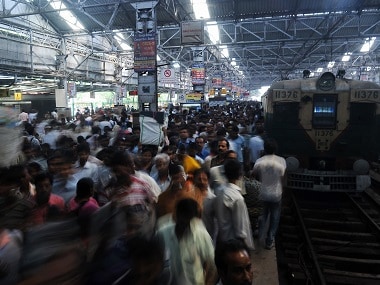
Both these are slower modes of transport with walking being slower than cycling for short distances, and public transport–factoring in waiting time, transfer time, number of bus stops and the absence of priority lanes for buses–being slower than using a private vehicle for longer distances. Bangalore Mobility Indicators 2011 calculated that the travel time for a distance of 9 km by public transport was about 1.5 times that by private vehicles.These patterns are more pronounced in Delhi, Chennai and Bangalore. Mumbai is an anomaly with relatively similar mode choices between men and women possibly due to the availability of a well-functioning suburban rail system, making it a convenient and faster transport option for both.Further research could reveal how slow transport limits jobs for womenCorrelating these factors—that women travel shorter distances for work and that they travel more by slower modes of transport—could indicate that even when women choose jobs closer to their homes, their commute might take as much time due to using slower modes of transport.Therefore, it can be argued that women, due to their lack of access to faster modes of transport, are forced to restrict their choice of location of workplace, thereby severely limiting their employment options.A previous study, based on a limited number of surveys, found similar links between employment and travel among women. The data currently available are very basic; all we can do is infer and argue. But the evidence that travel patterns are different between men and women cannot be ignored. We could push to collect more gender-disaggregated data to identify the causes and implications of such scenarios. A greater insight into the correlation between employability and mobility may provide a key to improving the participation of women in the economy.(Rao works at the Indian Institute for Human Settlements, Bangalore in the Academics and Research team. Her interest lies in the areas of mobility and urban informatics.)
 (Indiaspend.org is a data-driven, public-interest journalism non-profit)
First Published:Jan 08, 2016, 13:40:13 IST
Advertisement
Advertisement

NEET protest: Sonam Wangchuk ends hunger strike after talks with JP Nadda, Jitendra Singh
Sonam Wangchuk ended his hunger strike after meeting Union Ministers J.P. Nadda and Jitendra Singh, even as protests over the NEET paper leak and demands for exam reforms continue.
2 min read
Pakistan-based social media handles active during Op Sindoor spreading rumours amid NEET protest: Police
The police claimed the accounts, allegedly linked to Pakistan, were circulating fake posts, edited videos and misleading content to provoke students during the ongoing NEET protest at Jantar Mantar.
1 min read
PM Modi says stricter action against paper leaks to be announced at Friday's Cabinet meeting
Prime Minister Narendra Modi has announced that the Centre will introduce a fresh set of stringent measures to curb examination paper leaks, with key decisions expected to be taken at the Union Cabinet meeting on Friday.
2 min read
NEET protest: CJP delegation to meet ministers on Friday, sources say
The meeting comes after behind-the-scenes negotiations to resolve the impasse over the NEET paper leak, with protesters demanding Education Minister Dharmendra Pradhan's resignation and sweeping reforms to the examination system.
1 min read
Naresh Pal Gangwar appointed higher education secretary, Vineet Joshi moved to Panchayati Raj ministry
Gangwar is a 1994-batch Indian Administrative Service officer of the Rajasthan cadre. Prior to his new appointment, he was serving as Secretary, Department of Animal Husbandry and Dairying under the Ministry of Fisheries, Animal Husbandry and Dairying.
1 min read
Advertisement
Advertisement